
A filter press is widely used for solid-liquid separation and sludge dewatering in mining, chemical processing, wastewater treatment, food processing, and many other industrial applications. Although the filtration principle is relatively straightforward, reliable filter press operation depends on much more than simply starting a feed pump and opening the press after filtration.
A filter press works under pressure and contains moving mechanical parts, hydraulic components, filter plates, filter cloths, valves, pumps, and electrical controls. Improper operation, insufficient inspection, or poor maintenance can result in slurry leakage, cloudy filtrate, damaged filter plates, premature filter cloth failure, hydraulic problems, unexpected downtime, and potentially serious safety risks.
For this reason, operators should follow a systematic operating procedure covering pre-start inspection, press closing, gradual feeding, real-time monitoring, safe depressurization, cake discharge, cleaning, and preventive maintenance.
This guide explains the key steps in safe and efficient filter press operation and provides practical maintenance recommendations for extending equipment service life.
How Does Filter Press Operation Work?
A filter press separates solids from liquids by pumping slurry into chambers formed between filter plates covered with filter cloth.
During the filtration cycle, the filter plates are first closed and compressed together by the hydraulic system. The feed pump then introduces slurry into the filter chambers. Liquid passes through the filter cloth and drainage channels as filtrate, while solid particles are retained on the cloth surface.
As filtration continues, the accumulated solids gradually form a filter cake. Cake thickness and resistance increase until the filtration cycle reaches the required endpoint.
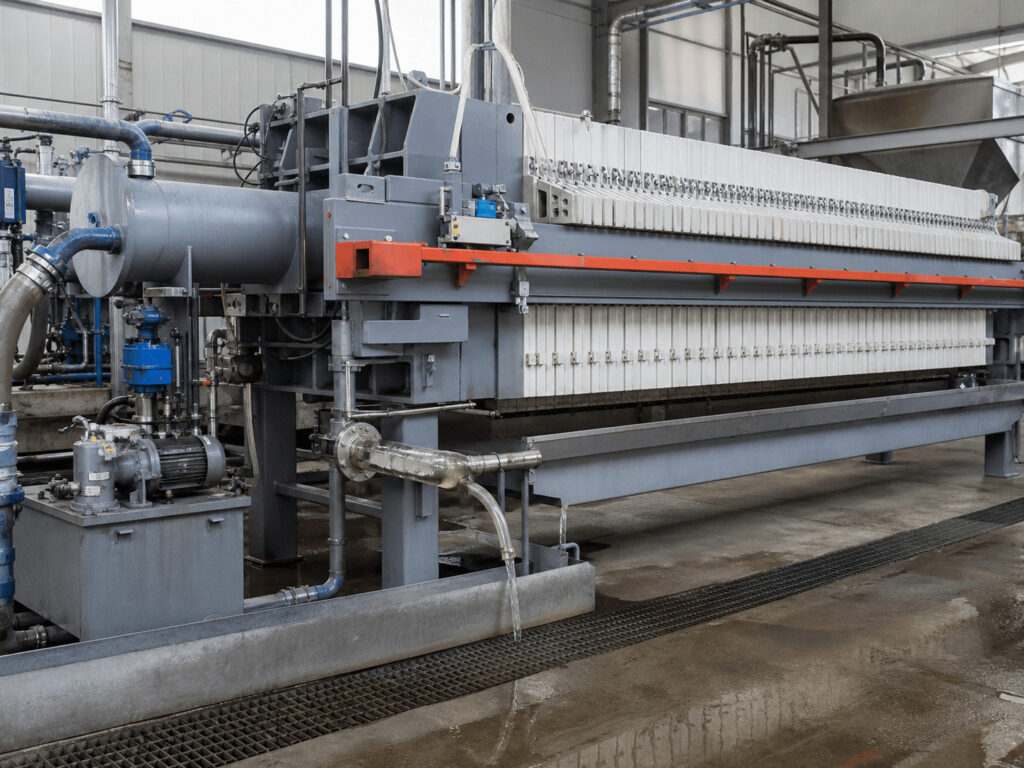
A typical filter press operating cycle includes:
- Closing and clamping the filter plate pack
- Starting the feed pump
- Filling the filter chambers gradually
- Building the filter cake
- Monitoring pressure and filtrate condition
- Stopping the feed process
- Performing optional cake squeezing, washing, or air blowing
- Depressurizing the press
- Opening the plate pack
- Discharging the filter cake
- Cleaning the filter cloth and sealing surfaces
- Preparing the press for the next cycle
Different applications may require different operating sequences. A standard recessed chamber filter press, membrane filter press, and fully automatic filter press may use different pressure settings, auxiliary systems, and cycle controls.
Therefore, operators should always follow the operating limits specified on the equipment nameplate and manufacturer manual.
It is especially important to distinguish between slurry feed pressure, membrane squeezing pressure, and hydraulic clamping pressure. These are different operating parameters and should never be treated as interchangeable values.
Pre-Start Filter Press Inspection and Safety Checklist
Safe filter press operation begins before the machine is started.
A short inspection before every production cycle can identify many problems before they develop into equipment failures or safety incidents.
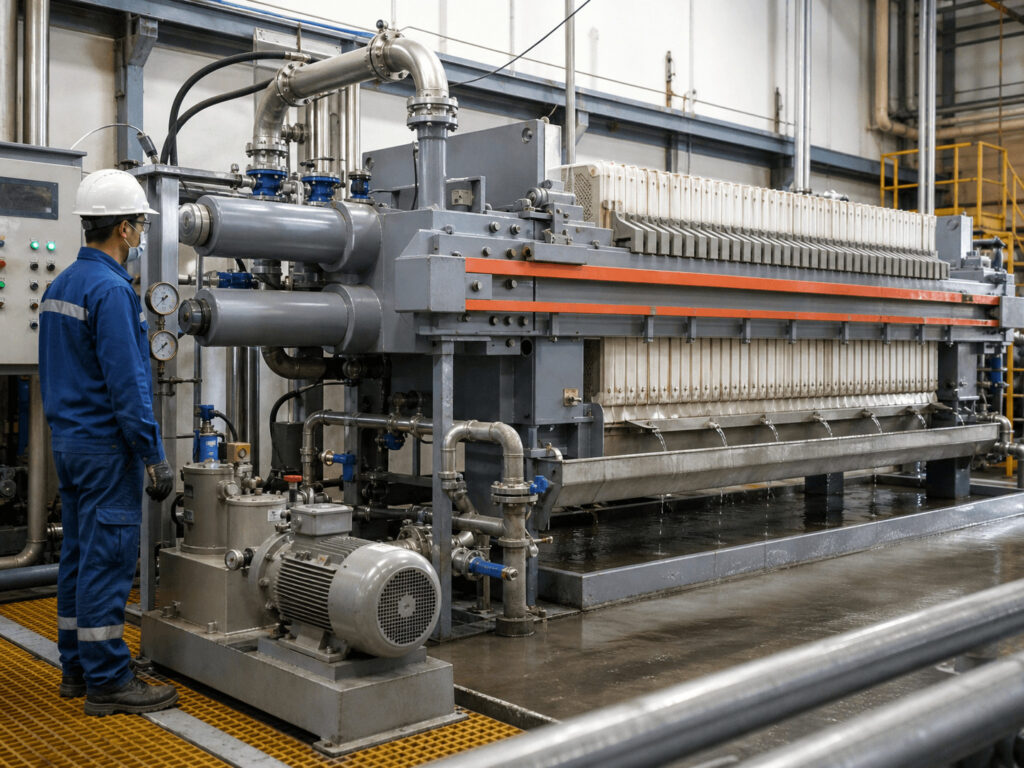
Check Operator Safety
Only trained personnel should independently operate a filter press.
Operators should wear appropriate personal protective equipment according to site conditions, which may include:
- Safety helmet
- Protective gloves
- Safety glasses or face protection
- Safety footwear
- Protective work clothing
Unauthorized personnel should remain outside the operating area, particularly during plate movement and cake discharge.
Operators should also know the position and function of emergency stop buttons before starting the equipment.
Inspect the Frame and Mechanical Components
Check the filter press frame, main beams, moving head, hydraulic cylinder mounting points, plate shifting system, and other load-bearing components.
Look for:
- Loose bolts
- Abnormal deformation
- Cracked welds
- Damaged plate handles
- Misaligned filter plates
- Excessive wear
- Obstructions around moving parts
Any structural abnormality should be investigated before the press is operated.
Inspect Filter Plates and Filter Cloths
Filter plates and filter cloths directly affect sealing and filtration performance.
Before closing the press, inspect the cloth for:
- Tears
- Holes
- Excessive wear
- Wrinkles
- Incorrect positioning
- Severe clogging
The sealing surfaces between filter plates should also be clean.
Residual cake or hardened solids trapped between sealing surfaces can prevent the plate pack from closing evenly. This can cause slurry leakage and uneven mechanical loading and may eventually damage the filter plates.
Damage caused by improper cleaning, incorrect operation, or operation outside specified equipment limits may not be covered by the manufacturer’s warranty.
Check the Hydraulic System
Inspect the hydraulic oil level and make sure it is within the specified range.
Check hydraulic hoses, pipes, fittings, cylinders, and connections for:
- Oil leakage
- Bulging
- Cracks
- Aging
- Damaged seals
The pressure gauge, pressure control devices, limit switches, and emergency stop system should also function correctly.
Never arbitrarily increase hydraulic pressure to solve sealing or filtration problems. Excessive pressure can damage hydraulic components or place unnecessary stress on the filter press structure.
Check the Electrical System and Work Area
Keep the electrical control cabinet clean and dry.
Check that:
- Electrical grounding is reliable
- Indicator lights operate normally
- Emergency stops are functional
- Wiring shows no obvious damage
- Control cabinet doors are properly closed
Electrical repairs should only be performed by qualified personnel.
Finally, remove tools, cake residues, hoses, and other obstacles from around the machine. Nothing should obstruct the hydraulic cylinder, moving head, plate shifter, or operator access area.
How to Operate a Filter Press Step by Step
Once all inspections have been completed, the filter press can enter the production cycle.
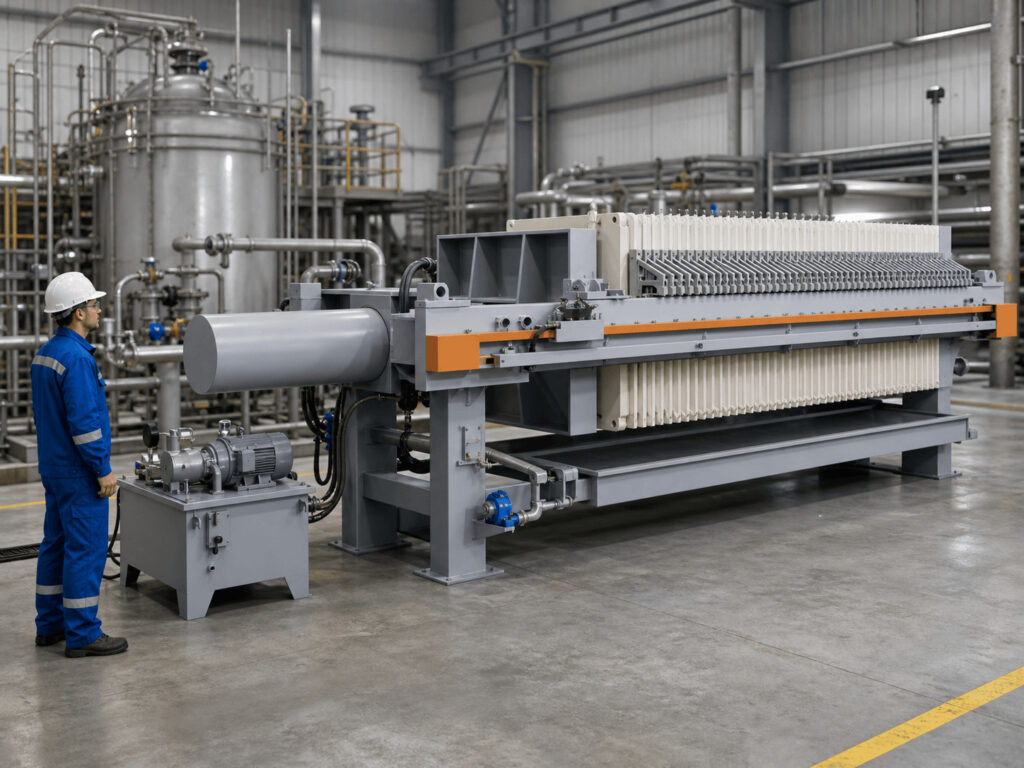
Start With a No-Load Test
If required by the operating procedure, run the equipment without feeding slurry for approximately 3–5 minutes.
Observe whether:
- The hydraulic cylinder operates smoothly
- The moving head travels normally
- Filter plates close correctly
- The plate shifter operates smoothly
- There is unusual vibration
- Abnormal noise is present
If the equipment behaves abnormally, stop and investigate the cause before introducing slurry.
Close and Clamp the Filter Plates
Make sure all filter plates are correctly aligned before starting the hydraulic closing system.
The moving head should compress the plate pack evenly.
Do not operate a filter press if plates are severely misaligned, damaged, or incorrectly installed.
The hydraulic clamping system must provide sufficient force to keep the plate pack closed while slurry is pumped into the chambers. However, the correct clamping pressure depends on the filter press design.
Always use the pressure specified for your particular machine.
Start the Feed Pump Gradually
One of the most important principles of proper filter press operation is avoiding sudden full-pressure feeding.
Start the feed pump at a relatively low flow or pressure and increase it gradually according to the process requirements.
Gradual feeding helps the slurry distribute more evenly throughout the plate pack and reduces sudden hydraulic loading.
Excessively rapid feeding can contribute to:
- Uneven chamber filling
- Slurry spray
- Leakage between filter plates
- Uneven filter cake formation
- Excessive stress on plates and piping
The exact feed pressure should be determined according to filter press design, slurry characteristics, filter cloth, pump configuration, and process requirements.
Never exceed the manufacturer’s specified maximum operating pressure.
Monitor the Filtration Process
Operators should not leave the equipment unattended when site procedures require active monitoring.
Pay particular attention to:
- Feed pressure
- Hydraulic clamping pressure
- Filtrate clarity
- Slurry leakage
- Pump operation
- Unusual noise
- Abnormal vibration
- Plate pack condition
- Filtration time
Clear and stable filtrate generally indicates that the filter cloth is retaining solids effectively.
If the filtrate suddenly becomes cloudy, possible causes include:
- Torn filter cloth
- Incorrect cloth installation
- Damaged filter plate
- Poor sealing
- Solids bypass around the cloth
Leakage between plates may result from dirty sealing surfaces, folded filter cloth, damaged plates, incorrect plate alignment, or unsuitable operating conditions.
Abnormal sounds from the plate shifting mechanism or guide rails may indicate insufficient lubrication, loose fasteners, foreign material, or component wear.
Never place hands, arms, or the head between filter plates while they are moving.
Safety guards, interlocks, pressure controls, and other protective devices should never be removed or bypassed for convenience.
Stop Immediately if a Serious Abnormality Occurs
If the filter press experiences severe pressure fluctuation, heavy vibration, major slurry leakage, abnormal structural movement, or another potentially dangerous condition, stop the process immediately.
Use the emergency stop if necessary, isolate the feed source, and follow the site’s shutdown and lockout procedures.
Hydraulic components must never be dismantled while the system remains pressurized.
Maintenance should only begin after stored pressure has been safely released and all moving components have completely stopped.
Safe Shutdown, Depressurization, and Filter Cake Discharge
The end of filtration does not mean the filter press can be opened immediately.
Incorrect opening procedures are a common source of equipment damage and operator risk.
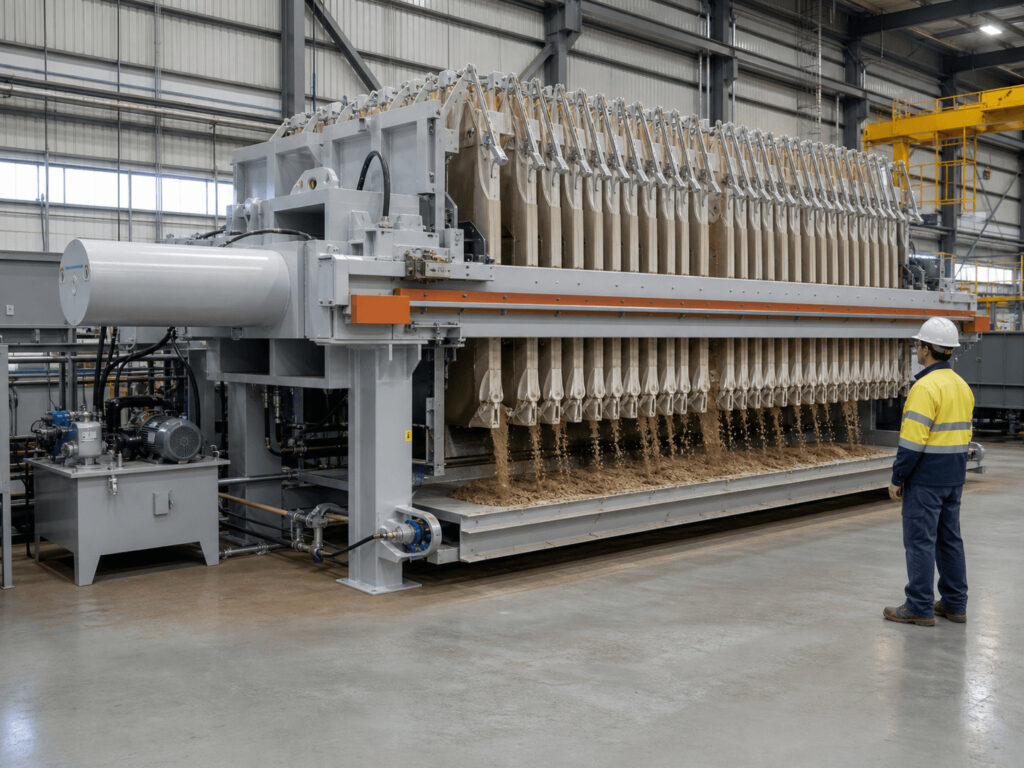
Stop Feeding
When the filtration cycle is complete, stop the slurry feed pump and close the appropriate feed valve according to the system design.
Some applications may include additional steps such as:
- Membrane squeezing
- Cake washing
- Air blowing
- Core blowing
These procedures should only be performed on filter presses designed for them and according to the manufacturer’s operating sequence.
Release Internal Pressure
Before opening the plate pack, make sure residual pressure inside the filtration system has been released.
Never open a filter press while the chambers remain pressurized.
Depending on the process, the press may remain closed briefly after feeding to allow additional drainage before opening.
Verify pressure conditions using the installed instrumentation rather than relying only on elapsed time.
Open the Press and Discharge the Cake
After safe depressurization, release the hydraulic clamping system and open the plate pack.
Move the filter plates individually or use the automatic plate shifting system to discharge the filter cake.
Avoid aggressive pulling, pushing, or striking of filter plates.
During plate movement:
- Keep hands away from plate gaps
- Do not enter the moving plate area
- Watch for falling filter cake
- Keep unauthorized personnel away
- Follow automatic plate shifter safety procedures
Most properly formed cakes should release from the filter cloth with gravity or controlled assistance.
If cake remains attached, use suitable non-damaging cleaning tools rather than sharp metal objects.
Clean the Filter Press
After cake discharge, remove residual solids from:
- Filter plate sealing surfaces
- Filter cloths
- Feed holes
- Plate edges
- Frame
- Guide rails
- Cake discharge area
Avoid hitting polypropylene filter plates with heavy metal tools. Scratches and impact damage can affect sealing performance and reduce service life.
Where appropriate, low-pressure water cleaning can be used to remove residual material without damaging the cloth or plate surface.
Keeping sealing surfaces clean is particularly important because hardened cake left between plates can cause leakage and uneven loading during the next filtration cycle.
Filter Press Maintenance: Daily, Monthly, and Semi-Annual Tasks
Preventive maintenance is more effective than waiting for the filter press to fail.
A structured maintenance program helps reduce unexpected downtime and enables operators to detect wear before it causes a major problem.
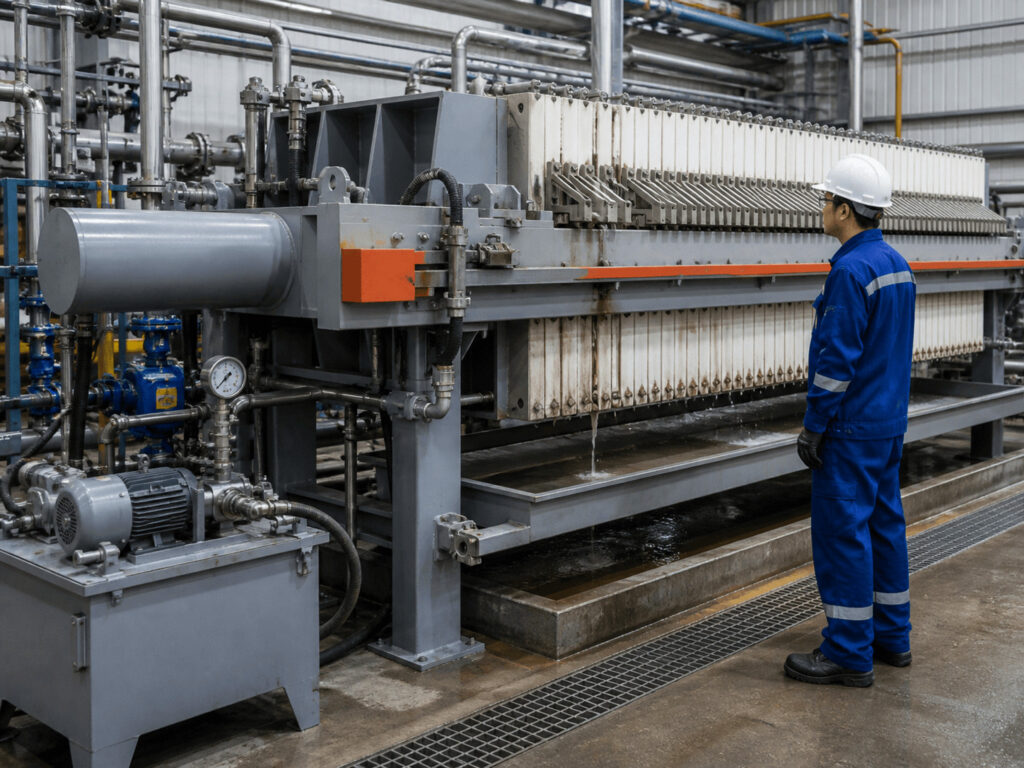
Daily Filter Press Maintenance
Daily maintenance should include:
- Clean the filter press and surrounding area
- Remove accumulated slurry and cake
- Inspect bolts and fasteners
- Check pipes and hydraulic hoses for leakage
- Check hydraulic oil level
- Inspect filter cloth condition
- Observe filter plate sealing surfaces
- Lubricate guide rails, rollers, and specified moving components as required
- Check indicator lights and safety devices
- Test the emergency stop according to site procedures
- Observe pressure readings during operation
- Record abnormal noise, vibration, leakage, or filtration changes
Daily cleaning is particularly important in corrosive, dusty, or wet industrial environments.
Monthly Filter Press Maintenance
Monthly maintenance should be more detailed.
Inspect the filter cloth for:
- Wear
- Stretching
- Tears
- Chemical degradation
- Severe clogging
A clogged filter cloth increases filtration resistance and may lengthen cycle time. A damaged cloth can allow solids to pass into the filtrate.
Replace cloth that can no longer provide acceptable filtration performance.
Monthly maintenance should also include:
- Inspecting hydraulic oil cleanliness
- Checking pressure gauges
- Testing limit switches
- Checking sensors and interlocks
- Tightening exposed frame bolts where required
- Inspecting the plate shifting mechanism
- Checking lubrication points
- Examining hoses and seals for aging
Semi-Annual Inspection
A deeper inspection can be performed approximately every six months or according to actual operating hours and service conditions.
Typical tasks include:
- Inspect hydraulic seals
- Inspect valve components
- Check transmission chains and moving mechanisms
- Replace severely worn parts
- Inspect the main beam
- Examine structural welds
- Check electrical cable insulation
- Inspect terminals and electrical connections
- Examine the hydraulic power unit
- Check the plate shifting system
- Review recurring operating problems
Maintenance intervals should not be treated as universal rules. A filter press operating continuously in mining slurry service may require more frequent inspection than a press operating intermittently with relatively clean material.
The maintenance schedule should therefore consider operating hours, slurry abrasiveness, chemical conditions, temperature, cycle frequency, and equipment design.
Maintain Accurate Operating Records
Good maintenance also depends on good records.
Operators should record information such as:
- Operating hours
- Filtration cycle time
- Feed pressure
- Abnormal leakage
- Filtrate condition
- Filter cloth replacement
- Hydraulic oil replacement
- Maintenance performed
- Component failures
Changes in these records can reveal developing problems.
For example, gradually increasing cycle time may indicate filter cloth clogging, changes in slurry properties, reduced pump performance, or restricted flow paths.
Common Filter Press Operating Problems and Warning Signs
Many filter press problems provide warning signs before a serious failure occurs.
Recognizing them early can reduce downtime.
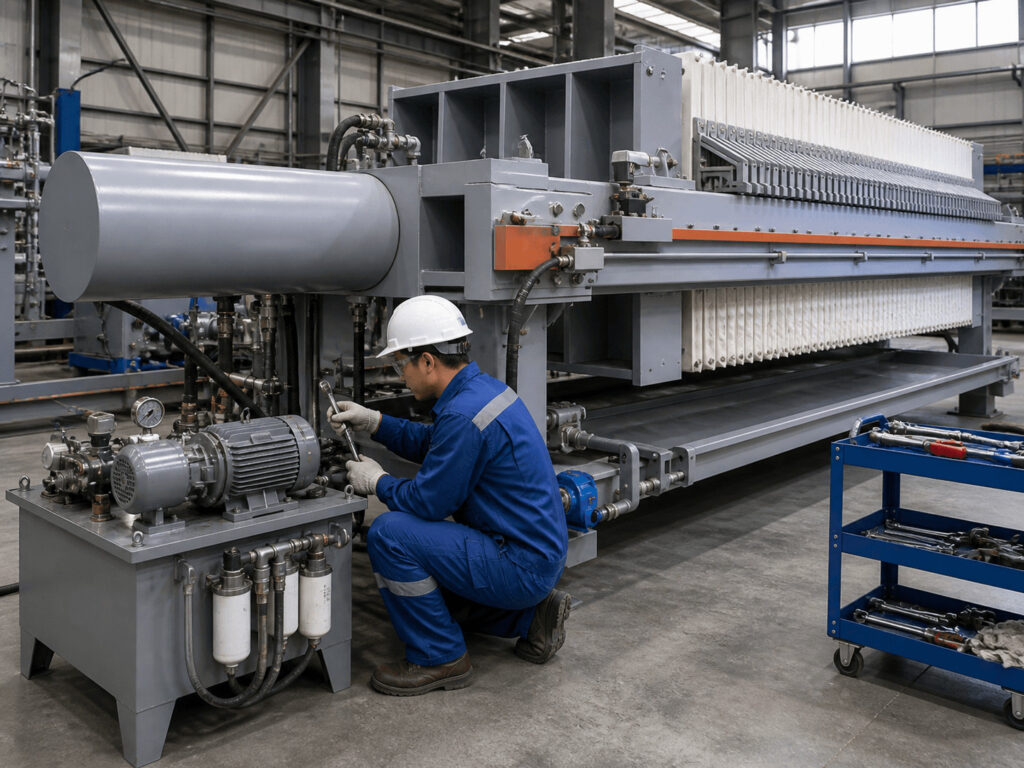
Cloudy Filtrate
Possible causes include:
- Damaged filter cloth
- Incorrect cloth installation
- Holes or tears
- Improper sealing
- Damaged filter plate
Inspect the affected chamber and cloth before continuing normal operation.
Leakage Between Filter Plates
Possible causes include:
- Material on sealing surfaces
- Folded or misaligned cloth
- Damaged filter plate
- Incorrect hydraulic clamping
- Excessive feed conditions
- Plate misalignment
Do not simply increase hydraulic pressure to stop the leakage. Identify the actual cause first.
Abnormally Long Filtration Cycle
Possible causes include:
- Clogged filter cloth
- Low feed pump performance
- Low slurry solids concentration
- Blocked feed passages
- Changes in slurry characteristics
- Inappropriate operating parameters
Comparing current cycle data with historical operating records can help identify the cause.
Abnormal Noise During Plate Shifting
Check:
- Guide rail lubrication
- Roller condition
- Plate alignment
- Fasteners
- Transmission components
- Foreign material around the shifting mechanism
Stop the plate shifting system before inspecting areas where mechanical movement could create a crushing hazard.
Hydraulic Pressure Problems
Unstable hydraulic pressure may result from:
- Insufficient hydraulic oil
- Contaminated oil
- Worn seals
- Leakage
- Faulty valves
- Pressure control problems
Never disconnect hydraulic lines to investigate a problem while the system is pressurized.
Conclusion
Reliable filter press operation is the result of correct procedures, trained operators, proper pressure control, regular inspection, and preventive maintenance.
The most important rule is simple: do not treat the filter press as equipment that only needs attention when a fault occurs.
Inspect the machine before every operating cycle. Keep filter cloths and sealing surfaces clean. Increase feed pressure gradually. Monitor filtrate, pressure, leakage, vibration, and noise during filtration. Fully depressurize the machine before opening or maintenance. Keep personnel away from moving filter plates and never bypass safety devices.
At the same time, establish daily, monthly, and periodic maintenance routines for the hydraulic system, filter plates, filter cloths, mechanical components, and electrical system.
A properly maintained filter press can deliver more consistent cake formation, clearer filtrate, fewer unplanned shutdowns, and longer component life.
Most importantly, all operating pressure limits, maintenance intervals, safety procedures, and replacement requirements should ultimately follow the specifications of the specific filter press model being used.
If you are selecting a new filter press or need help matching filter plates, filter cloths, hydraulic systems, and filtration parameters to your slurry, LARGO can provide customized solid-liquid separation solutions for mining, chemical processing, wastewater treatment, and other industrial applications.