
Elegir el material incorrecto de la placa de filtro puede provocar fallas catastróficas, contaminación del proceso y costosos tiempos de inactividad. Podría pensar que está ahorrando dinero con una opción más económica, pero una placa que no coincide puede erosionar rápidamente su presupuesto y su confiabilidad operativa. Comprender las diferencias fundamentales entre los materiales disponibles es el primer paso hacia un proceso de separación sólido-líquido sólido y eficiente.
El mejor material de placa de filtro depende completamente de su aplicación específica. El polipropileno (PP) es una opción versátil y rentable para uso general. El fluoruro de polivinilideno (PVDF) es para temperaturas más altas y productos químicos agresivos. El Acero Inoxidable es el estándar para aplicaciones higiénicas y de alta resistencia, mientras que el Hierro Fundido está reservado para condiciones extremas de presión y temperatura.
Profundicemos en las propiedades y los casos de uso ideales de cada uno para ayudarle a tomar una decisión informada.
¿Qué son las placas filtrantes y por qué es tan importante el material de las placas filtrantes?
Placas filtrantes son los componentes estructurales centrales de un filtro prensa. Cuando se presionan entre sí, forman una serie de cámaras huecas que contienen la suspensión para la filtración. La elección del material de la placa del filtro es fundamental porque determina la resistencia química, la tolerancia a la temperatura, la presión nominal y la vida útil operativa de la placa, lo que afecta directamente la eficiencia y la seguridad.
Las placas filtrantes son el corazón de cualquier sistema de filtro prensa. Son componentes diseñados con precisión que cumplen varias funciones críticas simultáneamente.
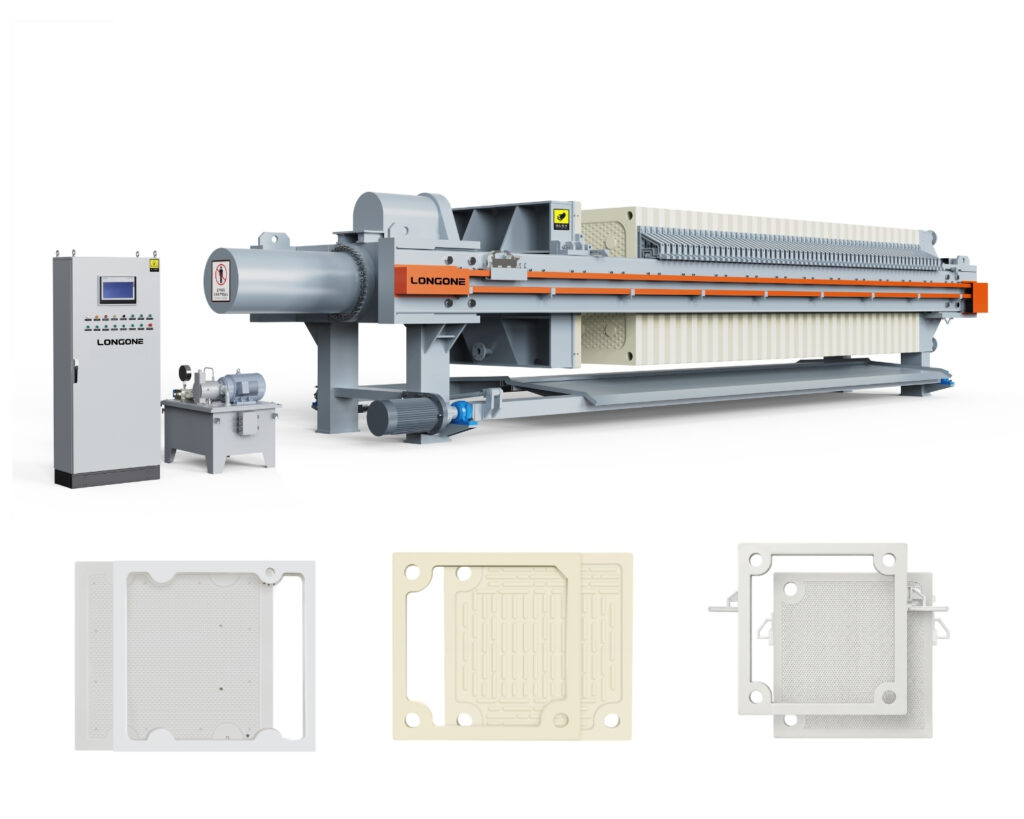
When the hydraulic system closes the filter press, the stack of plates is compressed, forming a series of sealed, pressure-tight chambers. The filter cloth is draped over each plate, acting as the primary filtration medium. Slurry is then pumped into these chambers under pressure. The liquid phase (filtrate) passes through the cloth and exits through drainage channels built into the plate’s surface, while the solid particles are trapped, forming a filter cake. The design and integrity of the plates ensure this process happens efficiently without leaks.
¿Cuándo son las placas filtrantes de polipropileno (PP) la mejor opción?
El polipropileno es el material de placa de filtro más común y, a menudo, se selecciona por defecto debido a su atractivo precio. Pero optar por PP sin un análisis completo de su proceso puede ser un error muy costoso a largo plazo. Exploremos dónde sobresale este polímero versátil y, lo que es igualmente importante, dónde se queda corto.
Las placas filtrantes de polipropileno (PP) son ideales para una amplia gama de aplicaciones de uso general con temperaturas moderadas (normalmente por debajo de 90 °C/194 °F), un rango de pH entre 2 y 12 y lodos que no son muy abrasivos. Ofrecen un excelente equilibrio entre buena resistencia química, peso ligero para un fácil manejo y una baja inversión inicial.
Polypropylene has earned its reputation as the “workhorse” of the filtration industry for good reason. It provides a reliable and economical solution for countless wastewater treatment, chemical, and industrial processes.
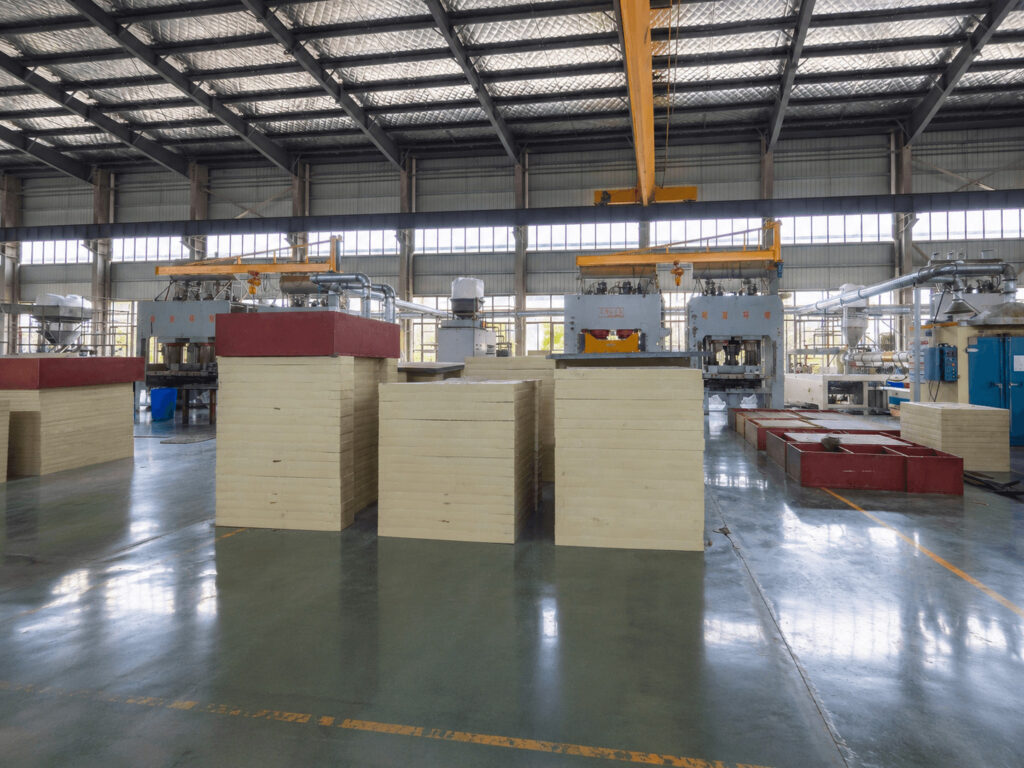
The “Workhorse” of the Industry
For many applications, PP is more than sufficient. Its key advantages include:
- Cost-Effectiveness: Virgin polypropylene is a widely available and affordable polymer, making PP plates the most budget-friendly option upfront.
- Good Chemical Resistance: It holds up well against a broad spectrum of acids, alkalis, and salt solutions, making it suitable for municipal and industrial wastewater, general chemical production, and many other common streams.
- Light Weight: PP plates are significantly lighter than their metal counterparts. This makes them much easier and safer for operators to handle during installation, cloth changes, and maintenance.
- Good Mechanical Properties: When properly designed and reinforced, PP plates offer excellent rigidity and can handle standard filtration pressures (typically up to 16 bar) with ease.
Critical Limitations to Consider
Despite its popularity, PP is not a universal solution. I’ve seen firsthand how choosing PP in the wrong application leads to costly failures. Here are the limitations you must respect:
- Temperature Sensitivity: This is perhaps the most common failure point. Polypropylene begins to lose its rigidity and can soften or warp at temperatures above approximately 90°C (194°F). I once worked with a chemical plant that had to replace an entire pack of PP plates that had deformed into a “banana” shape. The cause? Their steam-in-place (SIP) cleaning cycle created a peak temperature spike that exceeded the polymer’s limit, even though the average process temperature was well within range. Always design for the highest possible temperature your plates will ever see.
- Abrasion: My experience in the mining sector highlights another key weakness. For highly abrasive slurries like mineral concentrates, mining tailings, or kaolin clay, standard PP plates wear down extremely fast. We’ve observed that they can wear out 2 to 3 times faster than more durable options like rubber-coated or stainless steel plates. A customer who chose PP for a tailings dewatering project based on initial cost found themselves replacing the entire plate pack within 12 months. Over a 24-month horizon, their “cheap” choice ended up being the most expensive due to replacement parts and lost production.
- Solvent Incompatibility: Si bien el PP tiene una buena resistencia química general, puede ser atacado, ablandado o disuelto por ciertos hidrocarburos aromáticos y clorados. Siempre verifique la compatibilidad si su proceso involucra solventes orgánicos agresivos.
¿Por qué elegir PVDF como material de placa filtrante?
Su proceso implica altas temperaturas o productos químicos agresivos que degradarían o incluso disolverían rápidamente las placas de polipropileno estándar. El uso del polímero incorrecto en un entorno de este tipo puede provocar fallas en las placas, contaminación del proceso y fugas peligrosas. Aquí es donde un material de alto rendimiento como el PVDF proporciona el paso adelante necesario.
Polyvinylidene Fluoride (PVDF) filter plates are chosen for demanding applications that require superior chemical resistance and higher temperature tolerance. Capable of withstanding temperatures up to approximately 150°C (302°F), PVDF is an excellent choice for processing aggressive acids, bases, and solvents that are incompatible with PP.
PVDF is a specialty fluoropolymer that bridges the performance gap between common polymers like PP and expensive metal plates like stainless steel. It is an investment in reliability for harsh processing environments.
Superior Chemical and Thermal Resistance
The primary reason to specify PVDF is its exceptional stability.
- Thermal Performance: Con una temperatura máxima de servicio de alrededor de 150 °C (302 °F), el PVDF maneja cómodamente procesos que son demasiado calientes para el PP (máximo ~90 °C / 194 °F). Esto lo hace adecuado para aplicaciones que involucran reacciones químicas calientes o aquellas que requieren ciclos de limpieza a alta temperatura.
- Inercia química: El PVDF ofrece una resistencia excepcional a una gama más amplia de productos químicos que el PP. Es particularmente valorado por su capacidad para resistir agentes oxidantes fuertes (como halógenos), la mayoría de los ácidos y bases y muchos solventes orgánicos que dañarían rápidamente el polipropileno.
Aplicaciones en industrias especializadas
Este perfil de rendimiento mejorado convierte al PVDF en el material elegido en varios sectores especializados:
- Fabricación química agresiva: For processes involving intermediates or final products that are highly corrosive or require elevated temperatures to remain in a liquid state.
- Specialty Electronics and Battery Production: In industries where process purity is paramount, the inert nature of PVDF prevents leaching and contamination of sensitive chemical baths.
- Pharmaceutical Intermediates: While stainless steel is the standard for final drug products, PVDF can be a cost-effective choice for earlier synthesis steps involving harsh chemicals, provided the material meets the necessary compliance standards.
¿Son las placas filtrantes de acero inoxidable adecuadas para su aplicación?
You operate in an industry like food production or pharmaceuticals where hygiene and cleanability are non-negotiable. Or perhaps your process involves high temperatures and pressures that would warp or damage polymer plates. In these scenarios, using a polymer plate could lead to regulatory non-compliance, product contamination, or mechanical failure.
Stainless steel filter plates (typically grades 304 or 316L) are essential for applications demanding the highest levels of hygiene, corrosion resistance, and structural strength. They are the default standard in food, beverage, and pharmaceutical industries, as well as for processes involving high temperatures or abrasive slurries where durability is paramount.
El acero inoxidable representa el pináculo del rendimiento del material de placas de filtro y ofrece una combinación de pureza, resistencia y longevidad que los polímeros no pueden igualar.
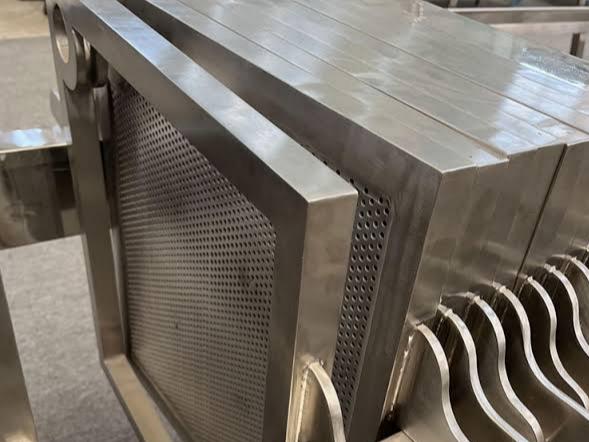
El estándar de oro para la higiene y el cumplimiento
Para las industrias reguladas, la elección de materiales suele estar dictada por el cumplimiento.
- Diseño sanitario: El acero inoxidable tiene una superficie lisa y no porosa que resiste la acumulación de bacterias y es excepcionalmente fácil de limpiar. Es totalmente compatible con los procedimientos de limpieza in situ (CIP) y esterilización in situ (SIP) estándar de la industria.
- Cumplimiento normativo: Este es un punto que considero pasado por alto hasta que una auditoría sea inminente. Los compradores de los sectores de alimentos, bebidas y farmacéutico se enfrentan a estrictos requisitos de certificación de materiales. Los grados de acero inoxidable como 316L están disponibles con la documentación para demostrar el cumplimiento de estándares como FDA, UE 1935/2004 y GMP. Descuidar esto durante la adquisición puede dar lugar a retrabajos urgentes y costosos en el sitio. Lo mismo se aplica a aplicaciones de alta pureza como el reciclaje de baterías, donde es fundamental prevenir la contaminación por iones metálicos.
Acero inoxidable 304 frente a 316L
No todo el acero inoxidable es igual. Los dos grados más comunes utilizados para placas de filtro son:
- Tipo 304: Se trata de un excelente acero inoxidable de uso general con buena resistencia a la corrosión. Se utiliza ampliamente en muchas aplicaciones de procesamiento de alimentos, como en la producción de vino o jugos.
- Tipo 316L: Este grado contiene un elemento añadido, molibdeno, que mejora significativamente su resistencia a la corrosión de cloruros (como agua salada o salmueras) y ácidos. La “L” significa “bajo en carbono”, lo que mejora sus propiedades después de la soldadura. 316L es la opción preferida para la producción farmacéutica, procesamiento de químicos agresivos y aplicaciones marinas.
Durabilidad y rango de temperatura inigualables
Más allá de la higiene, el acero inoxidable ofrece propiedades mecánicas superiores:
- Temperaturas extremas: Puede soportar temperaturas desde niveles criogénicos hasta varios cientos de grados Celsius, superando con creces los límites de cualquier polímero.
- Alta presión y abrasión: Las placas de acero inoxidable son increíblemente fuertes y rígidas, lo que les permite soportar presiones de filtración muy altas. También ofrecen una excelente resistencia a la abrasión, lo que los convierte en una fantástica solución a largo plazo para lodos minerales abrasivos, satisfaciendo la necesidad de durabilidad que mencioné anteriormente donde falla el PP.
¿Cuál es el papel del hierro fundido como material de placa filtrante?
Se trata de un proceso industrial tan extremo que incluso el acero inoxidable podría deformarse bajo la combinación de una presión inmensa y una temperatura alta. Una falla de placa en un entorno de trabajo tan pesado no sólo sería costosa; podría ser catastrófico. Para estos trabajos más duros, el hierro fundido ofrece una robustez mecánica inigualable.
Las placas de filtro de hierro fundido se utilizan en aplicaciones de filtración de servicio extremadamente pesado caracterizadas por temperaturas y presiones de funcionamiento muy altas. Sus principales ventajas son una inmensa resistencia estructural y estabilidad térmica, lo que los convierte en el material de último recurso cuando todas las demás opciones fallarían mecánicamente.
Las placas de hierro fundido no son comunes; son componentes altamente especializados para los rincones más exigentes del mundo industrial. Su selección se basa casi exclusivamente en la resistencia mecánica.
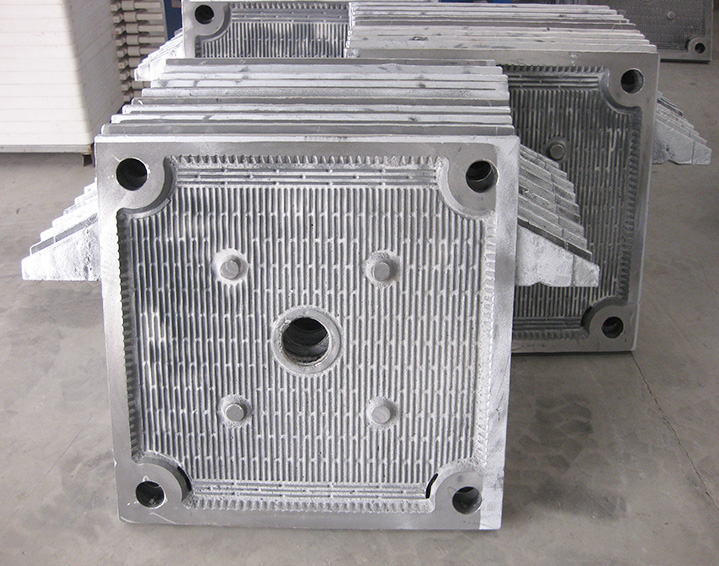
El campeón de alta presión y temperatura
La singular razón para elegir el hierro fundido es su capacidad para resistir fuerzas que destruirían otros materiales.
- Manejo de presión: Las placas de hierro fundido pueden diseñarse para soportar presiones de filtración muy superiores a 30 bar y, en algunos casos, hasta 60 bar o más.
- Estabilidad térmica: Mantiene su integridad estructural a temperaturas muy altas, lo que lo hace adecuado para ciertos procesos de refinación metalúrgica o síntesis química a alta temperatura donde los polímeros e incluso algunos grados de acero fallarían.
Compensaciones: peso y corrosión
This strength comes with significant disadvantages that limit its use:
- Extreme Weight: Cast iron is incredibly dense and heavy. A single plate can weigh hundreds of kilograms, making installation and maintenance a major logistical challenge requiring overhead cranes and specialized handling equipment.
- Poor Corrosion Resistance: Unlike stainless steel, cast iron is highly susceptible to rust and chemical attack. To protect the plate from the process slurry, it is almost always encapsulated with a protective layer. This is often done with sheets of polypropylene or a vulcanized rubber coating. While this provides chemical protection, the coating itself becomes a potential point of failure.
Niche Industrial Applications
You will only find cast iron plates in a select few industries where mechanical load is the overriding concern. Examples include:
- Mineral Refining: In certain high-temperature ore leaching processes.
- Dye and Pigment Manufacturing: For specific chemical pathways that run at extreme pressures.
- Legacy Systems: Many older filter presses were built with cast iron, and facilities may continue to use it for consistency, though modern engineering often allows for a transition to a more practical material.
Tabla comparativa: ¿Material de la placa filtrante de un vistazo?
To help you visualize the key differences and make a quick assessment, we’ve compiled a summary table. This table compares the most important attributes of each primary filter plate material we’ve discussed.
| Attribute | Polypropylene (PP) | PVDF | Stainless Steel (316L) | Cast Iron |
|---|---|---|---|---|
| Max Temp. | ~90°C (194°F) | ~150°C (302°F) | > 250°C (482°F) | Very High (> 300°C) |
| Chemical Resistance | Good (pH 2-12) | Excellent (Acids, Solvents) | Excellent (Wide Range) | Poor (Requires Coating) |
| Abrasion Resistance | Fair to Poor | Good | Excellent | Excellent (Structurally) |
| Initial Cost | Low | High | Very High | High |
| Weight | Low | Low-Medium | Very High | Extremely High |
| Hygiene/Compliance | Special grades only | Good Purity | Excellent (FDA, GMP) | Not Applicable |
| Best For… | Wastewater, General Use | Aggressive Chemicals, Heat | Food, Pharma, High Purity | Extreme Pressure & Temp. |
¿Cómo elijo el material de placa de filtro adecuado para mi sistema?
With all these variables of temperature, chemistry, pressure, and cost, choosing the correct material can feel overwhelming. But making a poor choice leads directly back to the problems of downtime, budget overruns, and safety risks. Let’s walk through a systematic process to simplify your decision.
To choose the right filter plate material, you must systematically evaluate your complete process requirements. This includes the slurry’s chemical makeup (pH and solvents), its peak operating temperature, the abrasiveness of its solid particles, and any regulatory compliance mandates. Balancing these technical needs against the total cost of ownership will lead you to the optimal solution.
Making the right choice is a process of elimination based on your specific operating conditions. Follow these steps to guide your selection.
A Step-by-Step Selection Guide
- Analyze Your Slurry Chemistry: This is your first and most important filter. What is the full pH range of your slurry, from start to finish? Are there any strong oxidizing agents, hydrocarbons, or organic solvents present? If you have a simple aqueous slurry with a neutral pH, PP is a strong candidate. If you have aggressive solvents or extreme pH values, you immediately need to look at PVDF or stainless steel.
- Determine Your Full Temperature Range: What is your average operating temperature? More importantly, what is the absolute peak temperature the plates will experience? As we discussed with the warped PP plates, cleaning cycles (CIP/SIP) or process fluctuations can cause temperature spikes that lead to failure. If your peak temp ever exceeds 90°C, PP is out. If it exceeds 150°C, PVDF is out, and you must consider a metal plate.
- Evaluate Abrasion Potential: Are the solid particles in your slurry hard and sharp? Think silica sand, mineral crystals, or ceramic fines. As my experience in mining shows, using standard PP in these applications will lead to a very short service life. The higher initial cost of an abrasion-resistant material like stainless steel or a specially formulated rubber-coated plate will provide a much better return on investment.
- Check Regulatory and Purity Requirements: Do you operate in the food, beverage, pharmaceutical, or biotech industry? If so, your choice may be made for you. You will likely need a material, like 316L stainless steel, that comes with full traceability and certification for FDA, EU 1935/2004, or other relevant standards. Don’t wait for an audit to discover your equipment isn’t compliant.
- Calculate the Total Cost of Ownership (TCO): Do not base your decision solely on the initial purchase price. A plate pack that costs 30% more but lasts three times as long is the far cheaper option. Factor in the cost of replacement parts, the labor to change them, and, most significantly, the value of lost production every time your press is down for maintenance.
While this guide provides a strong foundation, we always recommend a full process evaluation by an experienced filtration engineer. For new or complex applications, sending a slurry sample to the manufacturer for laboratory testing is the surest way to verify material compatibility and ensure a successful outcome.
Conclusión
Selecting the correct filter plate material is a foundational decision that directly impacts your operational efficiency, product quality, safety, and long-term costs. From the versatile and economical workhorse of polypropylene to the hygienic precision of stainless steel and the sheer brute strength of cast iron, each material has a distinct and important role. By methodically analyzing your process chemistry, peak temperature, abrasion potential, and compliance needs, you can move beyond a simple price comparison and choose a filter plate material that delivers reliable, long-term performance and the best possible total cost of ownership for your operation.