Sourcing a filter press often comes down to a familiar frustration: you evaluate frame size and hydraulic power, place the order, and only later discover that the plate design — not the machine frame — was the decision that mattered most. A chamber filter press and its filter plates are one system. If the plates are undersized, wrong material, or mismatched to your feed pressure, the entire press underperforms.
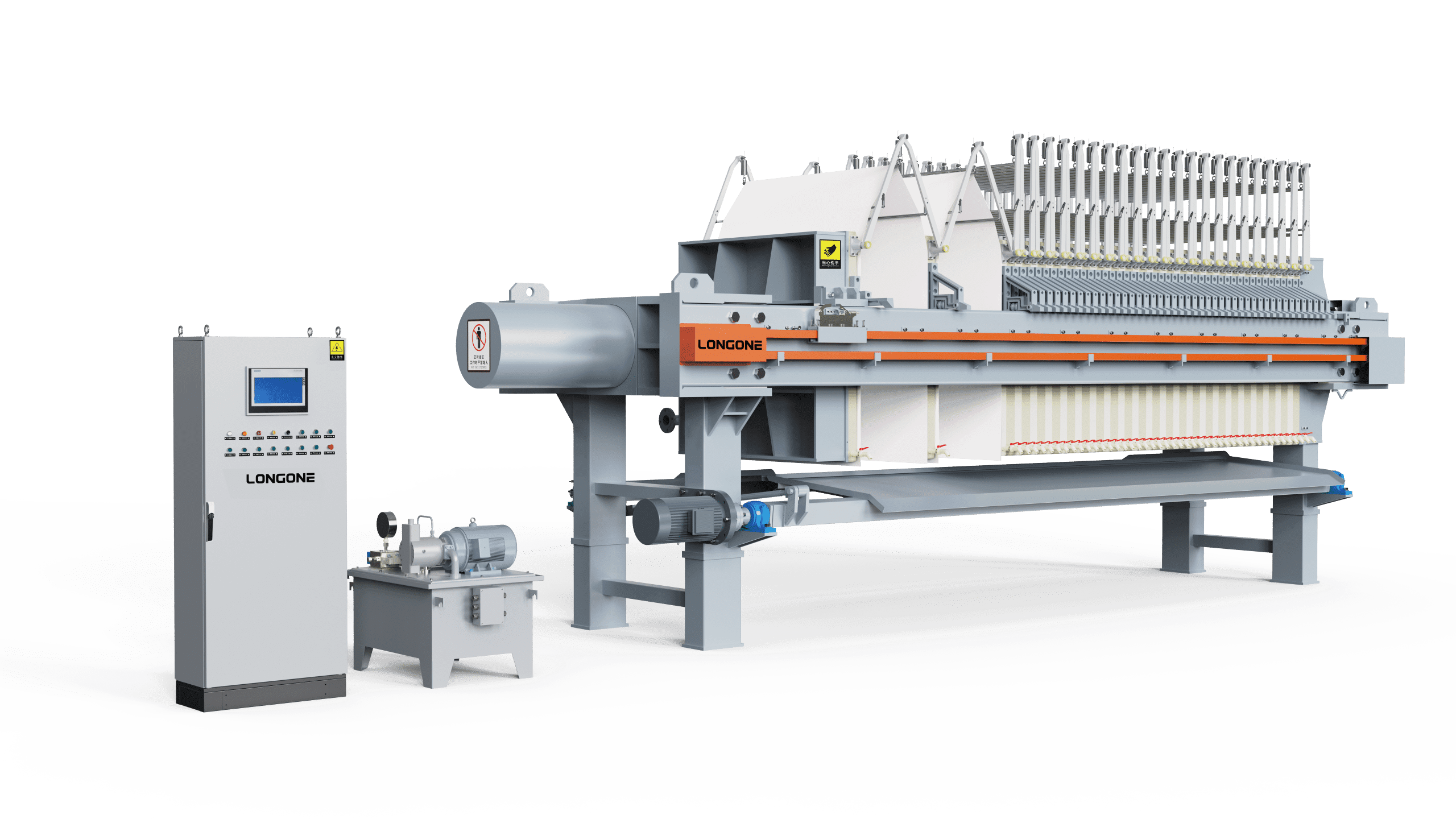
А chamber filter pressusesrecessed filter platesclamped together in a frame to form sealed chambers. Feed slurry enters under pump pressure, solids build as a filter cake inside each chamber, and clarified liquid exits through the filter cloth. The plate design — including chamber depth, feed port location, material, and pressure rating — controls cake thickness, cycle time, and filtration area. Selecting the plate correctly is as important as selecting the machine.
Understanding this plate-press relationship upfront saves significant rework during procurement. The sections below work through each decision layer — from basic operating principles to specifications — so you can evaluate both the machine and its plates as the single system they are.
What Is a Chamber Filter Press and How Does It Work?
Many buyers enter the market knowing they need solid-liquid separation but are uncertain how a chamber filter press differs from other press types, or why the plate is central to every performance figure.
A chamber filter press separates solids from liquid by pumping slurry into sealed chambers formed between recessed filter plates. Pressure builds inside each chamber, forcing liquid through a filter cloth and out of the press while solids accumulate as a filter cake. When chambers are full, the press opens, and the cake discharges by gravity or with mechanical assistance.
The Role of Feed Pump Pressure
The chamber filter press relies entirely on feed pump pressure to drive filtration — typically between 6 and 16 bar in standard industrial configurations. There is no secondary membrane inflation stage. This means the final filter cake moisture depends on how well the slurry dewaters under that pressure alone.
For many applications, this is sufficient. Mineral concentrates, paper pulp sludge, and chemical precipitates all respond well to chamber pressing. Where cake moisture in the range of50–75%is acceptable, a recessed chamber filter press is often the most straightforward and cost-effective choice.
How the Plate Forms the Chamber
Each recessed chamber filter plate has a shallow depression machined or molded into both faces. When two plates are clamped together face-to-face, those depressions form a sealed filtration chamber. The depth of that recess directly sets themaximum cake thickness— a critical variable in cycle time and total solids throughput. I will come back to this when we discuss specifications.
Chamber Filter Press Components: Frame, Plates, Cloth, and Hydraulics
Buyers often receive press quotations that list total filtration area and hydraulic pressure as headline numbers. Those numbers mean nothing without understanding which component generates them.
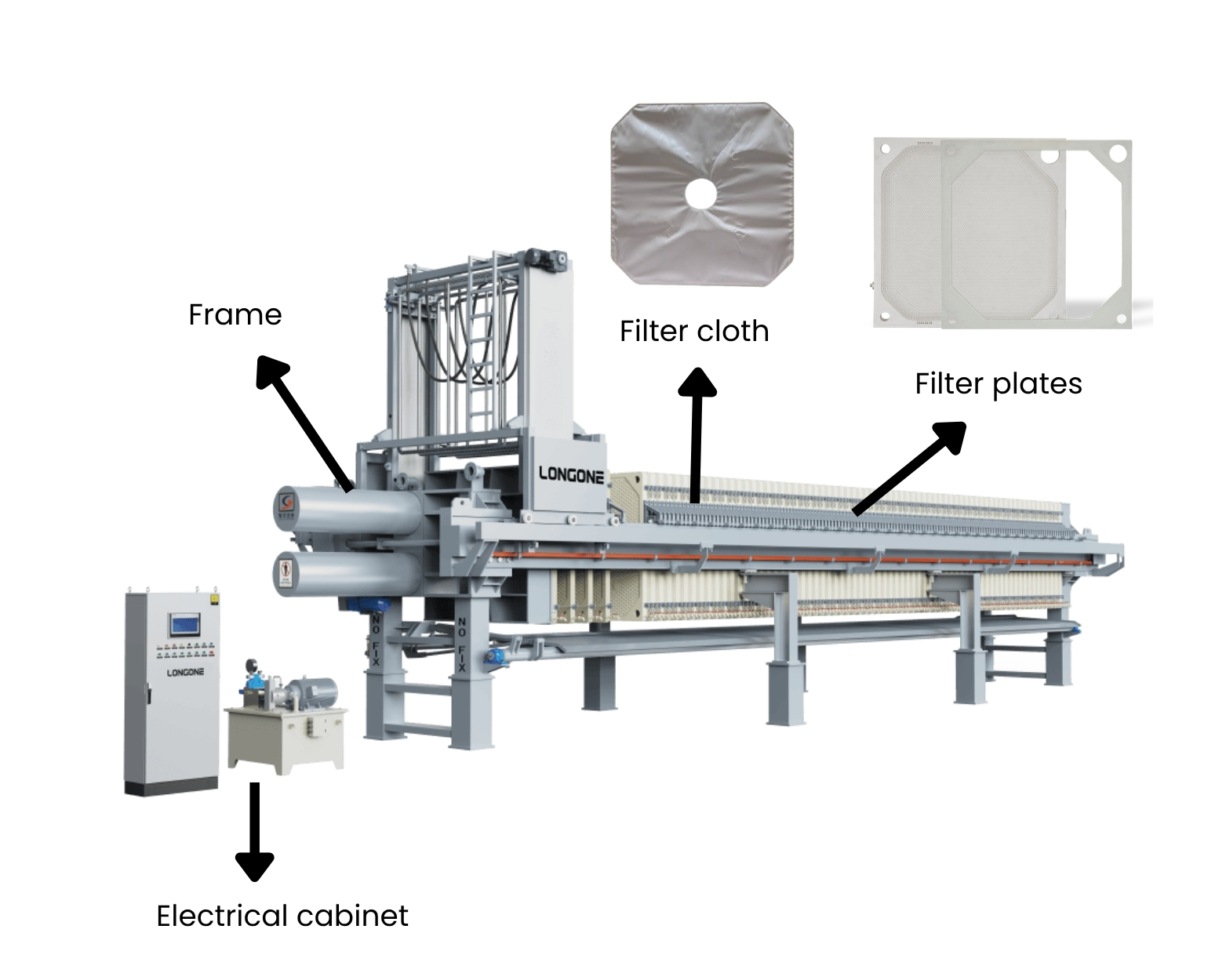
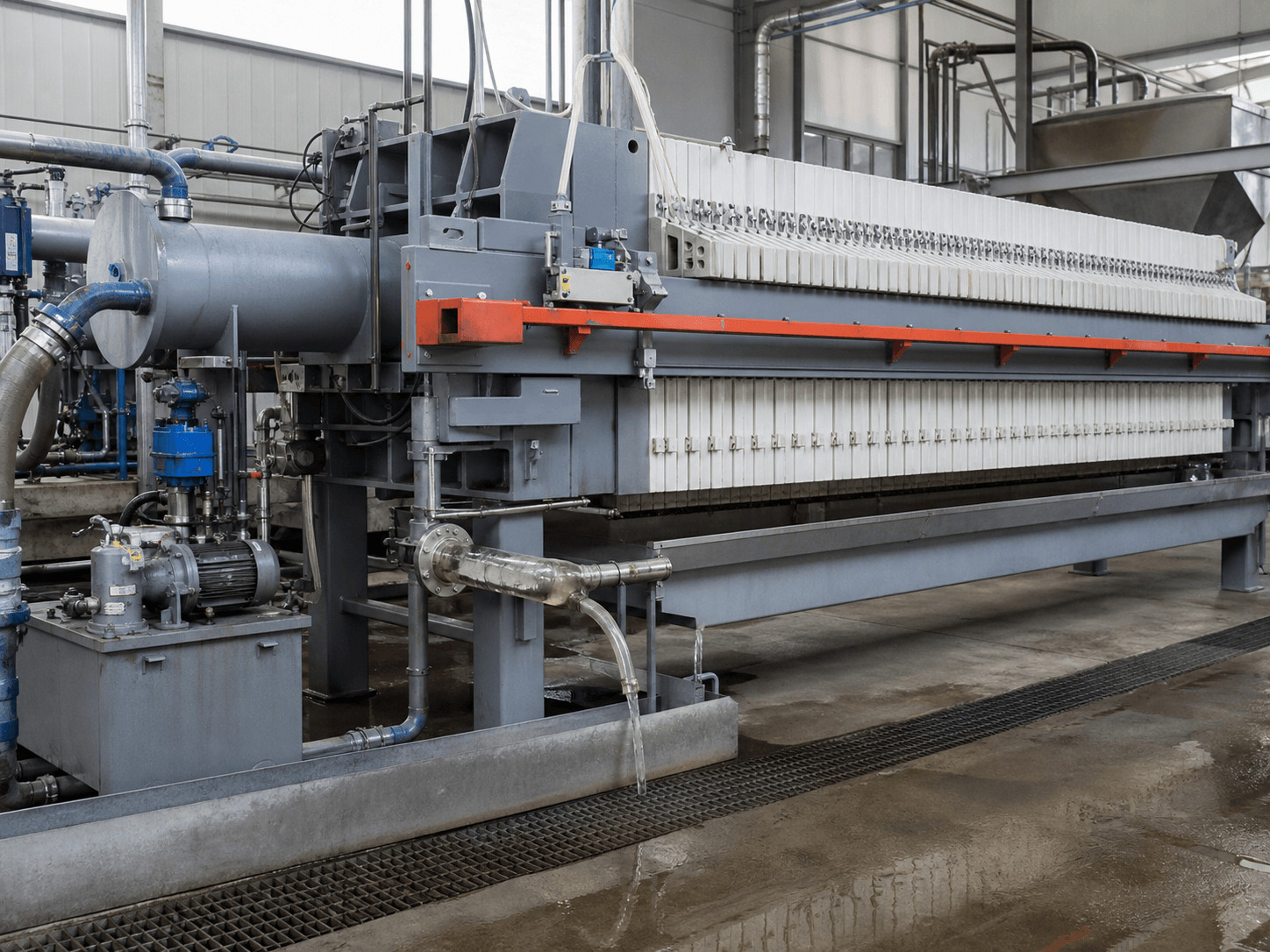
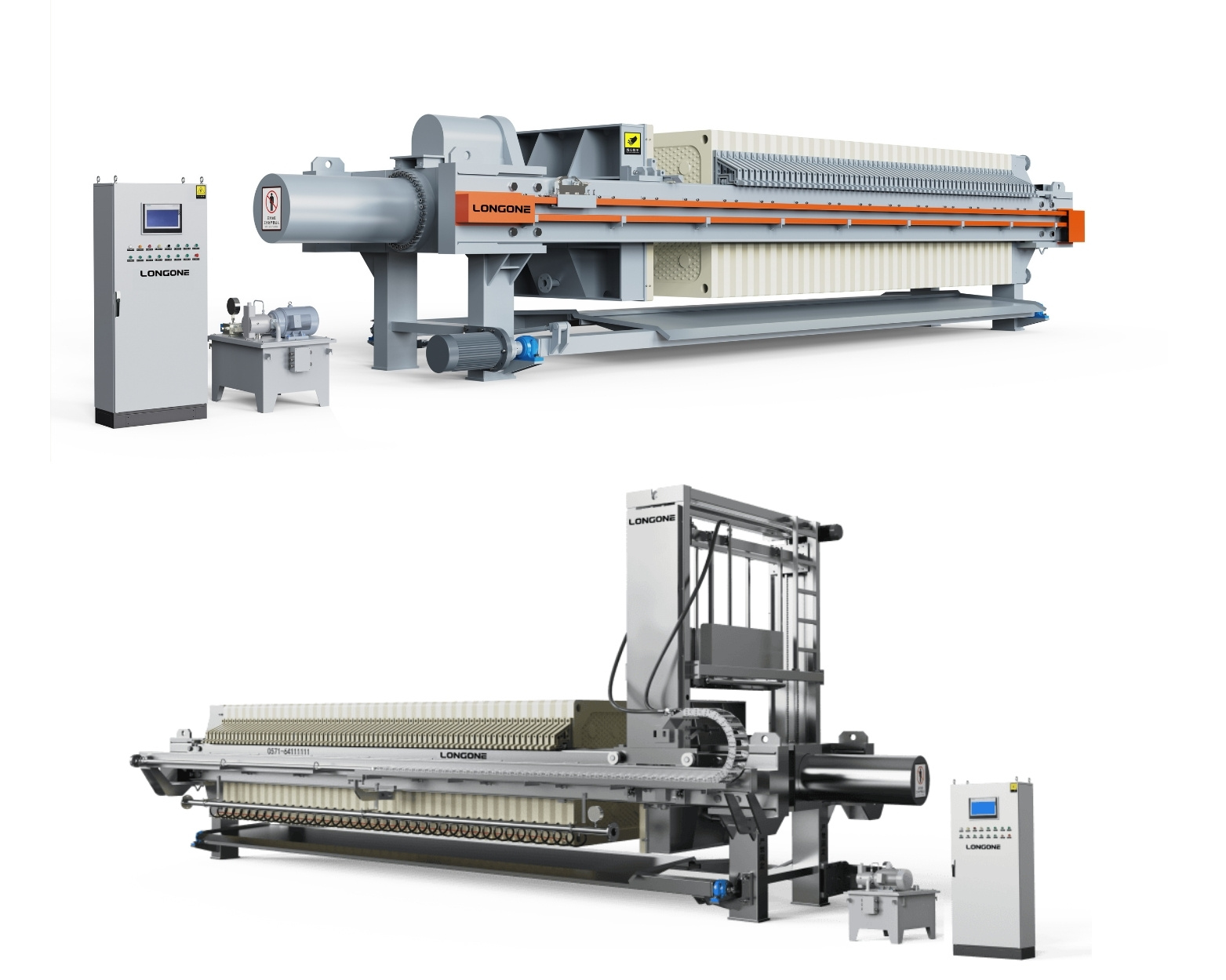
The major components of a chamber filter press are the structural frame, the filter plate stack, the filter cloths, and the hydraulic clamping system. Each component affects performance, but the filter plates and cloths are the wear items that determine ongoing operating cost and filtration quality.
Structural Frame
The frame carries the clamping load generated by the hydraulic cylinder. Frame material is typically carbon steel or stainless steel for corrosive environments. Frame length determines themaximum number of platesyou can install, which sets the upper limit of filtration area without modifying the machine.
Filter Plate Stack
The plate stack is where filtration actually happens. Key plate variables include:
Размер пластины— expressed as the square dimension of the filter face, e.g., 630 × 630 mm or 1500 × 1500 mm
Глубина камеры— typically 25–50 mm, setting cake thickness per cycle
Feed port design— center feed vs. corner feed
Материал пластины— polypropylene, cast iron, or stainless steel
Pressure rating— must match the feed pump specification
Filter Cloths
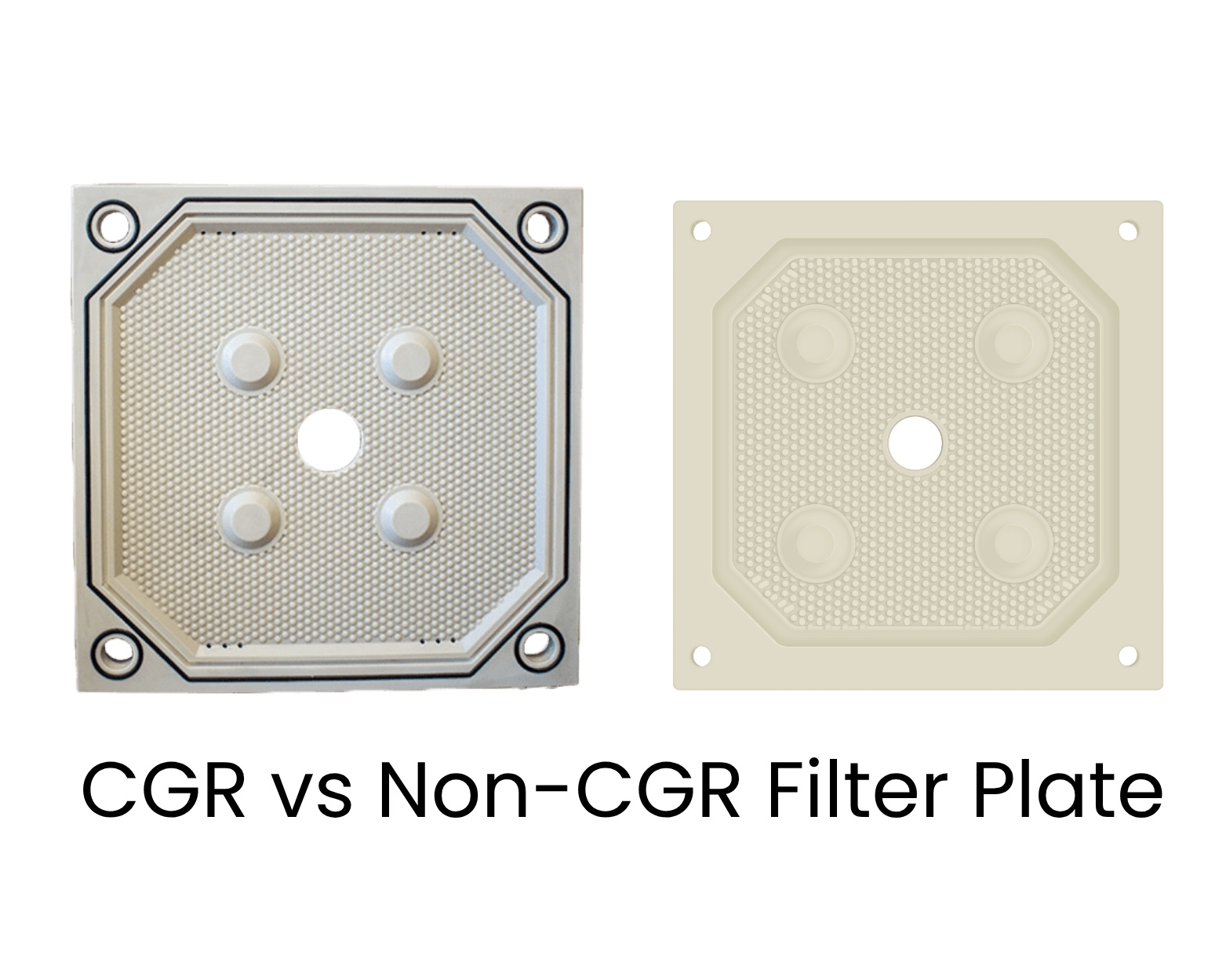
Filter cloths are fitted to each plate face. Cloth selection — fabric weave, fiber type, and pore rating — affects both filtrate clarity and cloth blinding rate. Cloths are consumables. A gasketed plate design helps retain the cloth in position and reduces bypass leakage; a non-gasketed design allows faster cloth replacement during maintenance. Both have legitimate use cases depending on your process.
Hydraulic Clamping System
The hydraulic cylinder closes the plate stack and maintains clamping force throughout the filtration cycle. The clamping force must exceed the total force generated by feed pressure acting across all plate faces. Undersized hydraulics cause leakage at the plate joints, which is a common field problem on presses that have been converted to higher-pressure pumps without reassessing the hydraulic system.
Chamber Filter Plate Design: Center Feed, Gasketed vs. Non-Gasketed, and Materials
The plate is the component buyers most often underspecify. Three design decisions define a chamber filter plate: feed port location, sealing method, and construction material.
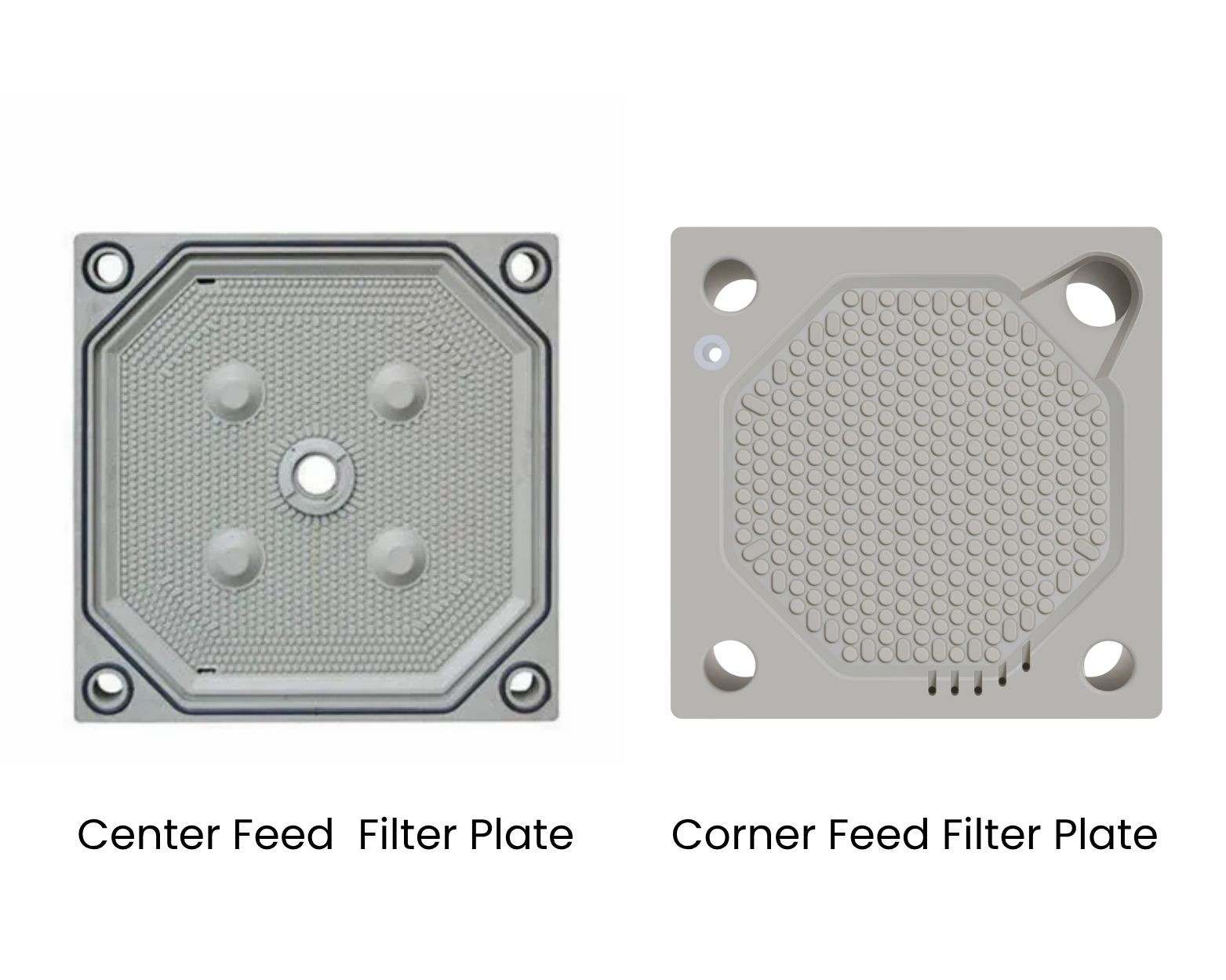
Center feed is the standard configuration because it distributes slurry evenly across every chamber, keeps solids loading balanced, and reduces the risk of uneven cake formation that can crack or deform plates in high-solids service.
Center feed platesdistribute slurry from a central port in the plate face. This produces uniform filling, balanced pressure distribution, and consistent filter cake moisture across the plate stack. It is the preferred design for most industrial applications.
Corner feed platesroute slurry through ports at the plate corners. This can simplify manifold design in certain configurations but tends to produce less uniform chamber filling, particularly in large plates or high-solids slurries.
For high-solids applications — mining concentrates, ceramic slurries, thickened sludge — center feed is the lower-risk choice.
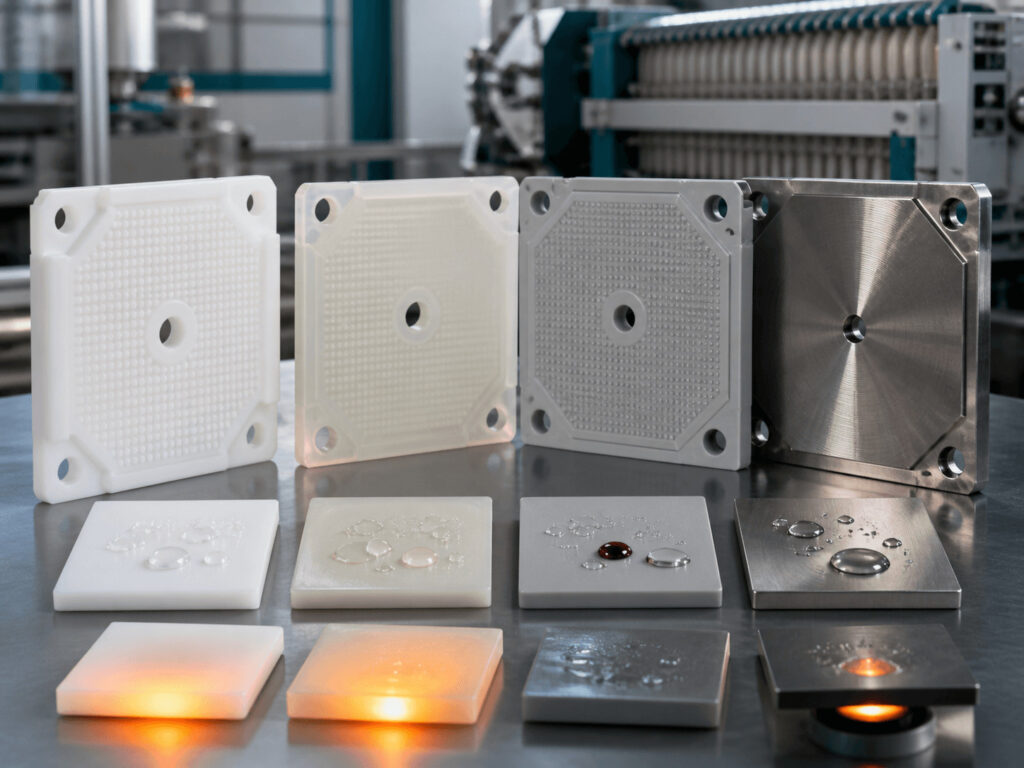
Polypropylene (PP)is the most common material for chamber filter plates in chemical, wastewater, and food processing applications. PP plates resist most acids, alkalis, and organic solvents up to moderate temperatures. They are lightweight, which simplifies plate handling during cloth changes.
Cast ironplates are used where high temperature, high pressure, or abrasion resistance is required — common in mining and mineral processing.
Stainless steelplates suit pharmaceutical and food-grade applications where cleanliness standards are strict.
Plate material also affects the maximum operating pressure and the plate’s rated service life. A polypropylene plate rated to 16 bar is not equivalent to one rated to 10 bar, even if the dimensions are identical. Always request the manufacturer’s pressure rating documentation for the specific plate configuration you are purchasing.
Chamber vs. Membrane Filter Press: How to Choose
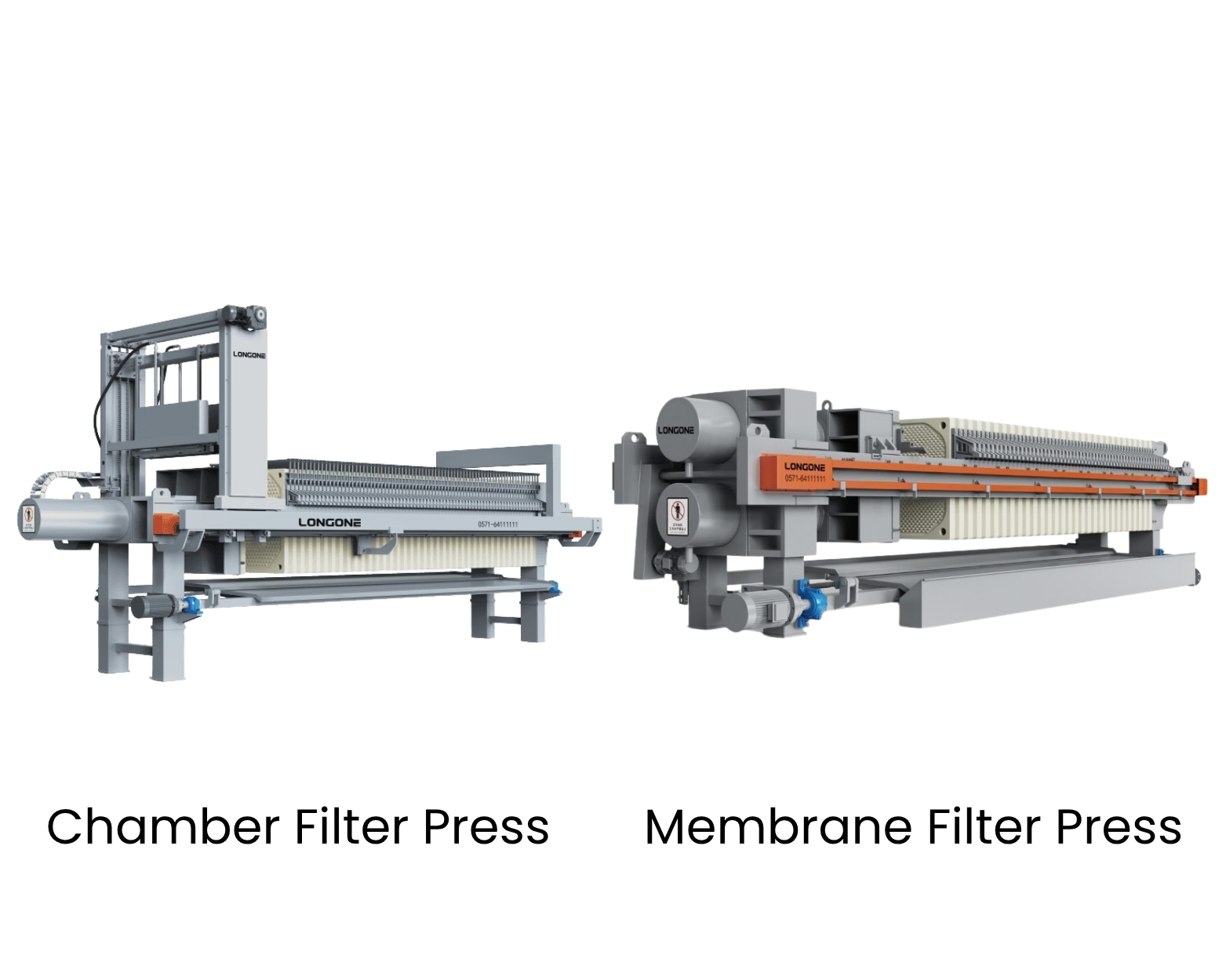
The most frequent decision a process engineer faces is whether a chamber filter press is sufficient or whether a membrane (diaphragm) press is needed. This is a plate-level decision, not a frame-level one.
A chamber filter press forms a fixed cake volume with no secondary compression. A membrane filter press uses the same recessed chamber plate but adds an inflatable membrane that squeezes the cake after filling, reducing final cake moisture.
Criterion
Камерный фильтр-пресс
Мембранный фильтр-пресс
Cake moisture (typical range)
50–75%
30–50%
Cycle time
Shorter
Longer (membrane inflation adds time)
Capital cost
Lower
Higher
Operating complexity
Lower
Higher (membrane inflation system)
Cake washing capability
Limited
Better — membrane re-compression after wash
Best for
Free-filtering slurries, less moisture-critical
Difficult slurries, drier cake required
Plate wear
Lower
Higher (membrane fatigue over cycles)
The practical rule:define your target filter cake moisture first. If your downstream process — landfill disposal, drying, transport — requires moisture below 45–50%, a chamber press alone will often not reach that target without very long cycle times. In that case, a membrane press is the correct tool. If 55–70% moisture is acceptable and your slurry dewaters readily, the recessed chamber filter press is simpler, cheaper to operate, and easier to maintain.
Chamber Filter Press Applications and Sizing Considerations
Chamber filter presses handle a wide range of industrial slurries. The common thread is that the slurry has compressible solids that form a cohesive cake rather than a gelatinous or highly compressible material that blinds cloth quickly.
Типичные области применения включают в себя:
Mining and mineral processing— concentrate dewatering, tailings treatment
Chemical manufacturing— pigment recovery, salt separation, catalyst filtration
Очистка сточных вод— municipal sludge dewatering, industrial effluent treatment
Food and beverage— starch processing, wine and juice clarification
Pharmaceutical manufacturing— API recovery and mother liquor filtration
Sizing a Chamber Filter Press
Sizing involves three variables that interact:plate size, number of chambers, and cake thickness. Total filtration area equals the number of chambers multiplied by twice the plate face area (both faces of each chamber contribute). Capacity in kilograms of dry solids per cycle equals filtration area multiplied by cake thickness multiplied by the bulk density of the wet cake.
Key sizing inputs:
Slurry feed rate(m³/hour)
Solids content of the feed(% by weight or volume)
Target cycle time(including fill, press, open, discharge, and cloth wash)
Acceptable filter cake moisture
Feed pump pressure available
I recommend running a pilot test or bench-scale leaf filter test before finalizing plate size and chamber count. Published sizing formulas give a starting point; actual slurry compressibility and cloth blinding behavior determine the real cycle time.、
Specifications should be read as a package. No single number — not pressure, not filtration area, not plate size — tells you whether a press suits your application. The table below presents typical industry ranges as a reference framework, not as guaranteed performance data for any specific product.
Спецификация
Typical Industry Range
Размер пластины
320 × 320 mm to 2000 × 2000 mm
Number of chambers
5 to 200+
Filtration area (per press)
0.16 m² to 1,600 m²
Chamber depth (cake thickness per side)
12–32 mm (25–50 mm total cake)
Filtration pressure
6–16 bar (standard); up to 25 bar (high-pressure designs)
Материал пластины
Polypropylene, cast iron, stainless steel
Filter cloth material
PP, polyester, nylon, PTFE-coated
Typical filter cake moisture
50–75% (slurry-dependent)
Important:Published pressure figures vary significantly across suppliers and plate configurations. A plate rated to 16 bar by one manufacturer may have a different safety factor, wall thickness, or test protocol than another. Always request the technical datasheet for the specific plate you are sourcing and confirm that the rated pressure matches your feed pump specification.
Frequently Asked Questions
What is the difference between a chamber filter press and a recessed filter press?
They are the same equipment. “Recessed chamber filter press” refers to the recessed cavity in each filter plate that forms the filtration chamber. “Chamber filter press” is the common short form. Both terms describe a press that uses recessed plates to create fixed-volume chambers where the filter cake builds under pump pressure.
How does plate size affect chamber filter press performance?
Larger plates increase the filtration area per chamber, reducing the total number of plates needed for a given capacity. However, larger plates are heavier, require stronger frames, and put higher bending stress on the plate material. Plate size must be matched to available floor space, feed pump pressure, and the structural capacity of the press frame.
What causes high filter cake moisture in a chamber filter press?
High filter cake moisture is usually caused by insufficient feed pressure, excessive cake thickness relative to the slurry’s dewatering rate, cloth blinding from fine particles, or a slurry that is inherently compressible and resists filtration. Addressing cake moisture requires diagnosing which factor dominates — a pilot test helps isolate the root cause before committing to equipment changes.
When should I choose a gasketed chamber filter plate?
Choose gasketed plates when your slurry is corrosive, hazardous, or operated above 10 bar, where leakage at the plate joint is a safety or environmental concern. Gasketed plates also suit processes where filtrate contamination from bypass flow is unacceptable, such as pharmaceutical or food-grade applications.
What is center feed and why does it matter?
Center feed means the slurry enters each filtration chamber through a port in the center of the plate face rather than through corner ports. Center feed produces more uniform slurry distribution across the chamber, which results in even cake formation, balanced plate loading, and more consistent filter cake moisture. It is the standard design for high-solids and high-pressure applications.
How do I match feed pump pressure to the filter plate pressure rating?
The rated pressure of the filter plate must equal or exceed the maximum pressure your feed pump can deliver. Do not rely on nominal press specifications — request the plate manufacturer’s technical datasheet and confirm the pressure rating applies to your specific plate size and material. Operating above the plate’s rated pressure risks plate deflection, cracking, and seal failure.
Заключение
A chamber filter press and its filter plates function as one system, and the plate is where performance limits are set. Plate size, chamber depth, center feed design, sealing method, material, and pressure rating collectively determine filtration area, cake moisture, cycle time, and service life. Comparing presses by frame size or hydraulic power alone is an incomplete evaluation.
The most productive procurement approach is to define your slurry properties and target filter cake moisture first, then select the correct chamber filter plate design, and finally size the press frame around that plate stack. If your application requires cake moisture below 45–50%, evaluate membrane press configurations before specifying a chamber-only design.
At LONGONE, we manufacture both filter presses and filter plates and are accustomed to working through this evaluation with engineering and procurement teams. If you have slurry data, throughput targets, or existing press specifications you would like to review, contact our engineering team for a technical discussion.