
A plant orders replacement plates for its filter press, and the new set leaks at the first cycle. Or a buyer specifies “plate and frame” because a supplier used the term, then finds the cake far wetter than expected. Both problems usually trace back to one issue: plate and frame filter plates are a distinct design with a specific job, and they are often confused with recessed chamber plates.
This guide explains how plate and frame filter plates work, where they perform well, where they do not, and what to check before you buy or replace them.
What Are Plate and Frame Filter Plates and How Do They Work?
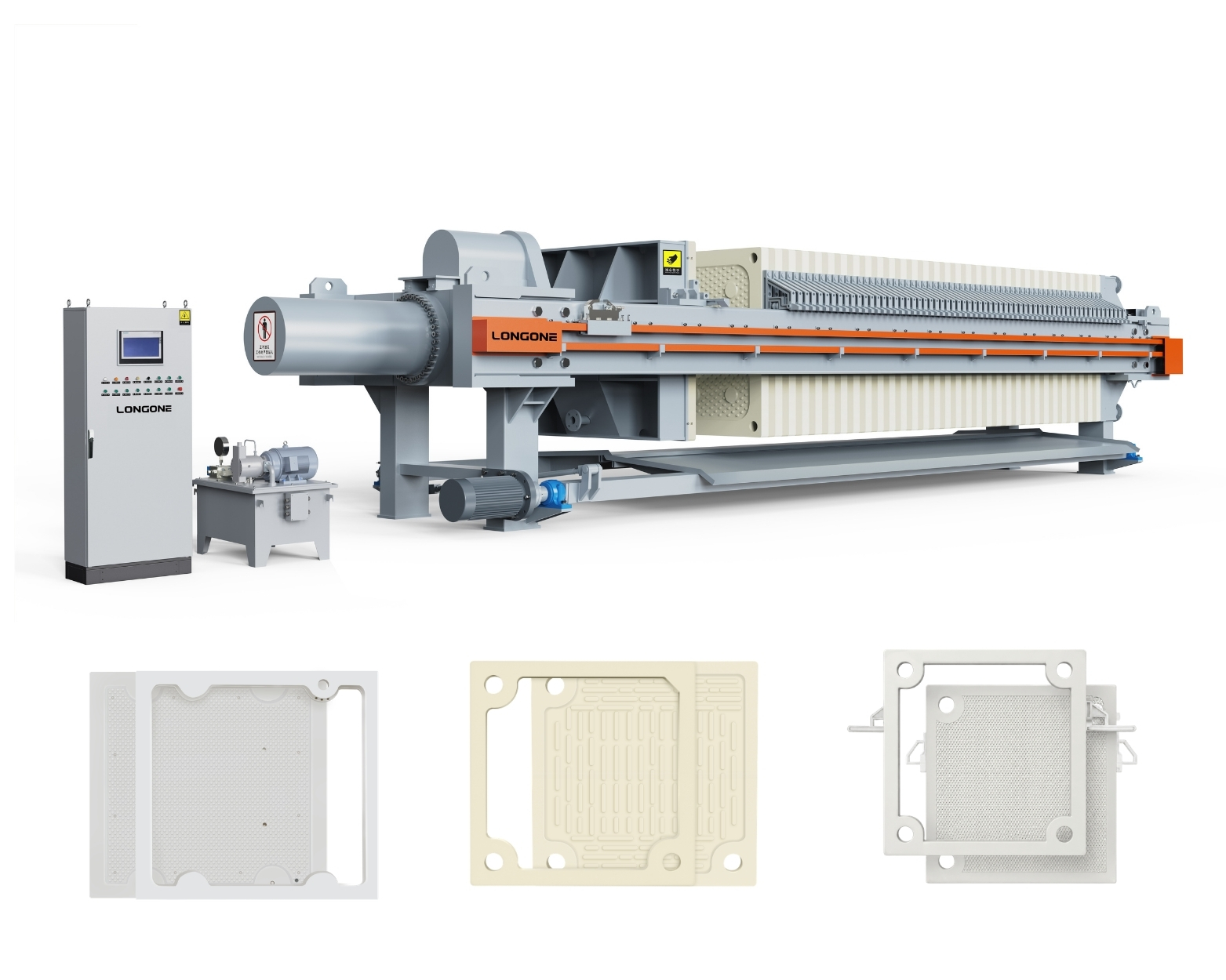
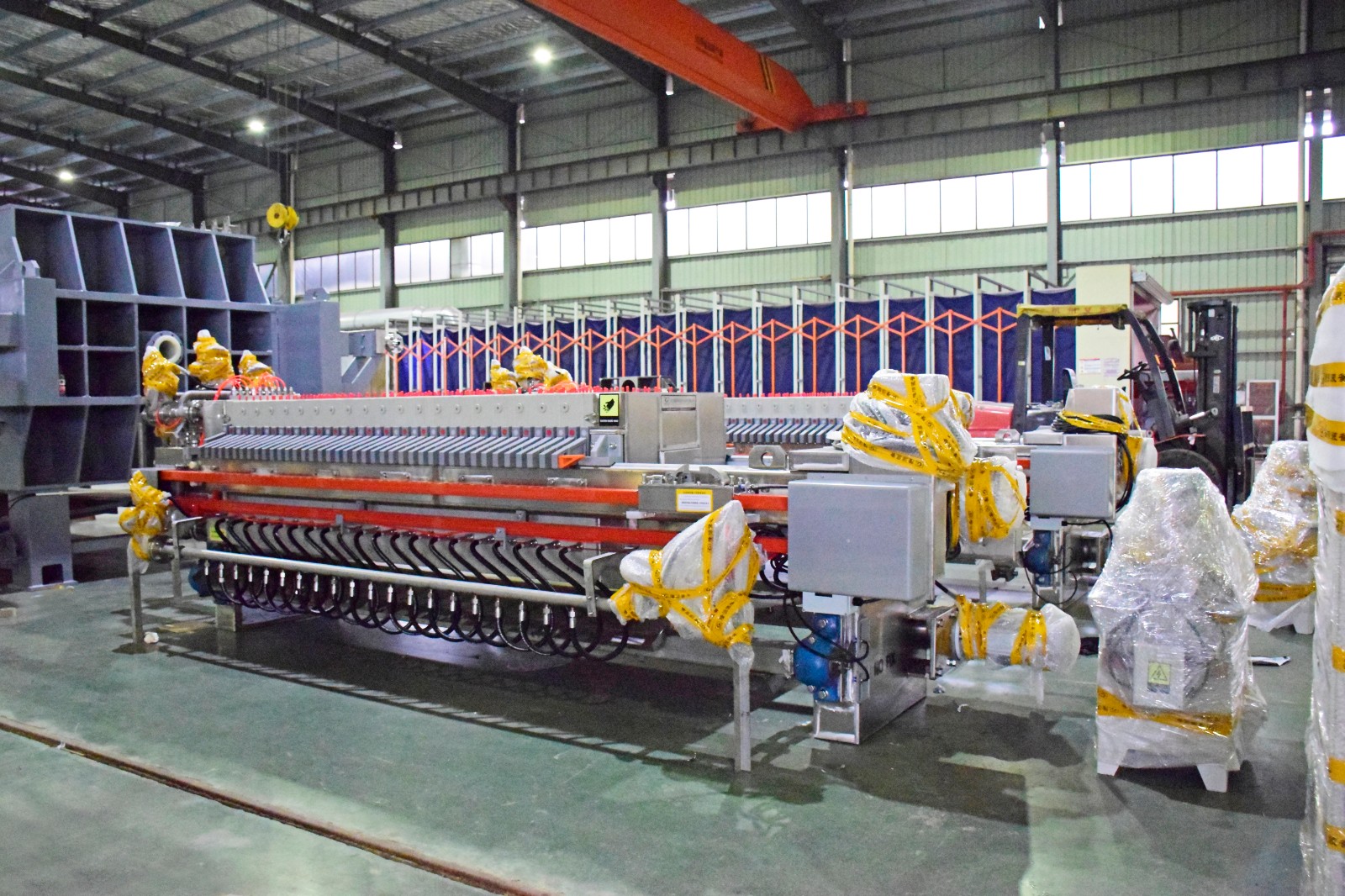
А plate and frame filter press is built from two alternating components: flat filter plates and hollow frames. The plates carry the drainage surface and the filtrate outlets. The frames are open rectangles placed between the plates. When the stack is clamped together, each frame forms the chamber where solids collect.
That is the defining feature of the design. In a plate and frame system, the cake space comes from the frame, not from a recess molded into the plate. The frame’s thickness sets the maximum thickness of the cake.
Basic structure: flat plates, frames and filter media
Each plate is covered on both faces with filter media, typically filter cloth or, in some applications, filter paper. The plate surface is usually grooved, ribbed or studded so filtrate can flow behind the media and out through the discharge channels. The frame sits between two plates and is sealed against them when the press is closed.
A complete plate and frame filter press therefore includes plates, frames, filter media, a feed channel, filtrate outlets, and a clamping system that holds the stack closed under pressure.
The filtration cycle from feed to cake discharge
The cycle follows a simple sequence:
- Closing: The plates and frames are pressed together to form sealed chambers.
- Feeding: Slurry is pumped into the frames through the feed channel.
- Filtration: Liquid passes through the filter media and drains behind the plate surface, while solids build up as a cake inside the frame.
- Completion: Filtration continues until the frame is full or flow drops to a set level.
- Discharge: The press is opened, the frames are separated from the plates, and the cake is removed.
Because the frame is a separate part, opening the press for cleaning or cloth changes is straightforward, and the frame thickness can be changed to suit the duty.
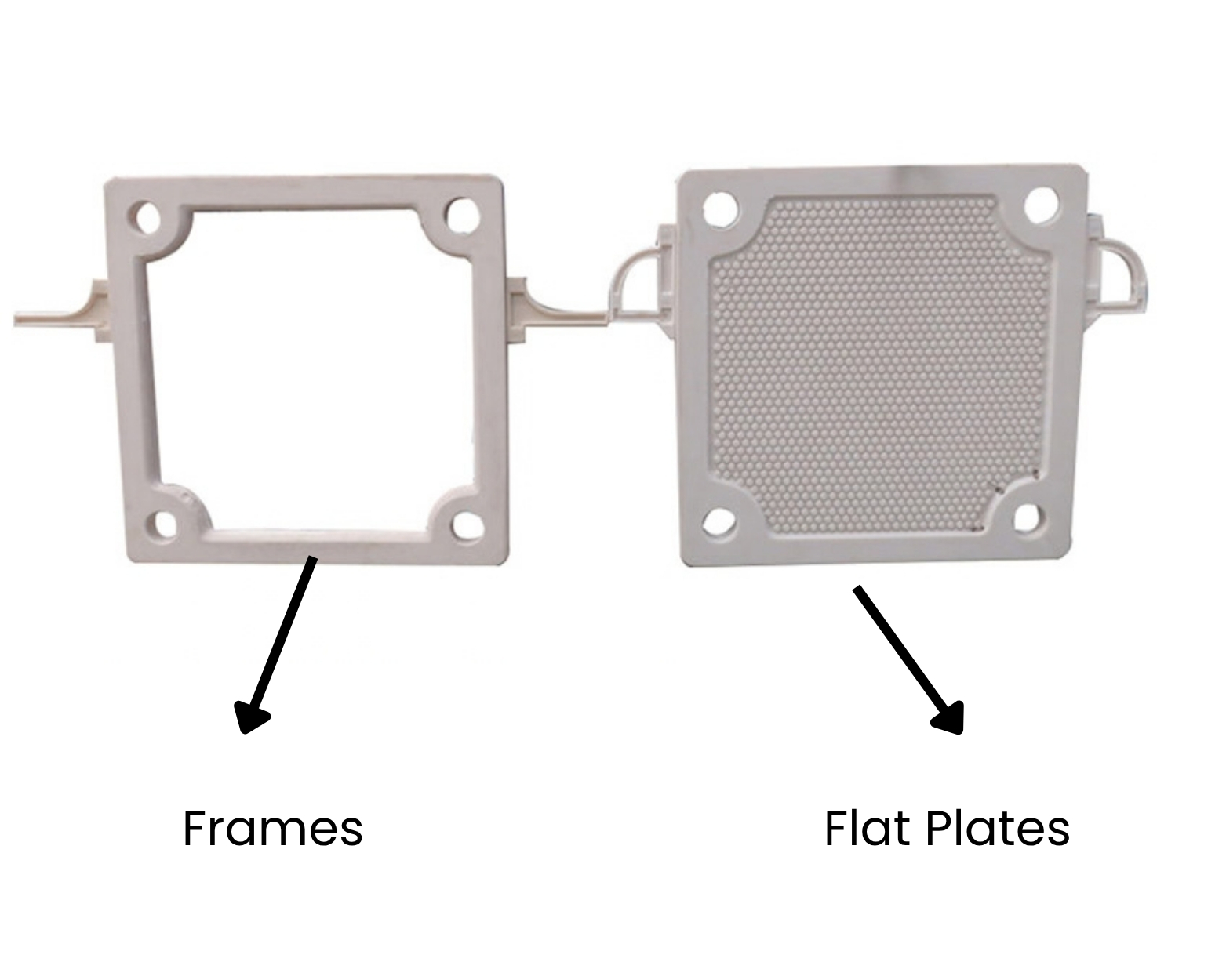
Plate and Frame vs. Recessed Chamber Filter Plates: Key Differences
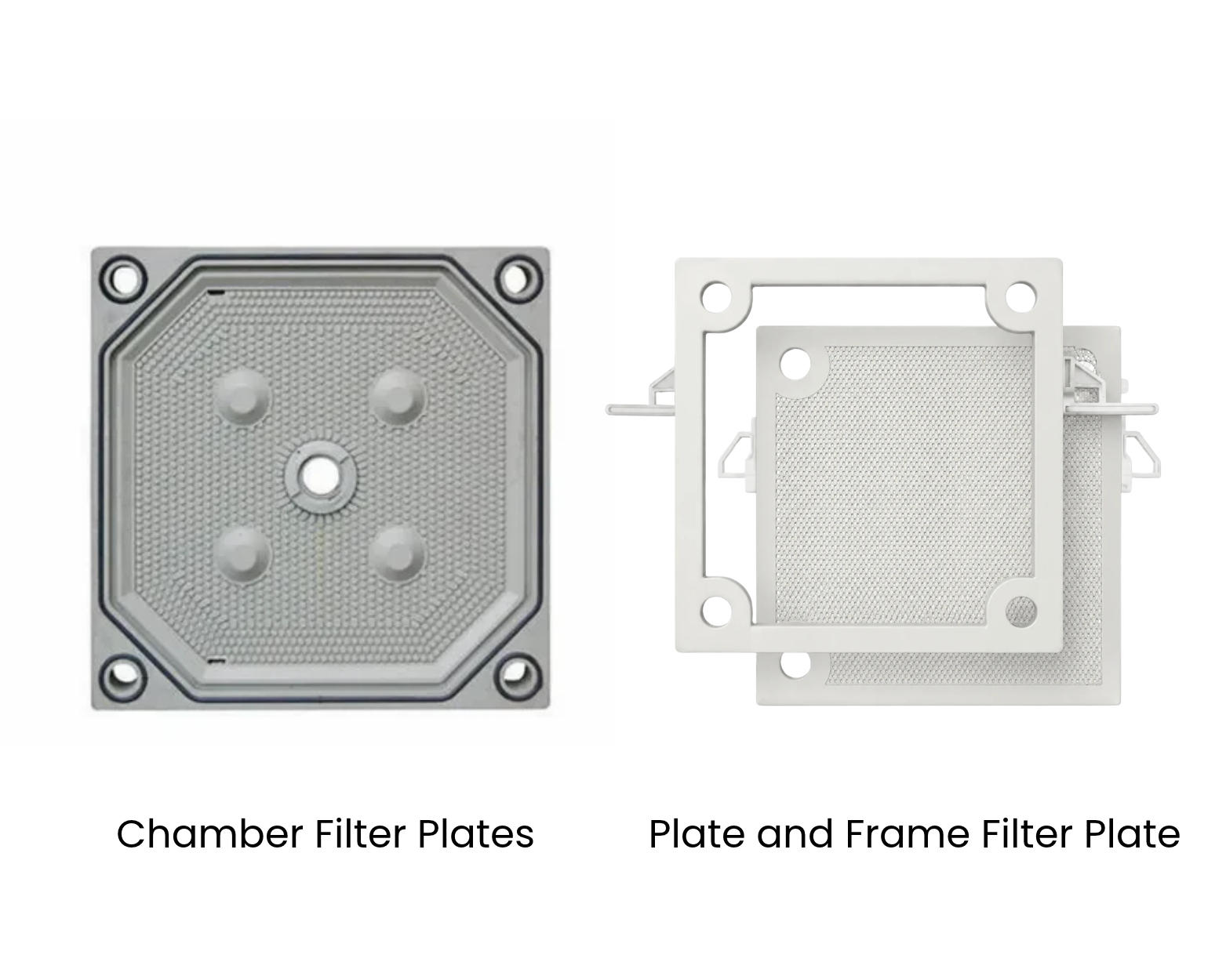
Recessed chamber plates form the cake space inside the plates themselves. Each plate has a molded recess, and when two plates are pressed together the recesses create the chamber. No separate frame is needed. Plate and frame designs achieve the same result with more parts and a different balance of strengths.
| Feature | Плита и рама | Recessed Chamber |
|---|---|---|
| Cake space formed by | Separate frame between flat plates | Recess molded into each plate |
| Толщина торта | Adjustable by changing frame thickness | Fixed by plate design |
| Typical strength | Clarification, polishing, low-solids duties | Dewatering and higher-solids slurries |
| Number of parts | More (plates, frames, media) | Fewer (plates and media) |
| Sealing points | More joints to keep sealed | Fewer joints |
| Cake handling | Flexible, suits thin or thick cake | Well suited to dense, dryer cake |
Neither design is universally better. The right choice depends on what you are trying to achieve.
When plate and frame is not the right choice
If your main goal is a drier cake from a high-solids slurry, recessed chamber plates, or membrane plates that squeeze the cake after filtration, are usually the more efficient option. Plate and frame presses have more sealing joints, and every joint is a potential leak point. If dewatering performance and cycle simplicity matter most, it is worth comparing recessed chamber and membrane options before committing to a plate and frame design.
Where Plate and Frame Filter Plates Perform Best
The design earns its place in applications where the priority is filtrate quality and flexibility rather than maximum cake dryness.
Low-solids, clarification and polishing duties
When the slurry carries a small proportion of solids and the aim is a clear filtrate, a plate and frame press is a natural fit. Typical duties include clarifying liquids, removing fine impurities, and polishing product streams before a later process step. In these cases the cake is thin and the value lies in the liquid that passes through.
Industries that commonly use this type of filtration include chemical processing, food and beverage, pharmaceutical intermediates, and general industrial liquid treatment. The exact suitability always depends on the slurry, so it should be confirmed against your own process data.
Duties that need adjustable cake thickness
Because the frame sets the cake space, changing the frame thickness changes the capacity of each chamber without replacing the plates. That helps when a plant handles different feed materials or varying solids loads across batches. It also allows a single press to be adjusted as process conditions change, rather than requiring a completely different plate set.
Materials and Design Options: Polypropylene, Cast Iron and Stainless Steel
Plate material is one of the biggest factors in service life. A well-designed plate in the wrong material will still fail early.
Polypropylene (PP) is widely used because it offers good chemical resistance, relatively low weight, and dependable performance across many general filtration duties. It suits many acidic and alkaline slurries, though its temperature limits mean it is not a fit for every hot process.
Cast iron is chosen where higher strength or higher operating temperatures are required. It is heavy and needs attention to corrosion in aggressive media, so the chemistry of the slurry must be checked.
Stainless steel suits duties that demand hygiene, corrosion resistance or cleanability, such as some food, beverage and pharmaceutical applications. It generally costs more, but can offer long service life where the process justifies it.
Other engineered plastics and specialty materials are available for unusual chemical or temperature conditions. If your process falls outside common ranges, discuss it with the plate manufacturer rather than assuming a standard material will cope.
Sealing surfaces and feed port design
Two design details deserve attention. First, the sealing surface on plates and frames must be flat and undamaged, because uneven or worn faces are a leading cause of leakage. Second, the feed port position and size must match your press and slurry. Plate and frame stacks depend on channels lining up correctly, so small dimensional differences can create leakage or uneven filling.
How to Choose the Right Plate and Frame Filter Plates
A reliable selection starts with process information, not with catalog dimensions. Before requesting a quote, gather the following.
A selection checklist
- Slurry characteristics: solids content, particle size range, viscosity, and whether the material is abrasive.
- Filtrate goal: is clarity the priority, or is a drier cake also required?
- Temperature and chemistry: operating temperature and the pH or chemical composition of the slurry, which decide plate material.
- Рабочее давление: the pressure the press will run at, so the plate rating is appropriate.
- Plate size and frame thickness: the plate dimensions and the frame thickness that gives the cake capacity you need.
- Feed port position and channel layout: these must match your existing press if you are replacing plates.
- Filter media: the cloth or paper type suited to your particle size and filtration target.
What to confirm before ordering replacements
If you are replacing plates on an existing press, do not rely on the model name alone. Measure the plate size and thickness, note the port positions and diameters, and record the frame thickness. Send drawings or photographs of a worn plate if you have them. A few millimeters of difference can be enough to cause leakage or misalignment, and it is far cheaper to confirm dimensions before production than after delivery.
The most useful question is not “which type is better,” but “what does my slurry and my filtrate quality target require?” Once you can answer that, the choice between plate and frame and other plate types usually becomes clear.
Maintenance, Common Problems and Replacement Tips
Plate and frame presses are dependable when they are maintained, and most problems can be traced to a small number of causes.
Common problems and their usual causes
- Leakage between plates and frames: often caused by damaged or dirty sealing surfaces, uneven clamping, or incorrect dimensions.
- Plate cracking or deformation: commonly linked to operating above the plate’s pressure or temperature rating, or to a material that does not suit the process.
- Blocked drainage surfaces: fine particles or hardened residue can restrict filtrate flow, reducing throughput.
- Uneven cake or poor filling: may indicate worn or misaligned feed ports, damaged cloth, or inconsistent feed.
Extending plate life
Regular habits make a measurable difference. Inspect sealing surfaces at every cloth change and clean them thoroughly. Keep drainage grooves clear. Use filter media in good condition and fitted correctly. Keep operating pressure and temperature within the plate’s rated limits, and store spare plates flat and supported so they do not warp.
Replace plates when sealing surfaces are damaged beyond cleaning, when cracks appear, or when repeated leakage cannot be fixed by adjusting clamping. Continuing to run damaged plates often costs more in lost product and downtime than the plates themselves.
Choosing With Confidence
Plate and frame filter plates are a practical, flexible solution when the goal is a clear filtrate and adjustable cake capacity, and a poor fit when the goal is maximum cake dryness from a dense slurry. Matching the design, material and dimensions to your actual process is what keeps a press running reliably.
If you are comparing filter plate types or preparing to replace plates, our engineering team is glad to review your slurry data and press details and help confirm a suitable configuration. You are welcome to get in touch with your operating conditions and any plate drawings you have.