
A filter press can have well-built plates, a strong feed pump and a carefully tuned cycle, and still deliver wet cake, cloudy filtrate or constant leaks at the plate edges. In many plants, the cause is the part that costs the least: the filter cloth.
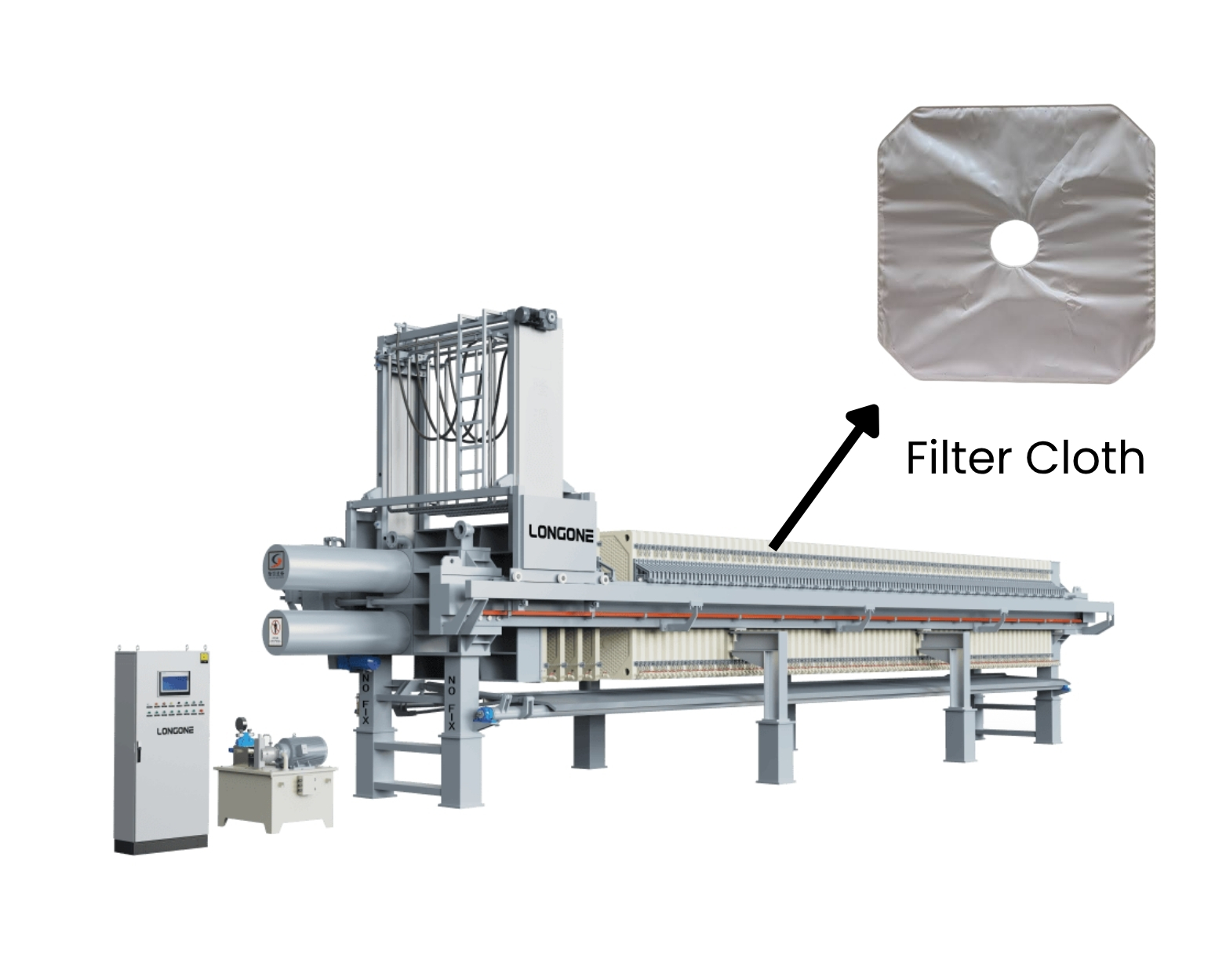
Filter press cloths are the actual filtering medium. The plates only hold them in place and give the filtrate somewhere to go. If the cloth is wrong for the slurry, every other part of the system has to work harder to make up for it. Cycle times stretch, cleaning becomes frequent, and cloths wear out long before the plates do.
This guide explains how filter press cloths work, how to compare filter cloth materials and weaves, which specifications matter, and how to install and maintain cloths so they last. It is written from the viewpoint of a manufacturer that builds filter plates and filter presses, so it also covers how cloth and plate need to work together.
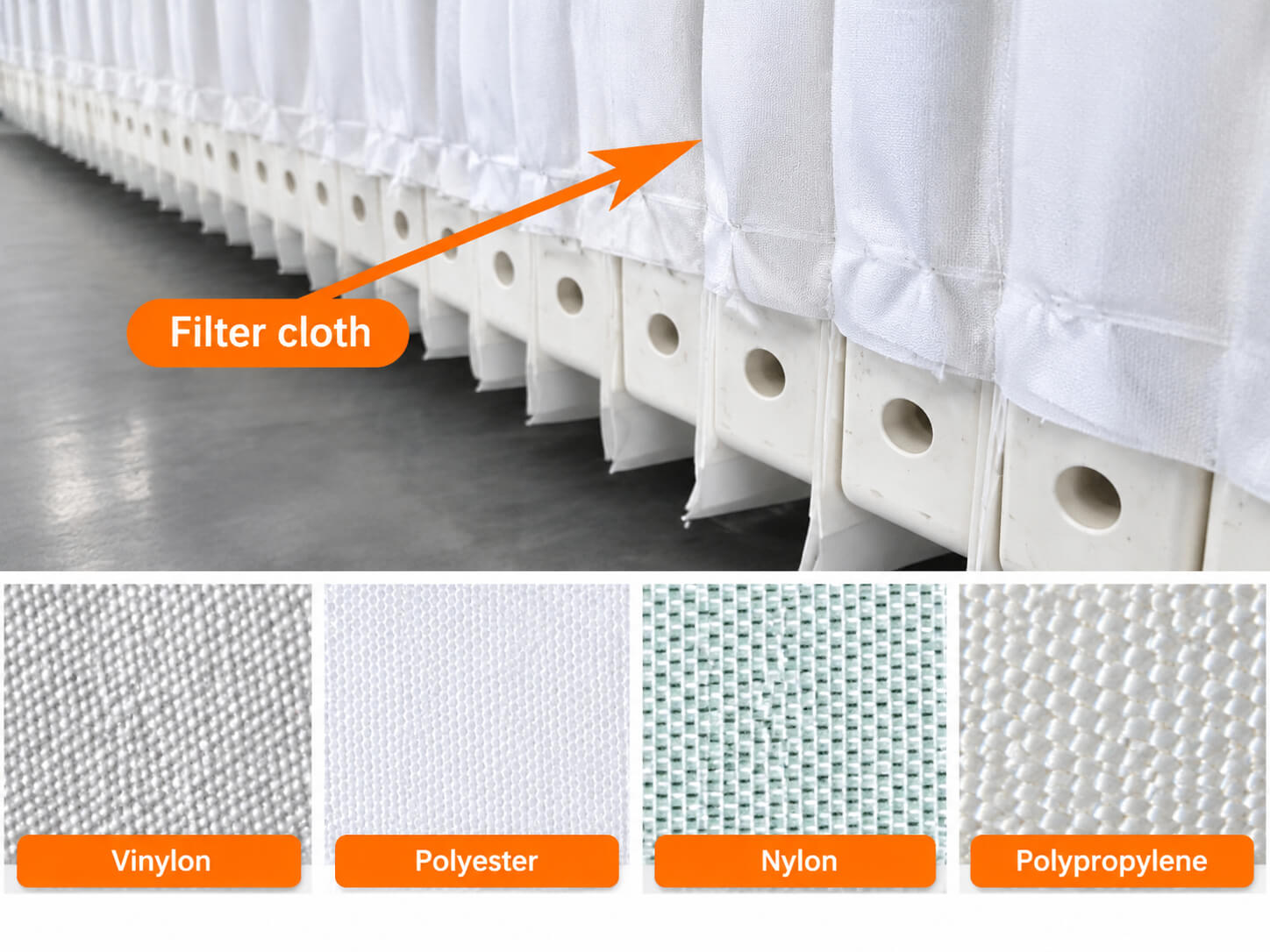
Filter Press Cloth Materials: Polypropylene vs Polyester vs Nylon
Most filter press cloths are woven from one of three synthetic fibers. Each has a different profile of chemical resistance, temperature tolerance and wear behavior.
Polypropylene (PP) is the most common choice. It resists a wide range of acids and alkalis, absorbs very little moisture, and releases cake well. Its main limit is temperature: it softens at higher process temperatures, so it is not suited to hot slurries.
Polyester (PET) handles higher temperatures than polypropylene and has good strength and dimensional stability. It performs well in many acidic applications, but it degrades in strong alkaline conditions.
Nylon (polyamide) is valued for abrasion resistance and mechanical strength. It suits abrasive slurries such as some mineral and sand-bearing applications, but it is vulnerable to strong acids and absorbs more moisture than the other two.
| Property | Polypropylene (PP) | Polyester (PET) | Nylon (PA) |
|---|---|---|---|
| Acid resistance | Very good | Good | Poor to fair |
| Alkali resistance | Very good | Poor to fair | Good |
| Typical temperature range | Moderate (up to roughly 90 °C) | Higher (up to roughly 130 °C) | Moderate to high (up to roughly 100–120 °C) |
| Abrasion resistance | Good | Good | Very good |
| Moisture absorption | Very low | Low | Higher |
| Typical applications | Chemical processing, wastewater, general mineral slurries | Acidic or warmer process streams, some chemical and metallurgical uses | Abrasive slurries, mineral processing, some mining applications |
The ranges above are typical values for standard industrial fabrics. Exact limits depend on fiber grade, fabric construction and exposure time, so confirm them with your supplier for your process.
A practical rule: start with polypropylene unless the temperature, pH or abrasion level of your slurry points elsewhere. Then check the weave, because material alone does not decide performance.
Weave Patterns Explained: Monofilament, Multifilament and Spun Yarn
Two cloths made of the same polypropylene can behave very differently depending on the yarn and weave. This is the most commonly overlooked part of cloth selection.
Yarn types
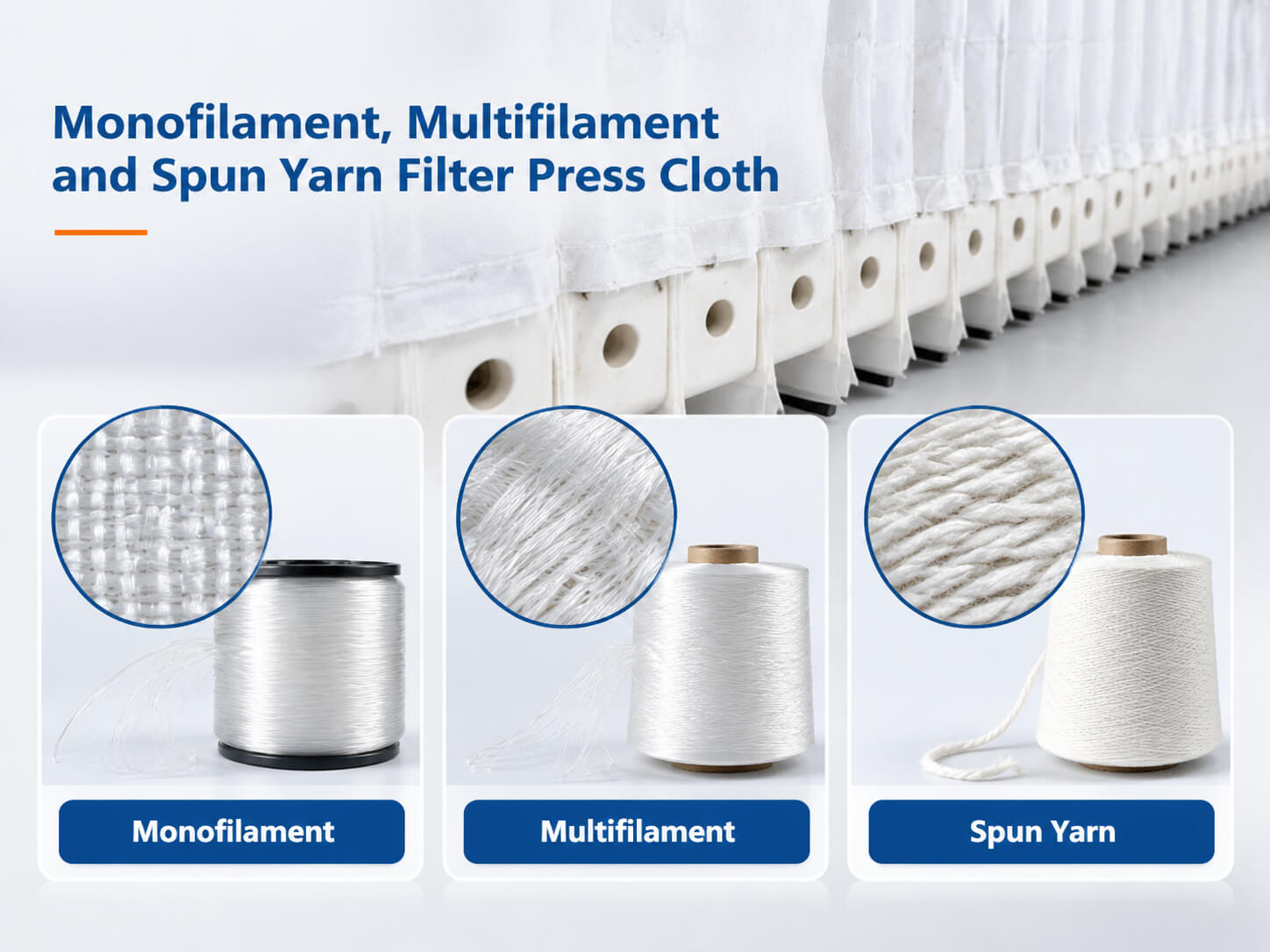
Monofilament yarn is a single smooth strand. Cloths made from it have a smooth surface, so the cake releases easily and the cloth resists blinding. The trade-off is lower retention of very fine particles.
Multifilament yarn is made of many fine strands twisted together. It captures finer solids and gives better sealing and strength, but fine particles can lodge between the strands, so blinding is more likely and cleaning is needed more often.
Spun (staple fiber) yarn has a fuzzy surface and the highest retention of fine particles. It is useful when filtrate clarity is the top priority, but cake release is poorer and the cloth clogs faster.
Many industrial cloths combine yarn types, for example monofilament in one direction and multifilament in the other, to balance retention and release.
Weave patterns
The weave pattern changes strength, permeability and surface texture.
- Plain weave is the simplest and most stable. It gives good strength and lower permeability, and is suitable when fine particle retention matters.
- Twill weave has a diagonal pattern. It is more flexible and generally allows higher flow, with good durability.
- Satin weave has a smoother surface and good cake release, which helps with sticky or difficult cakes, though it is less stable than plain weave.
There is no universally best choice. A tighter, more retentive cloth gives clearer filtrate but demands more cleaning. An open, smooth cloth keeps cycles fast but may let fines through. The right balance depends on what you are filtering.
How to Match Filter Press Cloths to Your Slurry
Choosing cloth by habit, or by whatever was used last time, is the most common cause of poor results. A better approach is to work through the slurry’s properties in order.
1. Particle size. Fine particles need a cloth with tighter construction and lower permeability to avoid cloudy filtrate. Coarse particles can use more open cloths that filter faster.
2. pH and chemistry. Check acid and alkali exposure first, since a cloth that chemically degrades will fail regardless of weave. This is usually what narrows the material choice.
3. Temperature. Confirm the maximum slurry and wash-water temperature, including any heated cleaning cycles.
4. Abrasiveness. Sharp or heavy particles wear fibers down. Abrasive duties usually favor tougher fibers and more robust weaves.
5. Plate type. Chamber plates and membrane plates place different demands on the cloth. Membrane plates flex during squeezing, so the cloth must tolerate repeated movement.
6. Target cake dryness and cycle time. If you need a drier cake or faster cycles, cloth permeability and cake release matter as much as pressure.
Typical examples:
- Горное дело и минеральные шламы often involve abrasion and coarse-to-fine mixed particles, so durability and release are the priorities.
- Химическая обработка puts chemical resistance first, followed by retention requirements.
- Municipal and industrial sludge is often sticky and fine, so cake release and cleanability matter most.
If you are unsure, testing a small sample of the real slurry is more reliable than choosing from a catalog.
Air Permeability, Micron Rating and Thickness: Specs That Matter
Cloth data sheets list several specifications. Three of them have the greatest effect on daily performance.
Air permeability
Air permeability measures how easily air passes through the fabric and is used as a practical indicator of how freely liquid will flow. A higher value means faster filtration but lower retention. A lower value means better retention but slower flow and a greater risk of blinding. Neither extreme is “better”; the right value depends on your solids.
Micron rating
The micron rating describes the approximate size of particles the cloth can retain. It is a guide rather than an exact cut-off, because cake formation also contributes to filtration. Once a thin layer of cake builds up on the cloth, it does much of the fine filtering itself. Choosing a cloth that is too tight just to catch the first few seconds of fines often causes blinding with little benefit.
Thickness and fit to the plate
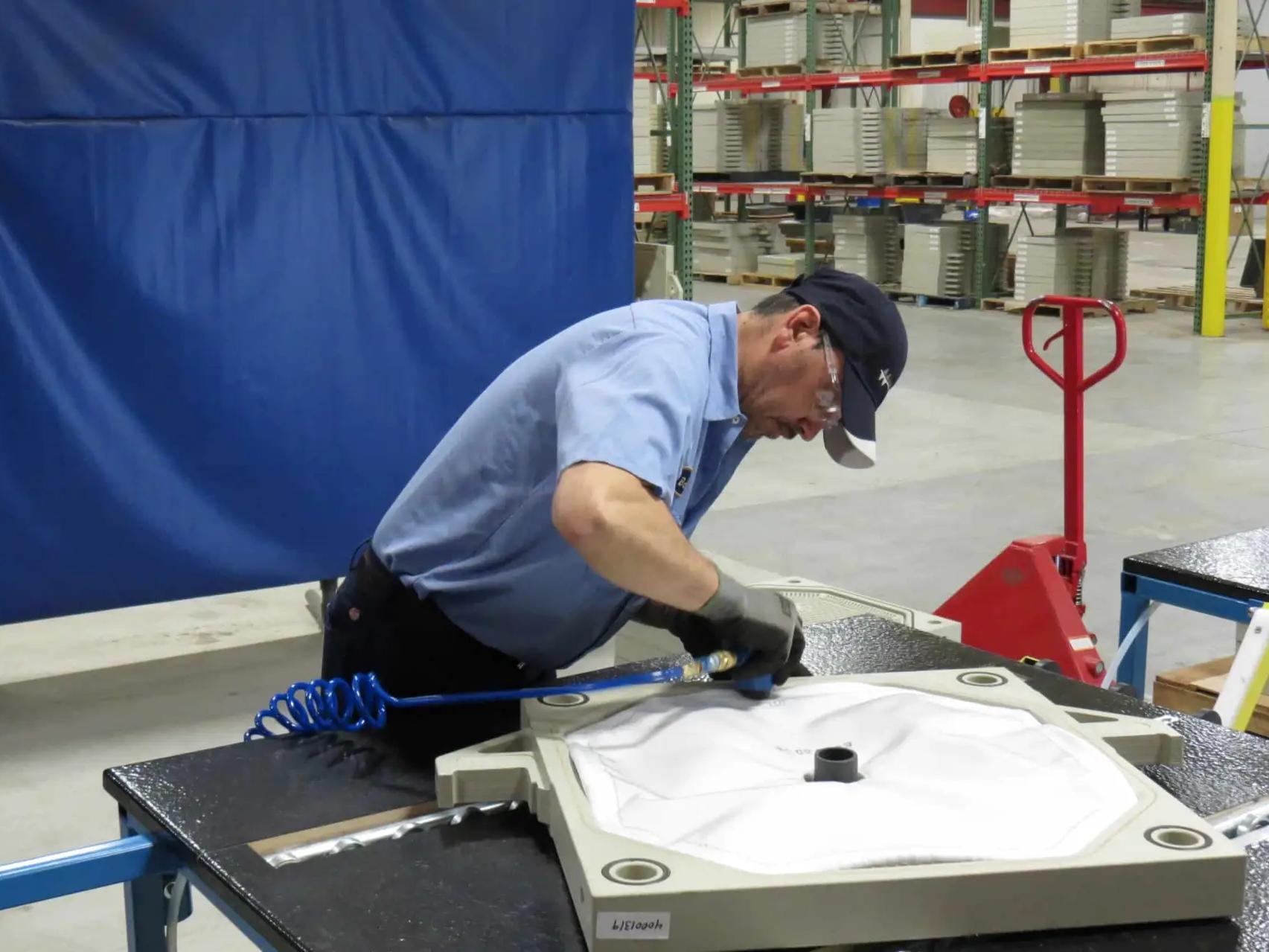
Thickness affects strength, sealing and how the cloth sits on the plate. This is where cloth and plate must be considered together.
- A cloth that is too thick or badly cut can cause leakage around the plate rim and make the plates harder to seal.
- A cloth that is too thin can be pressed into the plate’s drainage studs under pressure, leading to early tearing.
- On membrane plates, the cloth must also be able to flex repeatedly without cracking or losing shape.
When ordering replacement cloths, provide the plate size, plate type, feed hole position and edge design so the cloth matches your plates rather than only the slurry.
How to Install Filter Press Cloths Without Leaks
Even a well-chosen cloth fails early if it is installed badly. Many leaks and tears blamed on poor-quality fabric are filter cloth installation problems.
Before installing
- Confirm the cloth size and feed hole positions match the plate.
- Inspect the plate surface for burrs, residue or damage that could cut the cloth.
- Clean the sealing surfaces so old cake does not prevent a tight seal.
During installation
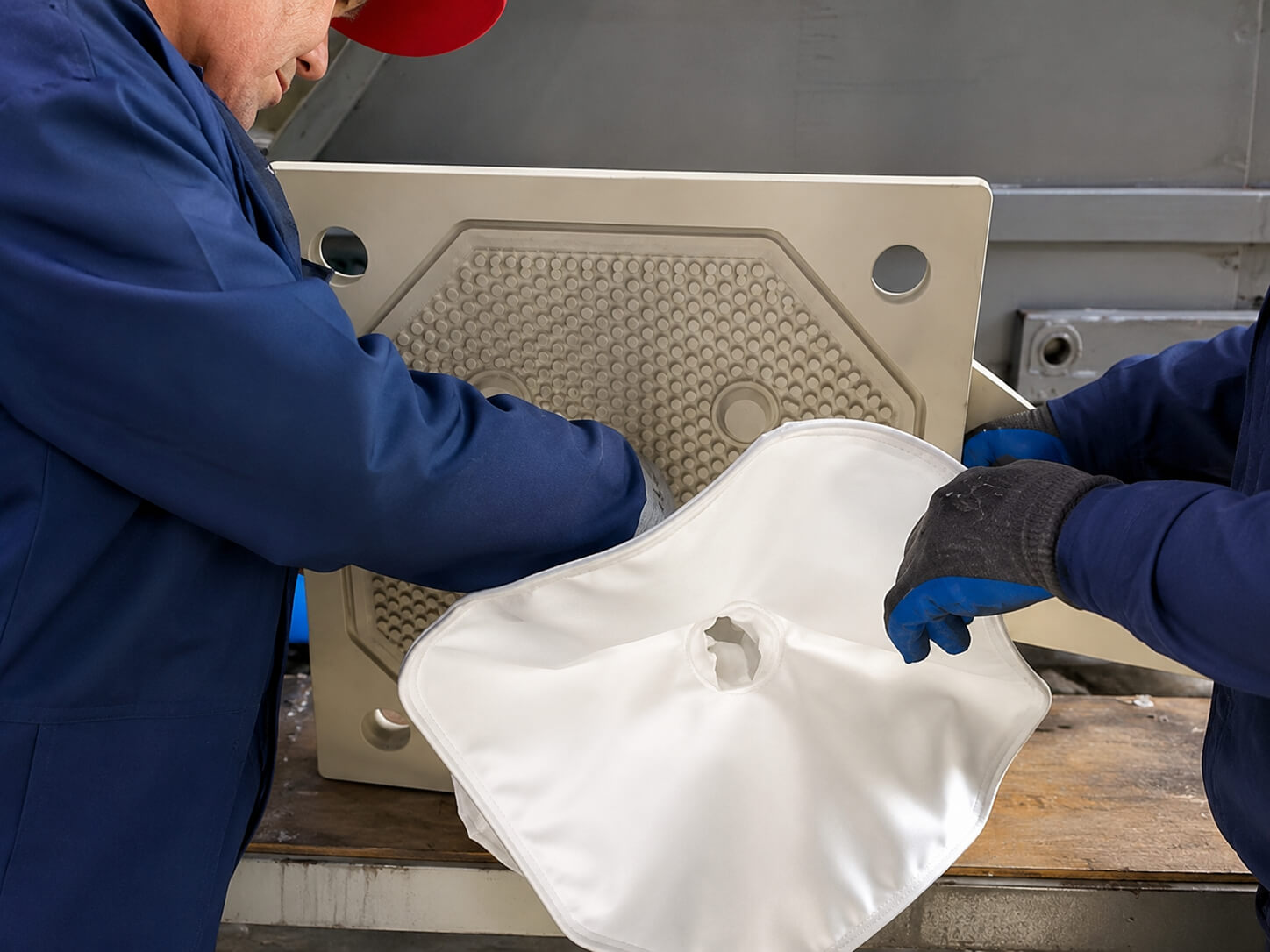
- Align the feed hole precisely with the plate’s feed port. Misalignment is a leading cause of leaks and uneven cake.
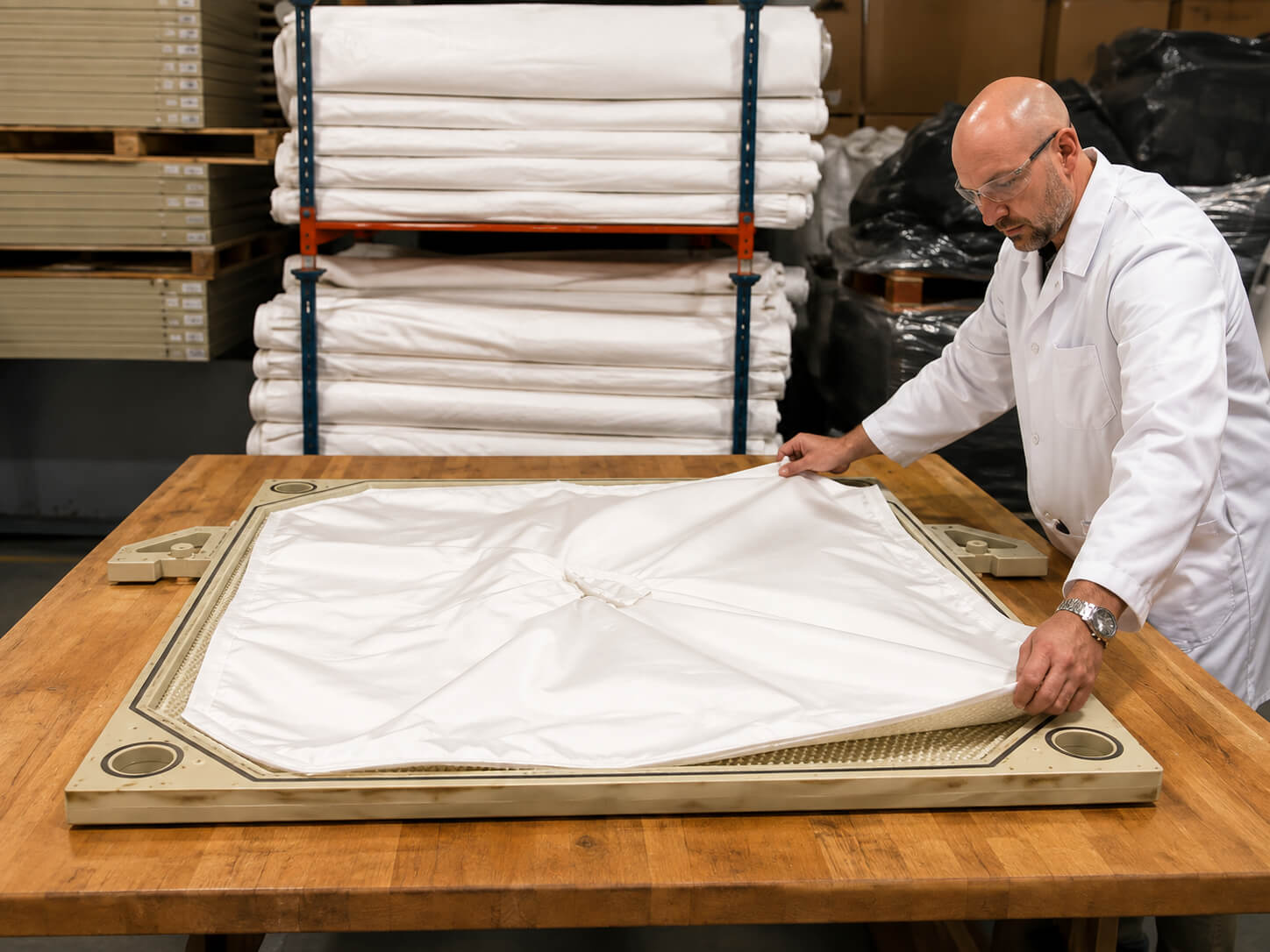
- Pull the cloth flat. Wrinkles and folds create gaps at the sealing edge and wear unevenly under pressure.
- Secure the cloth firmly using the fixing method designed for the plate, whether that is a neck, a ring, or a fastening around the feed hole. Loose fixing lets the cloth shift during pressing.
After installing
- Close the press at low pressure first and check that the cloths sit evenly with no visible folds at the edges.
- Run a first cycle and watch for leaks at the plate rim and around the feed hole before moving to full pressure.
Take a few extra minutes at this stage. Correcting a fold during installation is far cheaper than replacing a torn cloth and cleaning up a spill.
Why Filter Cloths Blind and How to Extend Cloth Life
Blinding happens when the openings in the fabric become clogged, so liquid can no longer pass freely. The result is slower filtration, longer cycles, wetter cake and higher pressure demand.
Common causes
- Fine particles embedded in the weave, especially when the cloth is too retentive for the slurry.
- Scaling or chemical deposits, such as precipitated salts or hardness scale.
- Sticky or oily materials that coat the fibers.
- Wrong cloth selection for the slurry’s particle size or chemistry.
- Insufficient cleaning between cycles or batches.
Extending cloth life
- Choose the cloth for the real slurry conditions, not for general purposes.
- Wash cloths regularly using a method suited to the fouling type. Mechanical washing and chemical cleaning may both be needed depending on the deposits.
- Avoid cleaning agents that attack the fiber. Check compatibility with the cloth material first.
- Keep the plate surfaces and drainage channels clean so the cloth is not damaged from underneath.
- Prevent sharp objects, hard lumps and uneven feeding from reaching the cloth.
[Internal link: filter press cloth cleaning guide]
When to replace
Cloths do not need to be replaced on a fixed calendar. Watch the process instead. Signs that a cloth has reached the end of its useful life include:
- Cake moisture rising even after cleaning
- Cycle times getting longer
- Filtrate becoming cloudy or carrying solids
- Visible holes, tears, thinning or hardened patches
- Repeated leaks at the same plate position
Tracking cake moisture, cycle time and filtrate clarity gives a clearer replacement signal than appearance alone. It also shows the real cost: the cheapest cloth per piece is rarely the cheapest per filtration cycle.
Frequently Asked Questions
How long do filter press cloths last?
Cloth life varies widely with the slurry, pressure, cleaning routine and installation quality. Abrasive or chemically aggressive duties shorten life, while clean, well-matched applications with regular washing extend it. Replace cloths based on cake moisture, cycle time and filtrate quality rather than a fixed schedule.
What is the best material for filter press cloths?
There is no single best material. Polypropylene is the most common because of its wide chemical resistance. Polyester suits warmer, acidic streams, and nylon suits abrasive slurries. The right choice depends on pH, temperature and abrasiveness.
How do I know my filter cloth is blinded?
Typical signs are longer filling times, rising pressure with lower flow, wetter cake and poor cake release. If these remain after washing, the cloth is likely permanently blinded or the weave is too tight for the slurry.
Can I use the same cloth on chamber and membrane plates?
Not always. Membrane plates flex during squeezing, so the cloth must tolerate repeated movement, and the fit around the plate edge and feed hole may differ. Confirm cloth specifications against the specific plate type before ordering.
What information should I send a supplier to get a cloth recommendation?
Provide the slurry type, particle size range, pH, temperature, solids concentration, abrasiveness, plate size and type, and your goals for cake dryness and cycle time. A small slurry sample helps even more.
Заключение
Filter press cloths decide how much of a press’s potential you actually get. Material sets the chemical and temperature limits, weave and yarn type set the balance between retention and release, and thickness and fit determine whether the cloth seals and survives on your plates. Correct installation and a cleaning routine suited to the fouling type then protect that choice.
The most reliable approach is to treat cloth, plate and process as one system. If you are unsure which cloth suits your slurry, you can send us your slurry details, plate type and operating conditions, and our team can suggest suitable options based on your application.