
If your filter cake leaves the press too wet to stack, truck or landfill economically, the question is rarely “how do we buy a bigger press?” It is usually “should the plates be different?” That is the real decision behind the chamber vs membrane filter press comparison, and it is why so many specifications end up revised after the first quotation.
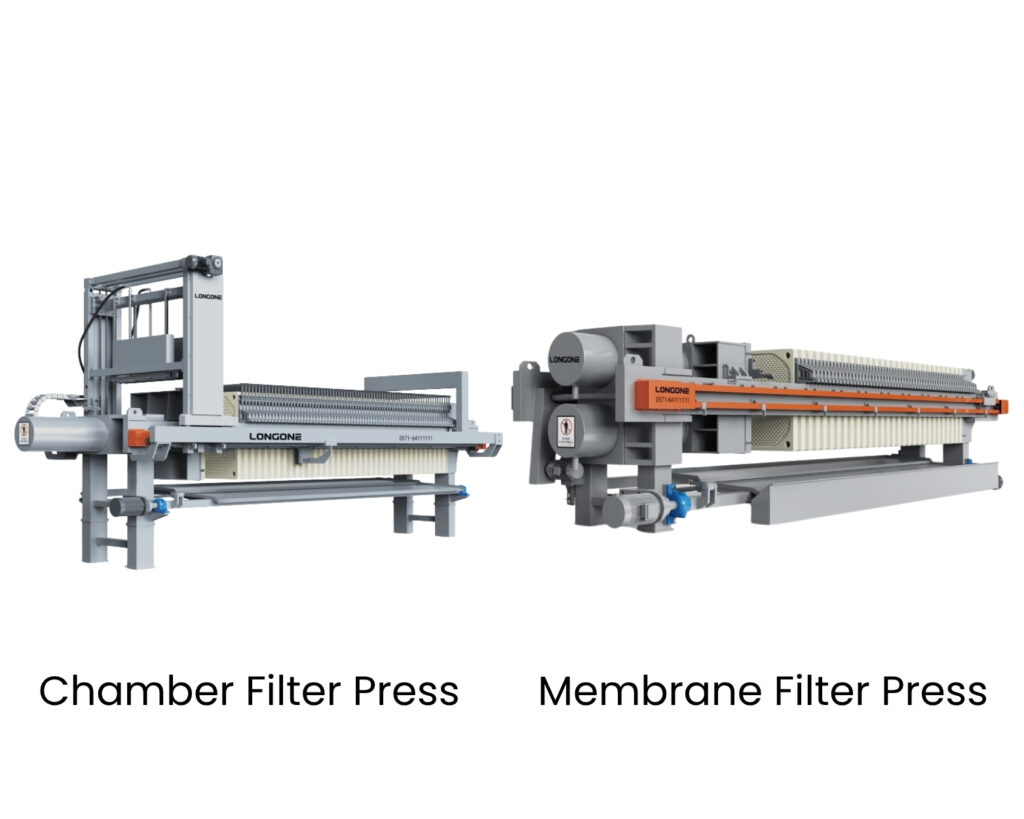
Both machines use the same basic idea: pump slurry into a closed chamber, hold the solids behind filter cloth, and let the filtrate escape. The difference lies in what happens once the chambers are full. A chamber press stops there. A membrane press keeps working on the cake. Understanding that one difference, and how it plays out in plate design, cycle time and cost, makes the choice much easier.
This guide explains how each press works, where membrane plates pay off, how to think about total cost, and how to specify the right configuration for your slurry.
How Each Press Works: Fixed-Volume Filtration vs Filtration Plus Membrane Squeeze
The chamber filter press
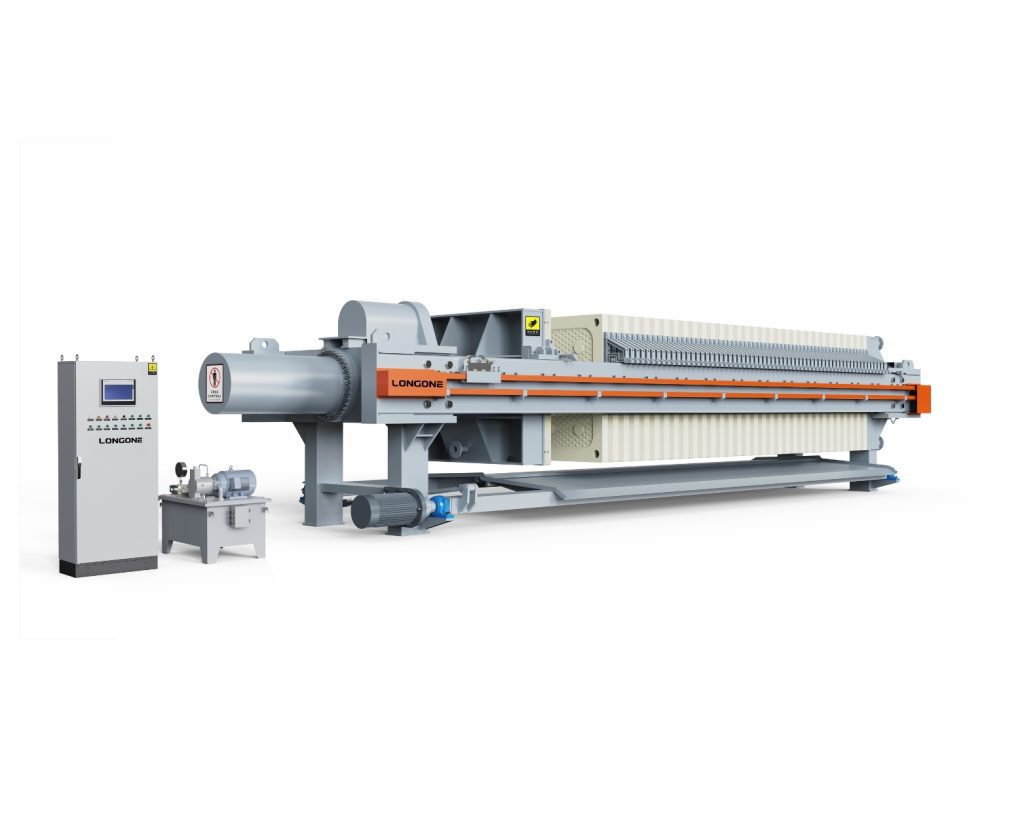
А chamber filter press uses recessed plates. When the plates are clamped together by the hydraulic system, the recesses on adjacent plates form sealed chambers, each lined on both sides with filter cloth. Slurry is fed through a central or corner port under pressure. Liquid passes through the cloth and out through the drainage channels in the plate surface. Solids stay behind and build up into a cake.
When the feed rate falls to an economic minimum, or the chambers are full, the pump stops. The press opens and the cakes drop out. The final cake thickness is fixed by the depth of the recess, and the cake dryness is determined by how well the slurry filters under feed pressure alone.
The design is simple. There are few moving parts, the plates are all identical, and the operating procedure is easy to teach. That simplicity is exactly why chamber presses remain the most widely installed type of filter press in mining, ceramics, metal finishing and municipal sludge handling.
The membrane filter press
А membrane filter press begins the same way. Slurry is pumped in, the chambers fill, and a cake forms. The difference is that each membrane plate carries a flexible diaphragm across its face. Once the feed phase is complete, compressed air or water is pumped behind the diaphragm. The membrane inflates and presses against the cake, squeezing out additional liquid that feed pressure alone could not remove.
After the squeeze, the pressure is released, the press opens, and a firmer, drier cake is discharged. Many membrane presses also allow cake washing or air blowing between the feed and squeeze stages, which is useful when product purity or washing efficiency matters.
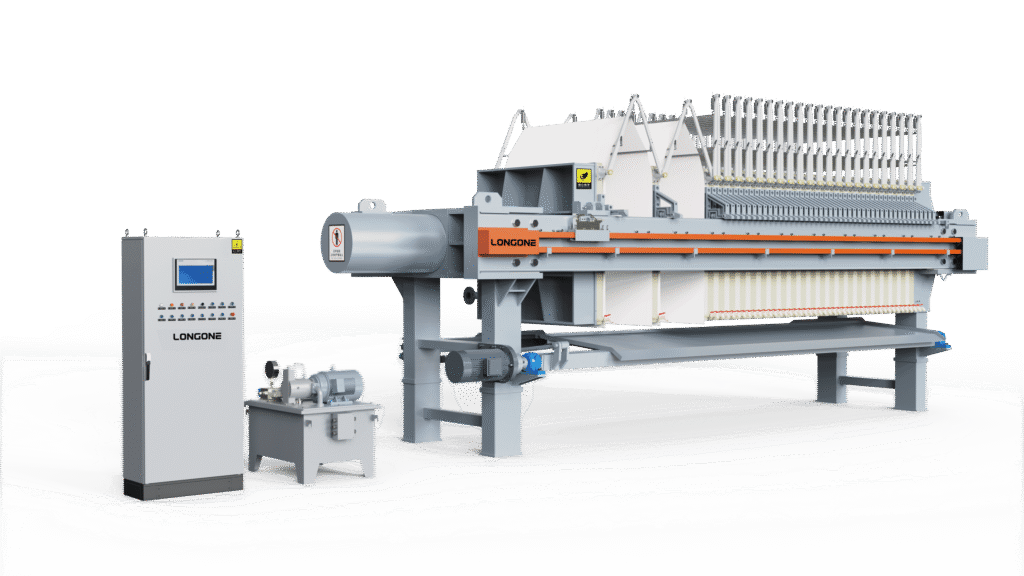
Plate arrangement matters
Membrane presses are usually built with a mixed plate pack: membrane plates alternate with standard recessed chamber plates. Each chamber is therefore formed by one membrane plate and one chamber plate, and only the membrane side inflates. Some designs use membrane plates throughout, but the alternating arrangement is common and affects both cost and spare-parts planning.
In other words, a membrane plate is essentially a chamber plate with a squeezing diaphragm added. That is why the plate, and not the machine frame, is where most of the performance difference and most of the potential failures live.
Cake Dryness, Cycle Time and Throughput: Where Membrane Plates Pay Off
Cake dryness
The most visible benefit of a membrane press is a drier cake. But how much drier depends heavily on the material being filtered, and this is where published figures become misleading.
Compressible solids, such as many industrial and municipal sludges, respond strongly to mechanical squeezing. The cake structure collapses under pressure and releases trapped water. Rigid, coarse or fast-draining solids, such as some mineral concentrates, gain much less, because most of the free water has already left during the feed stage.
This is why moisture figures quoted by different suppliers vary so widely. Two manufacturers can both be truthful and still publish very different numbers, because they tested different slurries. No single percentage applies across all applications. If a supplier promises a specific cake moisture without asking about your slurry, treat the figure with caution.
Cycle time
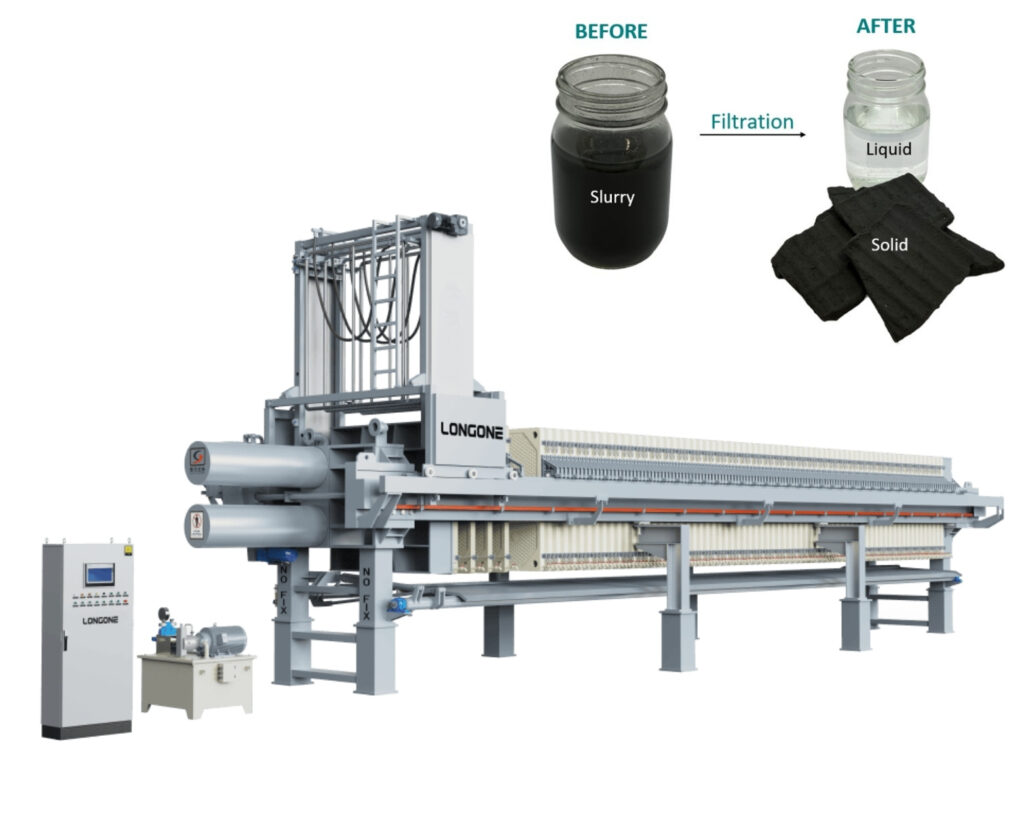
Membrane squeezing can shorten the overall cycle in a less obvious way. In a chamber press, the operator often has to keep feeding until the cake is dense enough, and the tail of the feed stage becomes slow as flow resistance builds. In a membrane press, feeding can be stopped earlier, and the squeeze stage removes the remaining liquid faster and more predictably.
That does not mean every membrane cycle is shorter. Squeeze time, air blowing and washing steps all add to the total. The benefit is greatest for slurries that would otherwise filter slowly at the end of the feed stage.
Throughput per unit of capital
Because dryness and cycle time improve together for many materials, a membrane press can process more dry solids per hour from the same footprint. For plants limited by floor space or by the number of shifts they can run, this productivity per square meter can matter as much as the moisture number itself.
Capital Cost vs Total Cost of Ownership: Running the Numbers Beyond the Price Tag
Up-front cost
Membrane presses cost more to buy. The plates themselves are more complex, and the press needs a squeeze medium supply: a compressor and air receiver for air squeeze, or a pump and water circuit for hydraulic squeeze. The frame and hydraulic closing system must also be rated for the added internal load during squeeze, because the pressure inside the chambers is higher during that stage.
Where the money comes back
The purchase price is only part of the picture. A more useful comparison asks what each ton of wet cake costs you after it leaves the press:
- Transport: Wetter cake weighs more per ton of dry solids. Every truck carries extra water.
- Disposal: Landfills and treatment contractors often charge by weight, so cake moisture has a direct line item.
- Handling: Drier cake conveys, stacks and stores more easily. Very wet cake may need further drying or mixing before it can be moved.
- Downstream processing: Where the cake feeds a furnace, kiln or dryer, lower moisture reduces fuel or energy consumption.
- Labor and throughput: A shorter, more repeatable cycle can reduce operator hours per batch.
If your cake disposal cost is high, or the plant is constrained by handling capacity, the extra investment in membrane plates often pays back through operating savings. If disposal is cheap, or cake dryness is not a process requirement, the chamber press usually wins on simple economics.
Maintenance considerations
Chamber plates are robust and forgiving. Membrane plates add a wearing component: the diaphragm. Its life depends on material, operating pressure, cake abrasiveness and how consistently the cloth is maintained. Good membrane plates are designed so that a failed diaphragm is easy to detect and, depending on the design, easy to replace. Ask about this at the specification stage, not after the first breakdown.
Which Applications Suit Chamber Presses and Which Need Membrane Plates
The table below summarizes the main differences. Treat it as a starting point, not a substitute for a slurry test.
| Factor | Камерный фильтр-пресс | Мембранный фильтр-пресс |
|---|---|---|
| Plate structure | Recessed plates, all identical | Membrane plates with flexible diaphragm, usually alternating with chamber plates |
| Dewatering stage | Feed filtration only | Feed filtration plus mechanical squeeze |
| Cake moisture | Determined by feed pressure and slurry properties | Typically lower for compressible solids; gain varies by material |
| Cycle time | Can be long when the feed stage tails off | Often shorter for slow-filtering slurries, but squeeze and wash steps add time |
| Capital cost | Lower | Higher (plates plus squeeze system) |
| Operating cost | Higher cake handling and disposal cost when cake is wet | Lower cake handling and disposal cost when cake is drier |
| Maintenance | Simple; few wearing parts | Diaphragm is an added wear item; more auxiliary equipment |
| Best suited to | Free-draining solids, moderate dryness targets, budget-sensitive projects | Compressible or sticky solids, strict moisture limits, washing requirements |
When a chamber press is the right choice
- The slurry filters freely and the cake is already dry enough to handle.
- Disposal is cheap or the cake is reused without drying requirements.
- The project budget is tight and the process is not moisture-critical.
- The operation is batch-based and does not run continuously.
- Simplicity and easy maintenance matter more than the last few points of dryness.
Typical examples include ceramic slip, some metal finishing sludges, general mineral processing and routine municipal wastewater treatment.
When membrane plates are worth it
- The cake must meet a moisture limit for transport, dry stacking or landfill acceptance.
- The slurry is compressible or sticky and responds to squeeze pressure.
- The process requires integrated cake washing for product purity.
- Floor space is limited and higher output per press is needed.
- Cake disposal or drying is a major cost line.
Typical examples include chemical and pharmaceutical intermediates, food-related processing, tailings dewatering, and industrial sludges with high disposal costs.
How to Choose and Specify: Slurry Testing, Plate Material and Upgrade Options
Start with the slurry, not the catalog
The single most useful step is a filtration test on a representative sample. Particle size distribution, solids concentration, compressibility, temperature and pH all influence how the slurry behaves. A pilot or laboratory test tells you two things that a datasheet cannot: whether squeezing actually improves your cake, and how much.
If you are comparing quotations, share the same slurry data with every supplier. Otherwise, you are comparing performance claims that are not based on the same conditions.
Check the details that decide plate life
Once you know you need membrane plates, the specification details matter as much as the choice itself:
- Plate material: Polypropylene is the standard for most applications. Temperature, chemical exposure and pressure rating may point to other materials or reinforced designs.
- Membrane construction: Ask whether the membrane is welded to the plate body or fitted as a replaceable element, and what the repair procedure is.
- Squeeze pressure and medium: Confirm the maximum operating pressure for both feed and squeeze, and whether the design uses air or water.
- Sealing and edge design: Leakage at the plate edge is a common cause of downtime. Plate flatness and gasket design are worth checking.
- Cloth compatibility: The filter cloth must be matched to the membrane surface and slurry. Poorly chosen cloth can cancel out the benefit of a good plate.
Consider upgrading an existing chamber press
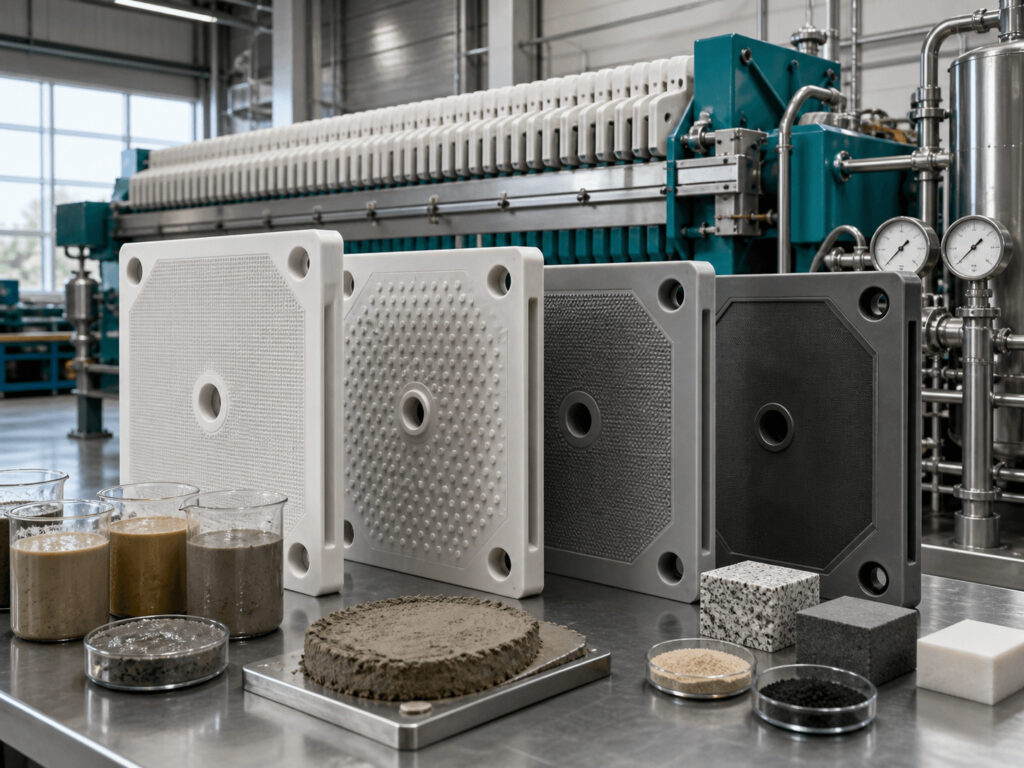
Many plants do not need a new machine. If your chamber press frame, hydraulic system and feed pump are in good condition, replacing selected chamber plates with membrane plates can lift performance at a much lower cost than a new press. A few points must be checked first:
- Frame and hydraulic rating: The closing force must be sufficient for the added pressure during squeeze.
- Plate dimensions and compatibility: Membrane plates must match the plate size, thickness, feed port position and sealing arrangement of the existing pack.
- Squeeze supply: You will need a compressor, water pump or equivalent, along with piping and controls.
- Control logic: The PLC or manual procedure must add a squeeze stage and pressure release step.
A well-planned retrofit is often the most economical path for plants that want drier cake without replacing the whole machine.
A simple decision rule
If wet cake is costing you money in transport, disposal or downstream drying, price the problem before you price the press. If those costs are small, a well-made chamber press is a perfectly good investment. If they are large, membrane plates usually earn their premium.
Choosing With Confidence
The chamber vs membrane filter press decision is less about which technology is “better” and more about which one matches your slurry, your dryness target and your cost structure. Chamber presses give you dependable, low-cost filtration where moisture is not critical. Membrane presses add a squeeze stage that can pay for itself when cake handling is expensive or moisture limits are strict.
At LONGONE, we manufacture плиты фильтр-пресса and filter presses for industrial dewatering. If you are comparing chamber and membrane configurations, or considering a plate upgrade for an existing press, you are welcome to send us your slurry details and plate dimensions. We can share what we would recommend and why, with no obligation.
Frequently Asked Questions
What is the main difference between a chamber and a membrane filter press?
A chamber filter press dewaters the slurry through feed pressure alone. A membrane filter press adds a second stage in which flexible diaphragms inflate and squeeze the cake, removing additional liquid before discharge. The membrane plate is essentially a chamber plate with this diaphragm added.
Does a membrane filter press always produce a drier cake?
Not always by the same amount. Compressible and sticky solids usually benefit strongly from squeezing, while coarse or free-draining solids may show little improvement. Testing a sample of your own slurry is the only reliable way to predict the result.
Is a membrane filter press worth the extra cost?
It depends on what wet cake costs you. If transport, disposal or drying costs are high, or if you must meet a strict moisture limit, the operating savings often justify the higher purchase price. If cake handling is cheap and dryness is not critical, a chamber press may be the better value.
Can I upgrade a chamber filter press to a membrane filter press?
In many cases, yes. Chamber plates can often be replaced with membrane plates on the same frame, provided the closing force, plate dimensions, feed arrangement and squeeze supply are compatible. A technical review of the existing machine is needed before ordering.
What is the typical service life of a membrane plate?
Service life varies with plate material, operating pressure, cake abrasiveness, cloth condition and maintenance practice. Well-designed plates used within their rated pressure and cleaned regularly can last many years, but the diaphragm remains the component most worth monitoring.