
Every ton of wet sludge you haul away is a ton of water you are paying to transport and dispose of. For many plants, sludge handling is one of the largest recurring operating costs, and the gap between a cake at 20% solids and a cake at 35% solids can cut disposal volume by more than 40%. The machine that closes that gap in most industrial and municipal plants is the sludge filter press.
But buying one is not as simple as matching a filtration area to a daily flow rate. Cake dryness, cycle time, and maintenance cost depend on the sludge itself, the plate design, and the filter cloth. This guide explains how a sludge filter press works, how the main types differ, and what to check before you request a quotation.
What Is a Sludge Filter Press and How Does It Work?
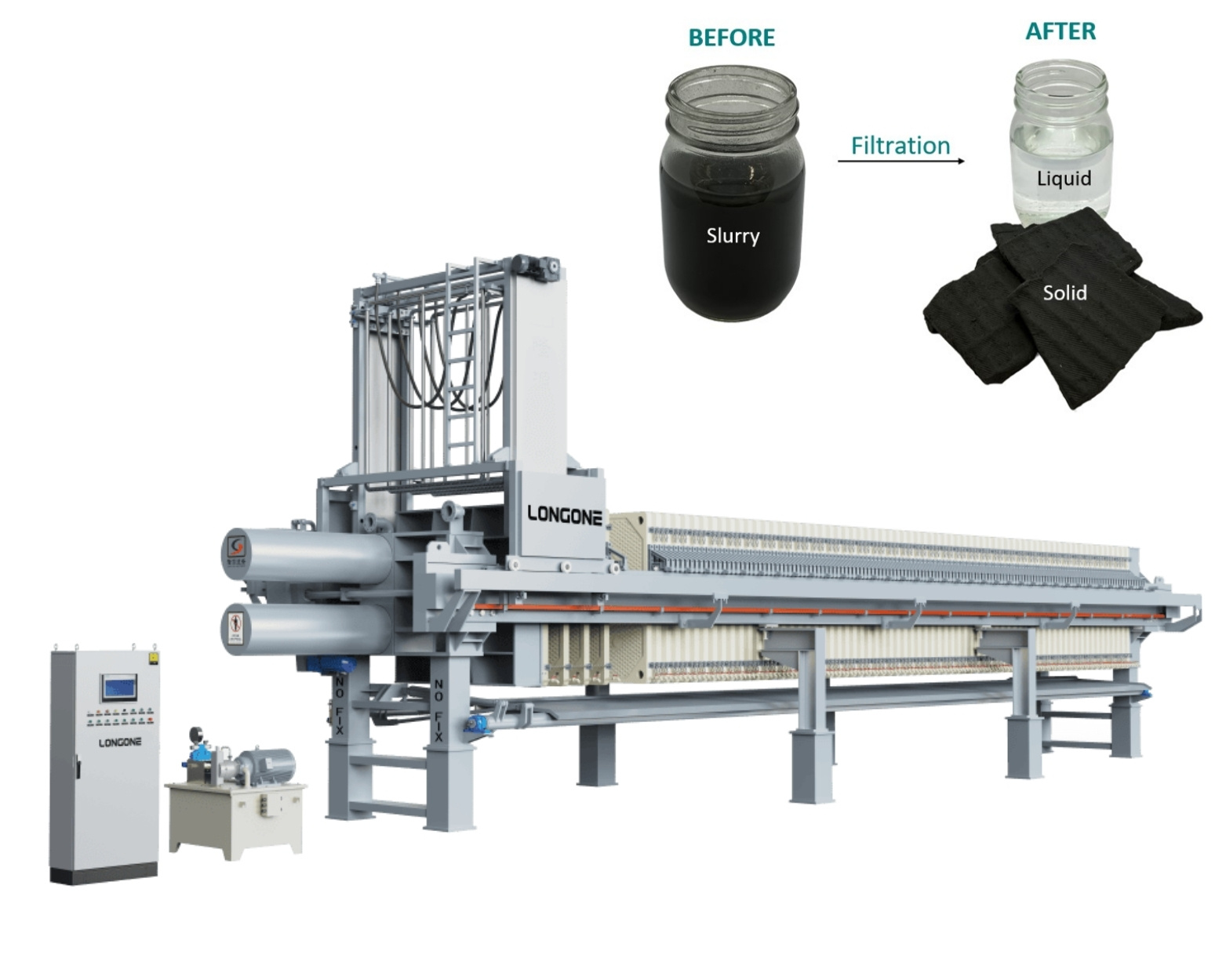
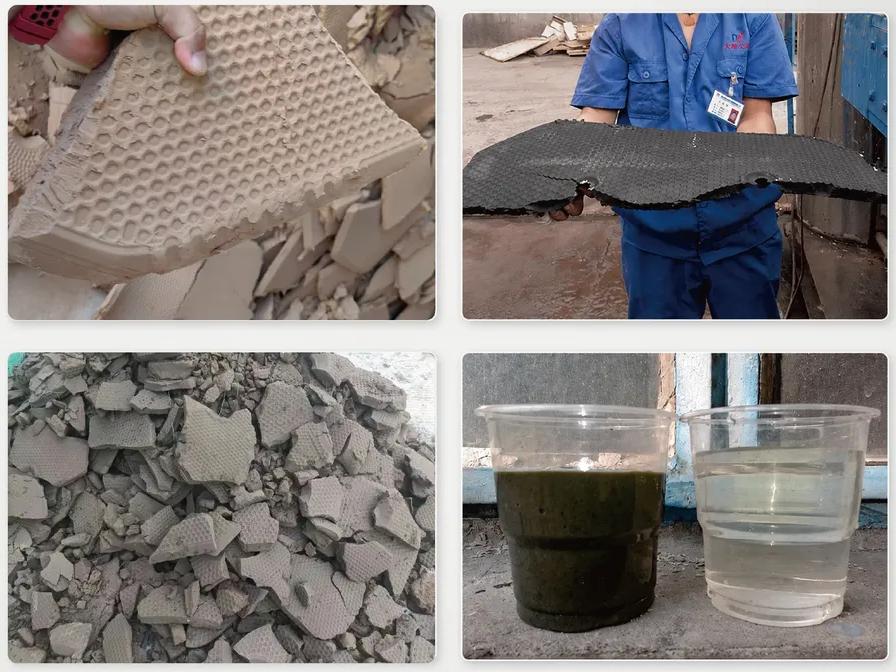
A sludge filter press is a batch dewatering machine that uses pressure to separate water from solid particles. Sludge is pumped into a series of closed chambers formed between filter plates. Each plate is covered with filter cloth. Water (filtrate) passes through the cloth and leaves the press, while solids are retained and build up into a solid filter cake.
A typical working cycle has four stages:
- Closing: A hydraulic cylinder pushes the plates together and holds them under high clamping force so the chambers stay sealed under pressure.
- Filling and filtration: A feed pump sends sludge into the chambers. Solids form a cake layer on the cloth as filtrate flows out through drainage channels in the plates.
- Squeezing (optional): In a membrane press, compressed air or water inflates a flexible diaphragm behind the cake, squeezing out additional moisture.
- Discharge: The press opens, the plates shift apart, and the cakes drop into a hopper, truck, or conveyor. The cloth is inspected and the cycle starts again.
The main components are the frame, the plate pack, the filter cloth, the hydraulic system, and the feed pump. Of these, the plates and cloth are the parts in direct contact with the sludge. They determine how evenly the cake forms, how well it releases, and how long the press runs between replacements.
Types of Sludge Filter Presses: Chamber, Membrane, and Plate-and-Frame
Not every sludge needs the same press design. Three configurations are common in sludge dewatering.
Recessed chamber filter press. The plates have a recessed surface, so two neighboring plates form a chamber without a separate frame. This is the most widely used design for sludge because it is simple, reliable, and handles a broad range of materials. Feed pressure is typically in the range of 0.6 to 1.6 MPa.
Membrane filter press. Some or all plates carry a flexible membrane. After the filling stage, the membrane is inflated to compress the cake further, usually at 1.0 to 1.6 MPa. This extra squeeze step produces a drier, more uniform cake and often shortens the overall cycle because filling can stop earlier. It is the preferred choice for compressible sludge such as biological sludge from wastewater treatment.
Plate-and-frame filter press. Alternating plates and hollow frames create the chamber. The frame thickness sets the cake thickness, which makes this design flexible for sludge with very different filtration behavior. It is also used where thick cakes or easy cloth access are priorities.
The table below summarizes how the three compare for typical sludge dewatering. Cake solids values are indicative ranges and depend heavily on sludge type and conditioning.
| Feature | Recessed Chamber Press | Membrane Press | Plate-and-Frame Press |
|---|---|---|---|
| Best for | Granular industrial sludge, mining and chemical sludge | Compressible biological and municipal sludge | Variable sludge, thick-cake applications |
| Typical cake solids | 30–50% (industrial); 25–35% (municipal) | 35–60% (industrial); 30–45% (municipal) | Similar to chamber press |
| Typical cycle time | 2–4 hours | 1.5–3 hours including squeeze | 2–4 hours |
| Cake uniformity | Good | Very good | Good |
| Investment cost | Lower | Higher | Moderate |
| Operating complexity | Simple | Moderate (air or water squeeze system) | Simple |
If your sludge is sticky or highly compressible, the added cost of membrane plates is often repaid through lower disposal costs. If your sludge is coarse and drains easily, a chamber press usually does the job at lower capital cost.

Where Sludge Filter Presses Are Used: Municipal, Industrial, and Mining Applications
Sludge filter presses are used wherever solids must be separated from water reliably and at scale.
Municipal wastewater treatment. Primary, waste-activated, and digested sludge are dewatered to reduce volume before landfill, incineration, or land application. Biological sludge is fine and compressible, so conditioning and membrane plates are common.
Electroplating, metal finishing, and chemical plants. Hydroxide sludge and process residues are often dense and relatively easy to filter. Many of these sludges are classified as hazardous waste, so every percentage point of dryness directly cuts disposal cost.
Mining, sand washing, and coal washing. Tailings and fine slurries are dewatered to recover water and enable dry stacking. Plates must withstand abrasive solids and higher pressure.
Food processing, paper, textile, and ceramics. Sludge in these industries ranges from fibrous to oily or colloidal, which affects cloth choice and conditioning requirements.
Because sludge properties vary so much between industries, the same press model can perform very differently from one site to another. This is why test data matters more than catalog specifications.
Key Factors That Determine Cake Dryness and Throughput
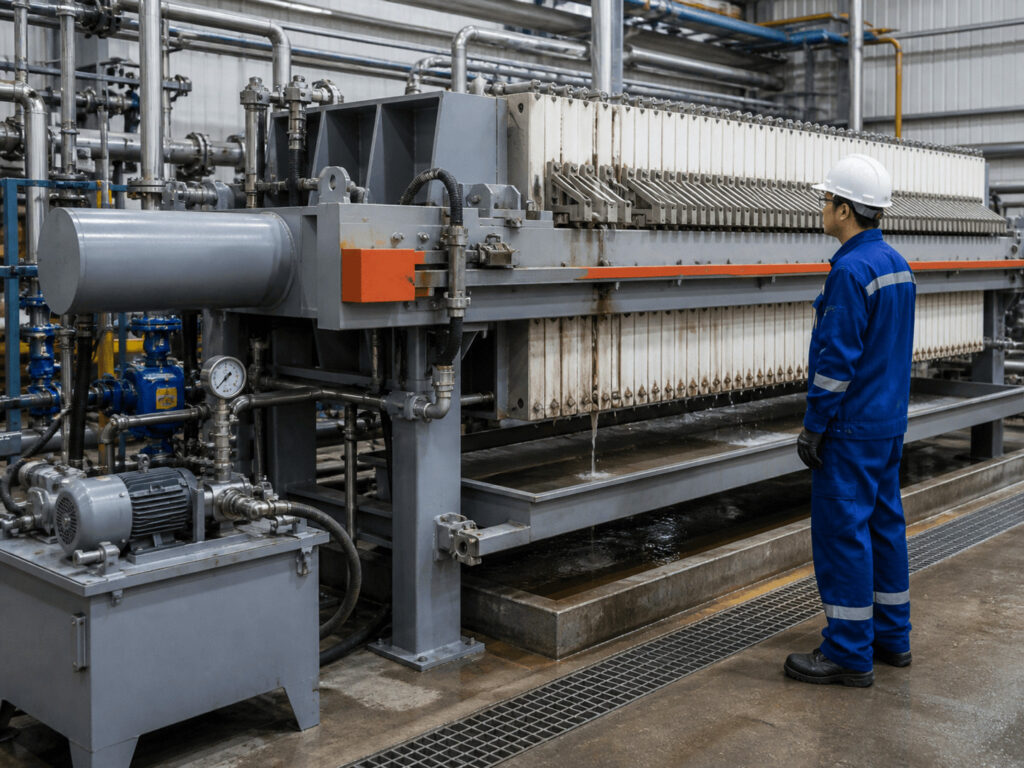
Operators often ask why two presses with the same filtration area deliver very different results. Five factors explain most of the difference.
Sludge conditioning. Fine, colloidal particles blind the cloth and slow filtration. Chemical conditioning with polymer (PAM), lime, or ferric salts builds larger flocs that release water more freely. Under-dosing leaves the sludge hard to filter, while over-dosing makes it sticky and can blind the cloth. A dosing trial is usually worth the time.
Feed pressure profile. Starting at low pressure and raising it gradually helps form an even cake layer. Jumping to maximum pressure immediately can drive fines into the cloth and reduce flow.
Filter cloth selection. Cloth material, weave, and air permeability must match the particle size. A cloth that is too open lets fines through and produces cloudy filtrate. One that is too tight clogs early and extends cycle time. Polypropylene is the most common material for sludge because of its chemical resistance and good cake release.
Plate design and condition. Drainage channel layout, feed port position, sealing surface flatness, and plate thickness all affect leakage and pressure distribution. Warped or cracked plates cause spraying and uneven cakes, and they put extra stress on neighboring plates.
Sludge solids concentration. Thicker feed sludge means fewer tons of water to remove per cycle and shorter filling time. Pre-thickening before the press is often a cheaper way to improve throughput than buying a larger machine.
How to Choose and Size a Sludge Filter Press for Your Plant
A practical selection process usually follows these steps.
1. Define your sludge. Record the source, solids concentration, particle size, pH, temperature, and any oils or abrasive content. If the sludge varies by season or production batch, test the worst case as well as the average.
2. Set the target. Decide the cake dryness you need for your disposal route. Landfills, incinerators, and composting operations have different moisture requirements, and a few extra percentage points of dryness can change the disposal cost significantly.
3. Calculate the dry solids load. Multiply daily sludge volume by solids concentration to get dry solids per day, then divide by the number of cycles you plan to run. This gives dry solids per cycle.
4. Estimate chamber volume and filtration area. Dry solids per cycle divided by cake dry density gives the chamber volume required. Plate size and number of plates are then selected to match, with a safety margin of 10–20% for fluctuations. Presses are available across a wide range of plate sizes, so area can be matched closely to your load.
5. Run a sample test. Laboratory or pilot filtration on your actual sludge provides cake solids, cycle time, and cloth recommendations that no catalog can. If a supplier proposes a configuration without asking about your sludge, treat it as a warning sign.
6. Choose the automation level. Manual presses suit small, intermittent duty. Semi-automatic and fully automatic presses with plate shifting, cloth washing, and drip trays suit continuous operation and reduce labor.
7. Plan the whole system. The press is only one part of the line. Feed pump, conditioning tank, filtrate handling, cake conveying, and air supply for membrane plates should be specified together.
8. Compare cost per ton of dry solids. Purchase price is only part of the picture. Energy use, labor, cloth and plate replacement, and disposal cost over several years often outweigh the initial price difference between two machines.

Operation, Maintenance, and Common Troubleshooting Tips
A well-maintained sludge filter press can run reliably for many years. Most problems trace back to a few recurring causes.
Daily checks. Inspect the plate sealing surfaces, look for cloth folds or damage, check hydraulic pressure, and clean any residual cake from the plate edges before closing. Debris on the sealing surface is the most common cause of leakage.
Cloth care. Wash cloths regularly with high-pressure water, and use acid or alkaline cleaning when blinding develops. Cloth life varies widely with sludge type and cleaning frequency, but many operators replace cloth every 6 to 18 months. Tracking cycle time is a simple early signal: when filtration slows without a change in sludge, the cloth is usually the cause.
Common problems and likely causes.
- Spraying or leakage between plates: Dirty sealing surfaces, folded cloth, insufficient clamping pressure, or worn or deformed plates.
- Wet or soft cake: Poor conditioning, cloth too tight, feed concentration too low, or the cycle ended before the cake was fully formed.
- Cake sticking to cloth: Cloth material or weave mismatch, or over-dosed polymer.
- Cloudy filtrate: Cloth too open, torn cloth, or fines bypassing at the feed port.
- Cracked plates: Uneven plate pack alignment, overpressure, or running without proper cloth coverage.
Spare parts. Keep spare cloths, sealing components, and a small number of plates on site. Because plates are wear items in abrasive or high-pressure service, planning replacements from the start avoids unplanned downtime.
FAQ
How much water can a sludge filter press remove?
Most sludge filter presses reduce sludge volume by 70–90%, depending on the starting solids concentration. Final cake solids range from about 25–35% for municipal sludge up to 50–60% for some inorganic industrial sludge, and results depend on conditioning and press type.
What is the difference between a membrane and a chamber filter press for sludge?
A chamber press relies only on feed pump pressure to dewater the sludge. A membrane press adds an extra squeeze step using an inflatable diaphragm, which produces a drier cake, especially for compressible sludge. Membrane presses cost more but often lower disposal costs.
How long does one filtration cycle take?
Typical cycles run from 1.5 to 4 hours including filling, squeezing, discharge, and closing. Cycle time depends on sludge filterability, feed pressure, cake thickness, and the level of automation.
How do I calculate the filter area I need?
Start with dry solids per day and the number of cycles you want to run. Divide to get dry solids per cycle, convert to chamber volume using the cake density, and select a plate size and count to match, adding a margin for variation. A pilot test on your sludge makes the estimate far more reliable.
How often should filter cloths be replaced?
There is no fixed interval. Many plants replace cloths every 6 to 18 months, but abrasive sludge, aggressive chemicals, or poor cleaning can shorten this. A rise in cycle time or wetter cake is the practical signal to inspect or replace.
Conclusion
A sludge filter press delivers its value when the machine, plates, cloth, and conditioning program are matched to the sludge in front of you. Start by understanding your sludge, define the cake dryness your disposal route demands, test before you size, and compare options on cost per ton of dry solids rather than purchase price alone.
As a manufacturer of filter press plates and complete filter presses, LONGONE regularly helps buyers translate sludge test results into a practical configuration. If you are evaluating a new press or planning a plate retrofit, share your sludge details and target cake dryness with our technical team, and we can suggest a suitable plate type, cloth, and press size for your application.