
Choosing the wrong filter plate material can lead to catastrophic failures, process contamination, and costly downtime. You might think you’re saving money with a cheaper option, but a mismatched plate can quickly erode your budget and your operational reliability. Understanding the core differences between available materials is the first step toward a robust and efficient solid-liquid separation process.
The best filter plate material depends entirely on your specific application. Polypropylene (PP) is a versatile, cost-effective choice for general use. Polyvinylidene Fluoride (PVDF) is for higher temperatures and aggressive chemicals. Stainless Steel is the standard for hygienic applications and high strength, while Cast Iron is reserved for extreme pressure and temperature conditions.
Let’s dive deeper into the properties and ideal use cases for each to help you make an informed decision.
What Are Filter Plates and Why Does the Filter Plate Material Matter So Much?
Filter plates are the core structural components of a filter press. When pressed together, they form a series of hollow chambers that hold the slurry for filtration. The choice of filter plate material is critical because it dictates the plate’s chemical resistance, temperature tolerance, pressure rating, and operational lifespan, directly impacting efficiency and safety.
Filter plates are the heart of any filter press system. They are precision-engineered components that serve several critical functions simultaneously.
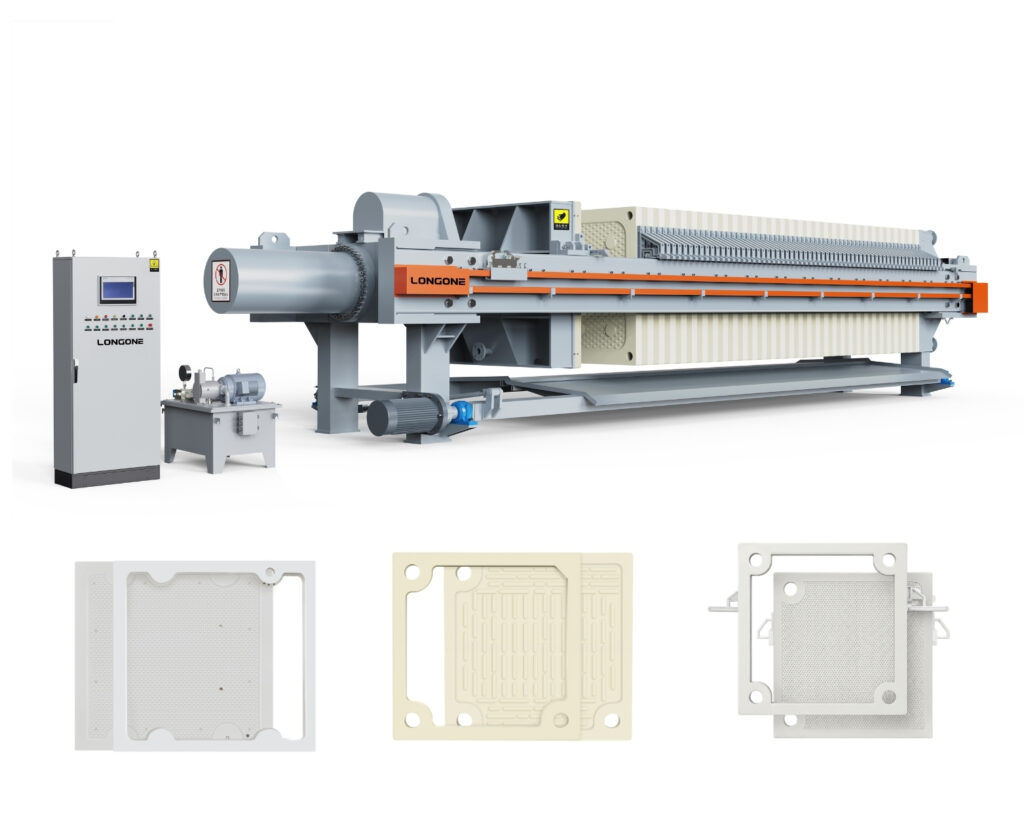
When the hydraulic system closes the filter press, the stack of plates is compressed, forming a series of sealed, pressure-tight chambers. The filter cloth is draped over each plate, acting as the primary filtration medium. Slurry is then pumped into these chambers under pressure. The liquid phase (filtrate) passes through the cloth and exits through drainage channels built into the plate’s surface, while the solid particles are trapped, forming a filter cake. The design and integrity of the plates ensure this process happens efficiently without leaks.
When Are Polypropylene (PP) Filter Plates the Best Choice?
Polypropylene is the most common filter plate material, often selected by default due to its attractive price point. But defaulting to PP without a full analysis of your process can be a very expensive mistake in the long run. Let’s explore where this versatile polymer excels and, just as importantly, where it falls short.
Polypropylene (PP) filter plates are ideal for a wide range of general-purpose applications with moderate temperatures (typically below 90°C / 194°F), a pH range between 2 and 12, and slurries that are not highly abrasive. They offer an excellent balance of good chemical resistance, light weight for easy handling, and a low initial investment.
Polypropylene has earned its reputation as the “workhorse” of the filtration industry for good reason. It provides a reliable and economical solution for countless wastewater treatment, chemical, and industrial processes.
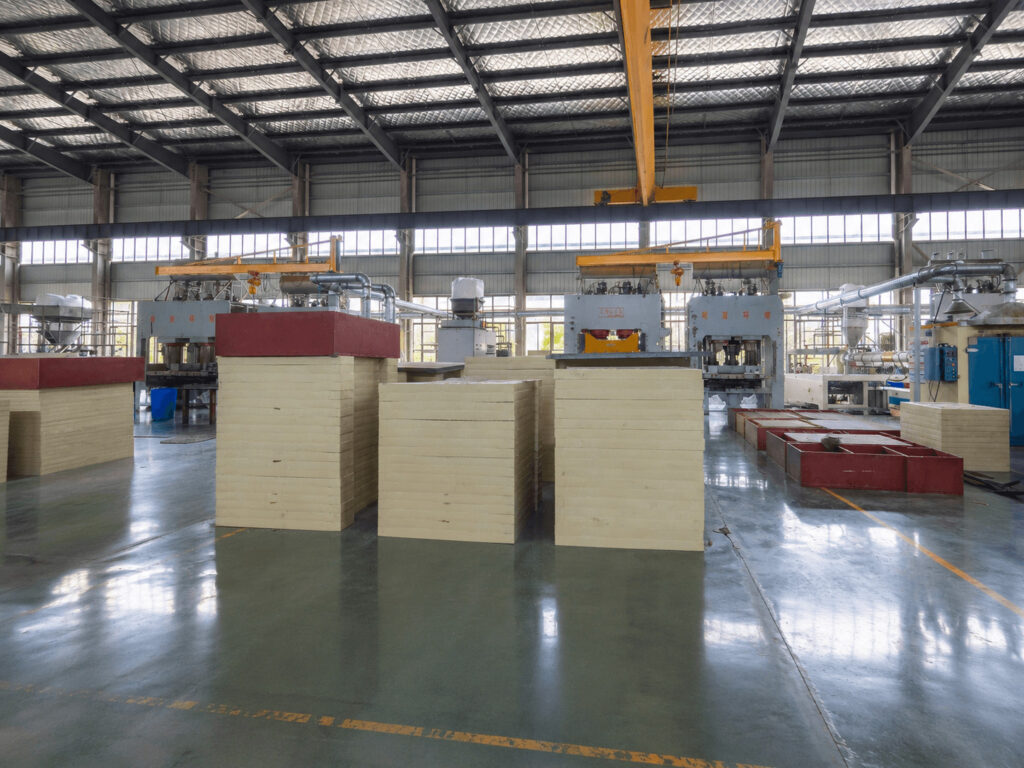
The “Workhorse” of the Industry
For many applications, PP is more than sufficient. Its key advantages include:
- Cost-Effectiveness: Virgin polypropylene is a widely available and affordable polymer, making PP plates the most budget-friendly option upfront.
- Good Chemical Resistance: It holds up well against a broad spectrum of acids, alkalis, and salt solutions, making it suitable for municipal and industrial wastewater, general chemical production, and many other common streams.
- Light Weight: PP plates are significantly lighter than their metal counterparts. This makes them much easier and safer for operators to handle during installation, cloth changes, and maintenance.
- Good Mechanical Properties: When properly designed and reinforced, PP plates offer excellent rigidity and can handle standard filtration pressures (typically up to 16 bar) with ease.
Critical Limitations to Consider
Despite its popularity, PP is not a universal solution. I’ve seen firsthand how choosing PP in the wrong application leads to costly failures. Here are the limitations you must respect:
- Temperature Sensitivity: This is perhaps the most common failure point. Polypropylene begins to lose its rigidity and can soften or warp at temperatures above approximately 90°C (194°F). I once worked with a chemical plant that had to replace an entire pack of PP plates that had deformed into a “banana” shape. The cause? Their steam-in-place (SIP) cleaning cycle created a peak temperature spike that exceeded the polymer’s limit, even though the average process temperature was well within range. Always design for the highest possible temperature your plates will ever see.
- Abrasion: My experience in the mining sector highlights another key weakness. For highly abrasive slurries like mineral concentrates, mining tailings, or kaolin clay, standard PP plates wear down extremely fast. We’ve observed that they can wear out 2 to 3 times faster than more durable options like rubber-coated or stainless steel plates. A customer who chose PP for a tailings dewatering project based on initial cost found themselves replacing the entire plate pack within 12 months. Over a 24-month horizon, their “cheap” choice ended up being the most expensive due to replacement parts and lost production.
- Solvent Incompatibility: While PP has good general chemical resistance, it can be attacked, softened, or dissolved by certain aromatic and chlorinated hydrocarbons. Always verify compatibility if your process involves aggressive organic solvents.
Why Choose PVDF as a Filter Plate Material?
Your process involves high temperatures or aggressive chemicals that would quickly degrade or even dissolve standard polypropylene plates. Using the wrong polymer in such an environment can lead to plate failure, process contamination, and hazardous leaks. This is where a high-performance material like PVDF provides the necessary step up.
Polyvinylidene Fluoride (PVDF) filter plates are chosen for demanding applications that require superior chemical resistance and higher temperature tolerance. Capable of withstanding temperatures up to approximately 150°C (302°F), PVDF is an excellent choice for processing aggressive acids, bases, and solvents that are incompatible with PP.
PVDF is a specialty fluoropolymer that bridges the performance gap between common polymers like PP and expensive metal plates like stainless steel. It is an investment in reliability for harsh processing environments.
Superior Chemical and Thermal Resistance
The primary reason to specify PVDF is its exceptional stability.
- Thermal Performance: With a maximum service temperature around 150°C (302°F), PVDF comfortably handles processes that are far too hot for PP (max ~90°C / 194°F). This makes it suitable for applications involving hot chemical reactions or those requiring high-temperature cleaning cycles.
- Chemical Inertness: PVDF offers outstanding resistance to a wider range of chemicals than PP. It is particularly valued for its ability to withstand strong oxidizing agents (like halogens), most acids and bases, and many organic solvents that would quickly damage polypropylene.
Applications in Specialty Industries
This enhanced performance profile makes PVDF the material of choice in several niche sectors:
- Aggressive Chemical Manufacturing: For processes involving intermediates or final products that are highly corrosive or require elevated temperatures to remain in a liquid state.
- Specialty Electronics and Battery Production: In industries where process purity is paramount, the inert nature of PVDF prevents leaching and contamination of sensitive chemical baths.
- Pharmaceutical Intermediates: While stainless steel is the standard for final drug products, PVDF can be a cost-effective choice for earlier synthesis steps involving harsh chemicals, provided the material meets the necessary compliance standards.
Are Stainless Steel Filter Plates Right for Your Application?
You operate in an industry like food production or pharmaceuticals where hygiene and cleanability are non-negotiable. Or perhaps your process involves high temperatures and pressures that would warp or damage polymer plates. In these scenarios, using a polymer plate could lead to regulatory non-compliance, product contamination, or mechanical failure.
Stainless steel filter plates (typically grades 304 or 316L) are essential for applications demanding the highest levels of hygiene, corrosion resistance, and structural strength. They are the default standard in food, beverage, and pharmaceutical industries, as well as for processes involving high temperatures or abrasive slurries where durability is paramount.
Stainless steel represents the pinnacle of performance for filter plate material, offering a combination of purity, strength, and longevity that polymers cannot match.
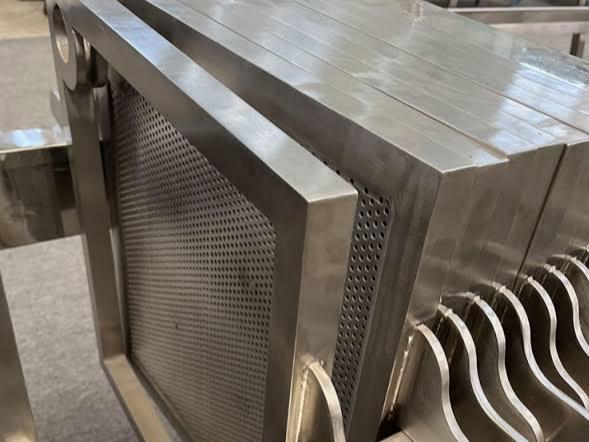
The Gold Standard for Hygiene and Compliance
For regulated industries, material choice is often dictated by compliance.
- Sanitary Design: Stainless steel has a non-porous, smooth surface that resists bacterial buildup and is exceptionally easy to clean. It is fully compatible with industry-standard Clean-in-Place (CIP) and Sterilize-in-Place (SIP) procedures.
- Regulatory Compliance: This is a point I see overlooked until an audit is imminent. Buyers in the food, beverage, and pharmaceutical sectors face strict material certification requirements. Stainless steel grades like 316L are readily available with the documentation to prove compliance with standards like FDA, EU 1935/2004, and GMP. Neglecting this during procurement can lead to expensive, urgent rework on-site. The same applies to high-purity applications like battery recycling, where preventing metal ion contamination is critical.
304 vs. 316L Stainless Steel
Not all stainless steel is created equal. The two most common grades used for filter plates are:
- Type 304: This is an excellent, general-purpose stainless steel with good corrosion resistance. It’s widely used for many food processing applications, such as in wine or juice production.
- Type 316L: This grade contains an added element, molybdenum, which significantly enhances its resistance to corrosion from chlorides (like salt water or brines) and acids. The “L” stands for “low carbon,” which improves its properties after welding. 316L is the preferred choice for pharmaceutical production, aggressive chemical processing, and marine applications.
Unmatched Durability and Temperature Range
Beyond hygiene, stainless steel offers superior mechanical properties:
- Extreme Temperatures: It can handle temperatures from cryogenic levels up to several hundred degrees Celsius, far exceeding the limits of any polymer.
- High Pressure and Abrasion: Stainless steel plates are incredibly strong and rigid, allowing them to withstand very high filtration pressures. They also offer excellent resistance to abrasion, making them a fantastic long-term solution for abrasive mineral slurries, fulfilling the durability need I mentioned earlier where PP fails.
What Is the Role of Cast Iron as a Filter Plate Material?
You’re dealing with an industrial process so extreme that even stainless steel might deform under the combination of immense pressure and high temperature. A plate failure in such a heavy-duty environment would not just be costly; it could be catastrophic. For these toughest of jobs, cast iron offers unmatched mechanical robustness.
Cast iron filter plates are used in extreme heavy-duty filtration applications characterized by very high operating temperatures and pressures. Their primary advantages are immense structural strength and thermal stability, making them the material of last resort when all other options would fail mechanically.
Cast iron plates are not common; they are highly specialized components for the most demanding corners of the industrial world. Their selection is based almost entirely on mechanical strength.
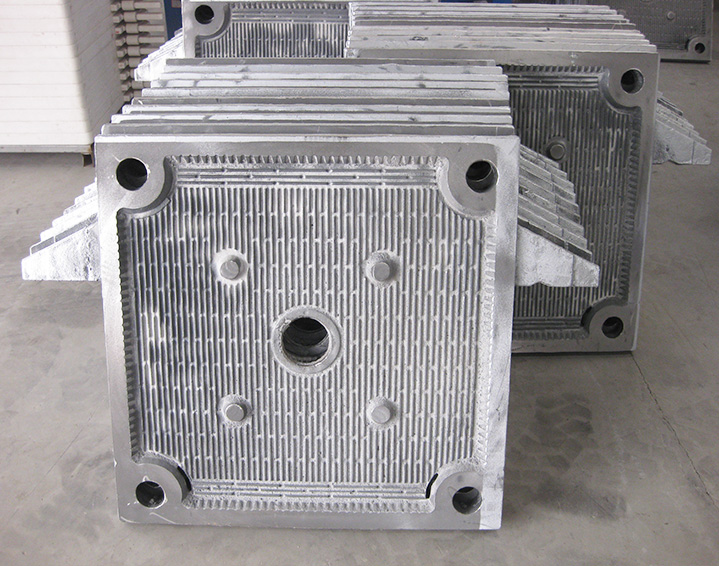
The Champion of High Pressure and Temperature
The singular reason to choose cast iron is its ability to withstand forces that would destroy other materials.
- Pressure Handling: Cast iron plates can be designed to handle filtration pressures well in excess of 30 bar, and in some cases, up to 60 bar or more.
- Thermal Stability: It maintains its structural integrity at very high temperatures, making it suitable for certain metallurgical refining processes or high-temperature chemical synthesis where polymers and even some steel grades would fail.
Trade-offs: Weight and Corrosion
This strength comes with significant disadvantages that limit its use:
- Extreme Weight: Cast iron is incredibly dense and heavy. A single plate can weigh hundreds of kilograms, making installation and maintenance a major logistical challenge requiring overhead cranes and specialized handling equipment.
- Poor Corrosion Resistance: Unlike stainless steel, cast iron is highly susceptible to rust and chemical attack. To protect the plate from the process slurry, it is almost always encapsulated with a protective layer. This is often done with sheets of polypropylene or a vulcanized rubber coating. While this provides chemical protection, the coating itself becomes a potential point of failure.
Niche Industrial Applications
You will only find cast iron plates in a select few industries where mechanical load is the overriding concern. Examples include:
- Mineral Refining: In certain high-temperature ore leaching processes.
- Dye and Pigment Manufacturing: For specific chemical pathways that run at extreme pressures.
- Legacy Systems: Many older filter presses were built with cast iron, and facilities may continue to use it for consistency, though modern engineering often allows for a transition to a more practical material.
Comparison Table: Filter Plate Material at a Glance?
To help you visualize the key differences and make a quick assessment, we’ve compiled a summary table. This table compares the most important attributes of each primary filter plate material we’ve discussed.
| Attribute | Polypropylene (PP) | PVDF | Stainless Steel (316L) | Cast Iron |
|---|---|---|---|---|
| Max Temp. | ~90°C (194°F) | ~150°C (302°F) | > 250°C (482°F) | Very High (> 300°C) |
| Chemical Resistance | Good (pH 2-12) | Excellent (Acids, Solvents) | Excellent (Wide Range) | Poor (Requires Coating) |
| Abrasion Resistance | Fair to Poor | Good | Excellent | Excellent (Structurally) |
| Initial Cost | Low | High | Very High | High |
| Weight | Low | Low-Medium | Very High | Extremely High |
| Hygiene/Compliance | Special grades only | Good Purity | Excellent (FDA, GMP) | Not Applicable |
| Best For… | Wastewater, General Use | Aggressive Chemicals, Heat | Food, Pharma, High Purity | Extreme Pressure & Temp. |
How Do I Choose the Right Filter Plate Material for My System?
With all these variables of temperature, chemistry, pressure, and cost, choosing the correct material can feel overwhelming. But making a poor choice leads directly back to the problems of downtime, budget overruns, and safety risks. Let’s walk through a systematic process to simplify your decision.
To choose the right filter plate material, you must systematically evaluate your complete process requirements. This includes the slurry’s chemical makeup (pH and solvents), its peak operating temperature, the abrasiveness of its solid particles, and any regulatory compliance mandates. Balancing these technical needs against the total cost of ownership will lead you to the optimal solution.
Making the right choice is a process of elimination based on your specific operating conditions. Follow these steps to guide your selection.
A Step-by-Step Selection Guide
- Analyze Your Slurry Chemistry: This is your first and most important filter. What is the full pH range of your slurry, from start to finish? Are there any strong oxidizing agents, hydrocarbons, or organic solvents present? If you have a simple aqueous slurry with a neutral pH, PP is a strong candidate. If you have aggressive solvents or extreme pH values, you immediately need to look at PVDF or stainless steel.
- Determine Your Full Temperature Range: What is your average operating temperature? More importantly, what is the absolute peak temperature the plates will experience? As we discussed with the warped PP plates, cleaning cycles (CIP/SIP) or process fluctuations can cause temperature spikes that lead to failure. If your peak temp ever exceeds 90°C, PP is out. If it exceeds 150°C, PVDF is out, and you must consider a metal plate.
- Evaluate Abrasion Potential: Are the solid particles in your slurry hard and sharp? Think silica sand, mineral crystals, or ceramic fines. As my experience in mining shows, using standard PP in these applications will lead to a very short service life. The higher initial cost of an abrasion-resistant material like stainless steel or a specially formulated rubber-coated plate will provide a much better return on investment.
- Check Regulatory and Purity Requirements: Do you operate in the food, beverage, pharmaceutical, or biotech industry? If so, your choice may be made for you. You will likely need a material, like 316L stainless steel, that comes with full traceability and certification for FDA, EU 1935/2004, or other relevant standards. Don’t wait for an audit to discover your equipment isn’t compliant.
- Calculate the Total Cost of Ownership (TCO): Do not base your decision solely on the initial purchase price. A plate pack that costs 30% more but lasts three times as long is the far cheaper option. Factor in the cost of replacement parts, the labor to change them, and, most significantly, the value of lost production every time your press is down for maintenance.
While this guide provides a strong foundation, we always recommend a full process evaluation by an experienced filtration engineer. For new or complex applications, sending a slurry sample to the manufacturer for laboratory testing is the surest way to verify material compatibility and ensure a successful outcome.
Conclusion
Selecting the correct filter plate material is a foundational decision that directly impacts your operational efficiency, product quality, safety, and long-term costs. From the versatile and economical workhorse of polypropylene to the hygienic precision of stainless steel and the sheer brute strength of cast iron, each material has a distinct and important role. By methodically analyzing your process chemistry, peak temperature, abrasion potential, and compliance needs, you can move beyond a simple price comparison and choose a filter plate material that delivers reliable, long-term performance and the best possible total cost of ownership for your operation.