
Every tonne of wet cake that leaves a filter press carries a cost: transport, landfill fees, drying energy, or lost product. For most operators, the moisture left in the cake is the single number that decides whether a filtration process is economical. Understanding what filter cake is, and what shapes it, is the first step toward controlling that number.
This guide explains filter cake in practical terms: how it forms, which properties matter, what determines its quality, and how filter plate selection changes the result.
What Is Filter Cake in Solid-Liquid Separation?
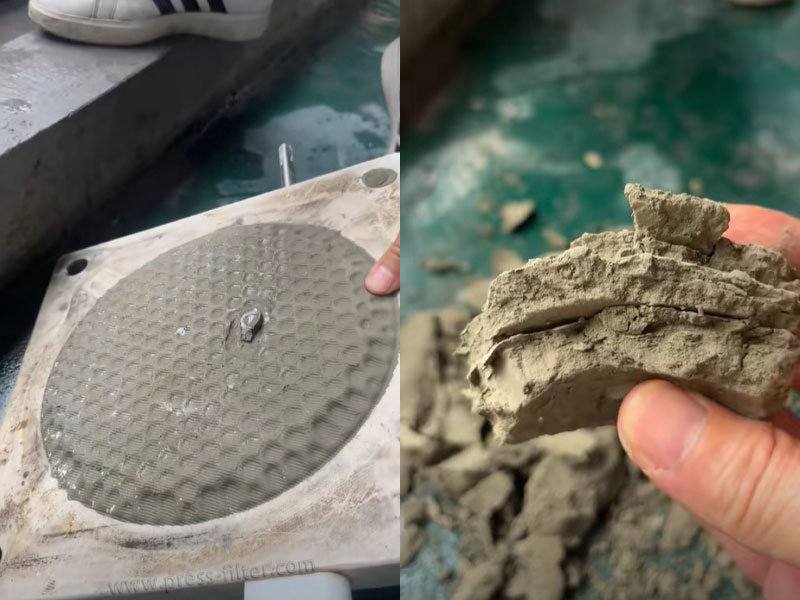
Filter cake is the layer of solid particles left on the filter medium after a slurry passes through it. The liquid that passes through the medium is called filtrate. The solids that stay behind build up into a compact, semi-solid mass, and that mass is the filter cake.
The term applies across many separation technologies, including filter presses, vacuum filters, and belt filters. In a filter press, the cake forms inside the chambers between adjacent filter plates and is discharged when the press opens.
Depending on the process, filter cake can be either the valuable product or the waste stream:
- Cake as product: mineral concentrates, pigments, starch, and chemical intermediates, where the solids are recovered and sold or reprocessed.
- Cake as waste: municipal and industrial sludge, where the goal is to remove as much water as possible before disposal.
In both cases, the drier and more uniform the cake, the lower the downstream cost.
How Is Filter Cake Formed in a Filter Press?
Cake formation in a filter press follows a repeatable sequence:
- Feed: Slurry is pumped into the chambers formed by closed filter plates, each covered with filter cloth.
- Initial deposition: Solid particles are caught on the cloth surface while filtrate passes through and exits via the plate drainage channels.
- Cake build-up: As more solids accumulate, the cake itself becomes part of the filter medium. It traps finer particles, which often improves filtrate clarity as filtration continues.
- Chamber fill: Feed pressure rises as the cake thickens and flow resistance increases. Filtration is complete when the chambers are full and the filtrate flow drops to a minimum.
- Squeezing or air blow (optional): With membrane plates, an inflatable diaphragm compresses the cake mechanically. Alternatively, compressed air can be used to push out residual liquid.
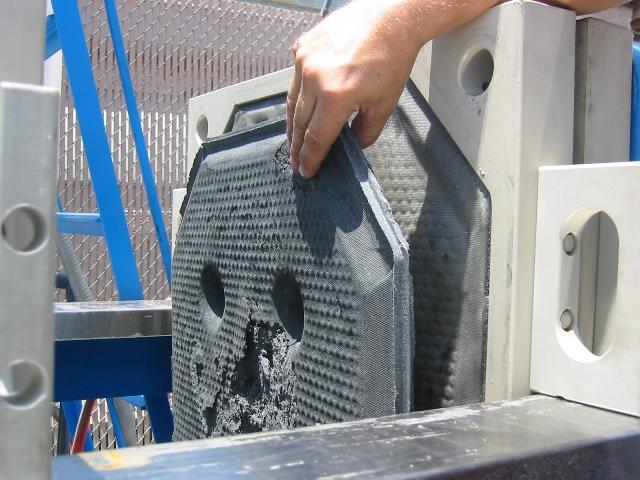
- Discharge: The plate pack opens and the cake falls out, ideally cleanly and in one piece.
This sequence explains why plate design matters so much. The chamber geometry, drainage surface, and squeeze capability all act directly on the cake before it is ever discharged.
Key Properties of Filter Cake: Moisture Content, Thickness, and Release
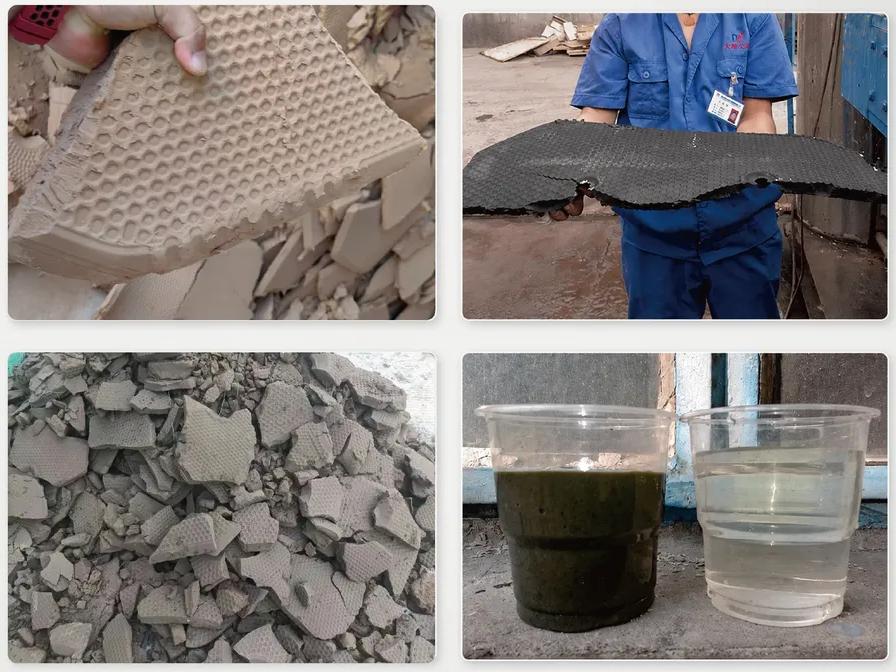
Four properties determine how a filter cake behaves in operation and how expensive it is to handle.
| Property | What It Means | Why It Matters |
|---|---|---|
| Moisture content | Percentage of water remaining in the cake | Drives transport, disposal, and drying costs |
| Cake thickness | Depth of solids built up in the chamber | Affects cycle time and drainage uniformity |
| Compressibility | How much the cake structure compacts under pressure | Determines whether squeezing will release more water |
| Release behavior | How easily the cake separates from the cloth and plate | Impacts cycle time, cloth life, and manual cleaning labor |
Moisture is the property most buyers focus on, but it does not stand alone. A thick cake can dewater unevenly, and a cake that sticks to the cloth slows every cycle. Good filtration design balances all four.
What Affects Filter Cake Quality? Slurry, Pressure, Filter Cloth, and Plate Design
Cake quality is the combined result of the material being filtered and the equipment filtering it. Some factors are fixed by the process, while others can be engineered.
Factors Set by the Process
- Slurry characteristics: Particle size distribution, solids concentration, viscosity, and chemistry all influence how easily water drains. Fine, compressible, or sticky materials are harder to dewater.
- Feed pressure and time: Higher pressure and longer filtration times generally produce a drier cake, up to the point where the cake structure stops releasing more water.
- Filter cloth selection: Cloth permeability and weave determine how quickly solids are caught and how cleanly the cake releases.
Factors Set by the Filter Plate
This is where equipment choice has the biggest effect. The plate decides how much pressure the cake actually experiences and how evenly water can escape.
Chamber (recessed) filter plates form a fixed-volume cavity. Dewatering depends entirely on the feed pump pressure, and the cake dries through filtration alone. For free-draining or less compressible materials, this is often sufficient and offers a simple, robust, low-cost solution. LONGONE’s chamber filter plates are the most widely used option for general sludge dewatering and solid-liquid separation.
Membrane filter plates add a second stage. After the chambers are filled, an elastic diaphragm on the plate face is inflated with water or compressed air. The diaphragm presses on the cake from both sides, forcing out water that feed pressure alone cannot remove. This squeezing step typically reduces cake moisture noticeably compared with a chamber plate, and it also produces a more uniform cake with fewer wet spots. Because the cake is drier and more compact, it often releases more cleanly as well, and in many applications the shorter overall cycle offsets the added squeeze time.
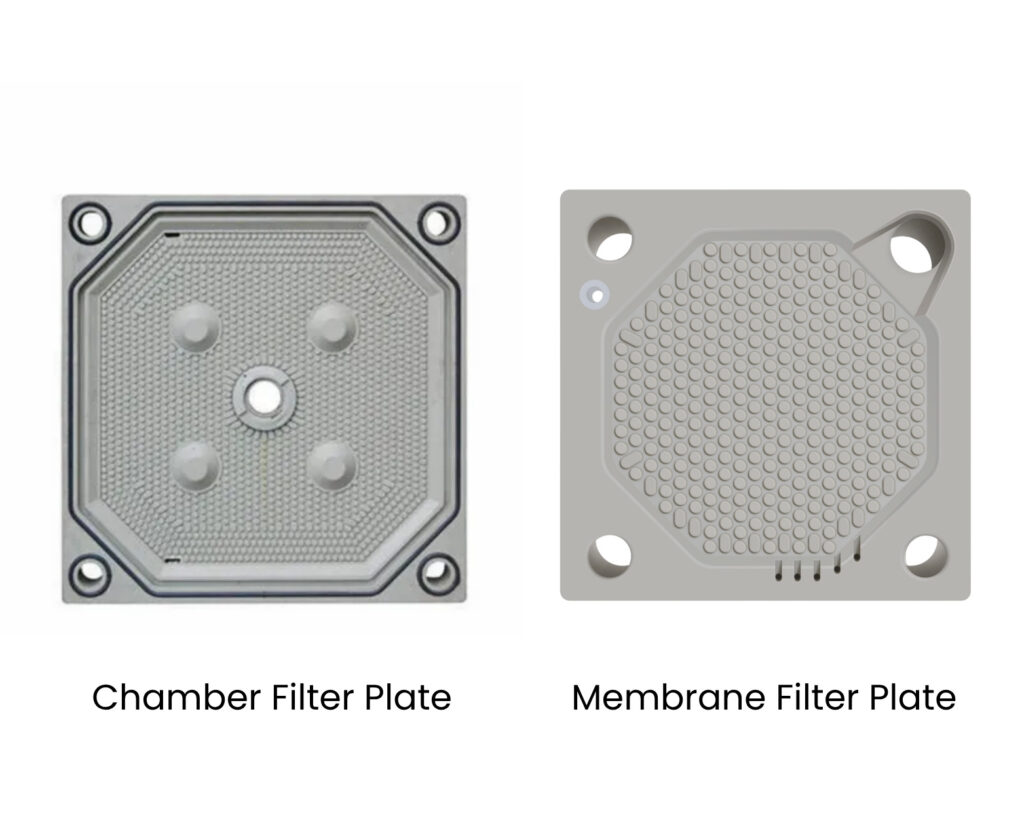
LONGONE’s membrane filter plates are manufactured from high-grade polypropylene with tight dimensional tolerances, so the diaphragm and sealing surfaces perform consistently over repeated squeeze cycles.
Other plate-level variables also shape the cake:
- Chamber depth: Determines cake thickness. Thinner cakes drain faster and more evenly; thicker cakes increase capacity per cycle.
- Drainage surface pattern: Ribs, grooves, and pips affect how quickly filtrate leaves the chamber and how well the cloth is supported.
- Feed position: Center, corner, top, or side feed changes how slurry distributes across the plate, which influences cake uniformity.
- Sealing design: Gasketed, non-gasketed, and CGR plates differ in leakage control, which matters when pressures are high.
Because these parameters interact, a plate that is well matched to the slurry usually outperforms a higher-spec plate chosen without reference to the material.
Filter Cake in Practice: Applications, Handling, and Choosing the Right Filter Plate
Filter cake looks different and is handled differently in every industry. The table below summarizes the main applications and the plate configurations that commonly suit them.
| Industry | Typical Material | Cake Priority | Common Plate Choice |
|---|---|---|---|
| Wastewater treatment | Municipal and industrial sludge | Lowest possible moisture to cut disposal cost | Membrane plates for high dryness; chamber plates for cost-sensitive plants |
| Mining and minerals | Tailings, concentrates | Abrasion resistance, stable cake, high throughput | Reinforced PP chamber or membrane plates |
| Chemical processing | Pigments, intermediates, process residues | Chemical compatibility, product recovery | GFPP or PVDF plates with resistant gaskets |
| Food and beverage | Starch, juice solids, sugar processing residues | Hygienic operation, clean cake release | Food-compatible PP plates, plate-and-frame where fine filtration is needed |
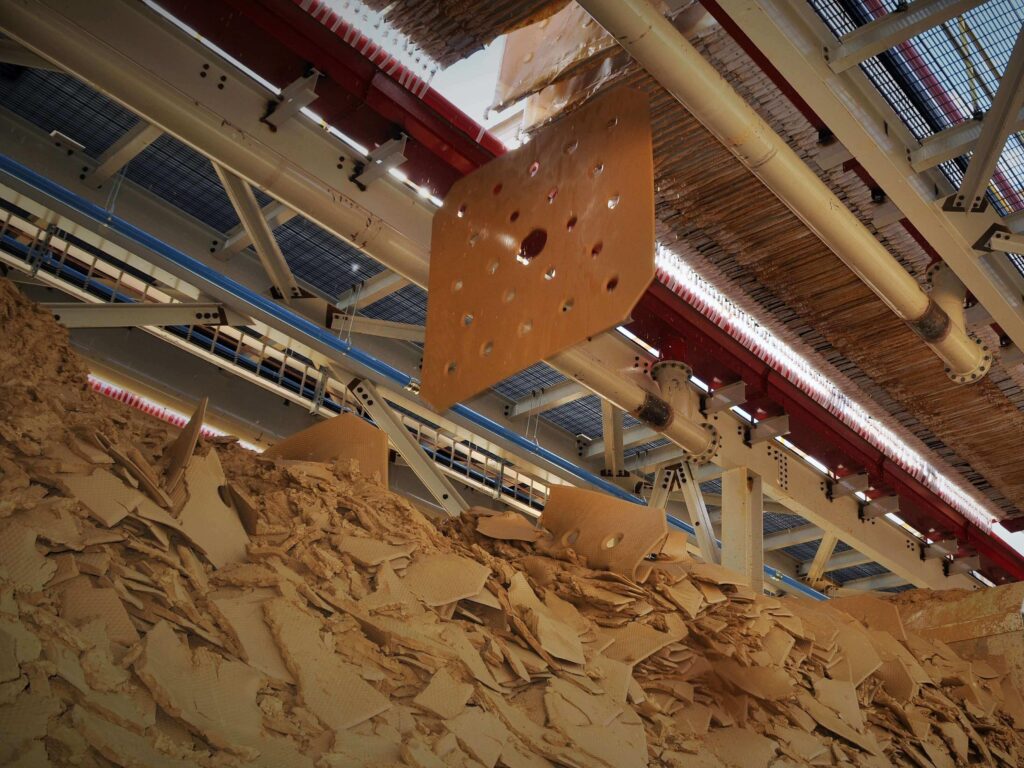
Handling and Disposal
After discharge, filter cake is conveyed, stored, and either disposed of or reused. Drier cake is lighter, easier to convey, and less likely to leak during transport. In wastewater treatment, every percentage point of moisture removed directly lowers the weight that must be hauled away. Where cake is a recovered product, such as a mineral concentrate, lower moisture reduces drying energy and improves product value.
Choosing the Right Filter Plate
For plants that rely on filtration to meet disposal or recovery targets, the plate type is a financial decision as much as a technical one. A membrane plate costs more than a chamber plate, but the saving in transport, drying, or disposal can justify the difference when volumes are high. For free-draining materials or lower-volume operations, a chamber plate may offer the better return.
LONGONE manufactures chamber, membrane, CGR, and plate-and-frame filter plates in sizes from 250 × 250 mm to 2000 × 2000 mm and beyond, in PP, glass fiber reinforced PP, PVDF, stainless steel, and cast iron. Plates are designed to fit most major filter press brands, so replacement and upgrade projects do not require costly press modifications. If you can share your slurry type, operating pressure, and current press model, our engineering team can review the application and suggest a suitable plate configuration. You can also explore our full range of filter press plates or see the industries we serve.
Conclusion
Filter cake is more than a by-product of filtration. It is the outcome that determines disposal cost, recovery value, and cycle efficiency. Its quality depends on the slurry, the operating conditions, the cloth, and, most directly, the filter plate.
Chamber plates remain a reliable, economical choice for many materials. Where lower moisture is the priority, membrane plates add a squeezing stage that often delivers a drier, more uniform cake and lowers handling costs across the whole process chain. The right choice comes down to your material, your volume, and what each percentage point of moisture is worth to your operation.
If you are planning a new press or replacing worn plates, send us your slurry details, plate size, and press model. LONGONE can review your requirements and recommend a plate configuration that fits your process.
Filter Cake FAQ
What is filter cake in simple terms?
Filter cake is the solid material that builds up on a filter medium when a slurry is filtered. In a filter press, it forms inside the chambers between the plates and is discharged when the press opens.
What is the difference between filter cake and filtrate?
Filtrate is the liquid that passes through the filter medium. Filter cake is the solid layer left behind. Depending on the process, either one can be the desired product.
What is a good moisture level for filter cake?
There is no single target. Acceptable moisture depends on the material, the disposal or reuse route, and local regulations. Free-draining mineral solids can reach low moisture levels easily, while biological sludge retains more water. The practical goal is the lowest moisture that your process can reach economically.
How can I reduce filter cake moisture?
The most effective approaches are optimizing slurry conditioning, adjusting feed pressure and filtration time, selecting a suitable filter cloth, and using membrane filter plates to squeeze the cake after filtration. Membrane squeezing is often the largest single improvement for compressible materials.
Why does filter cake stick to the filter cloth?
Sticking is usually caused by fine or sticky particles blinding the cloth, a cake that is too wet to separate cleanly, or a cloth that is not suited to the material. Using a drier cake from membrane squeezing, choosing a different cloth weave, and regular cloth cleaning typically improve release.