
Choosing a filter press starts with one structural question: how is the filtration chamber formed? Many buyers use “plate and frame” as a general name for any filter press, but it describes one specific design, and picking the wrong design can affect cake dryness, labor cost and operating pressure for years.
This guide explains what a plate and frame filter press is, how it works, what it is made of, and how it compares with the recessed chamber design. It also helps you decide when a plate and frame press is the more practical choice for your application.
What Is a Plate and Frame Filter Press?
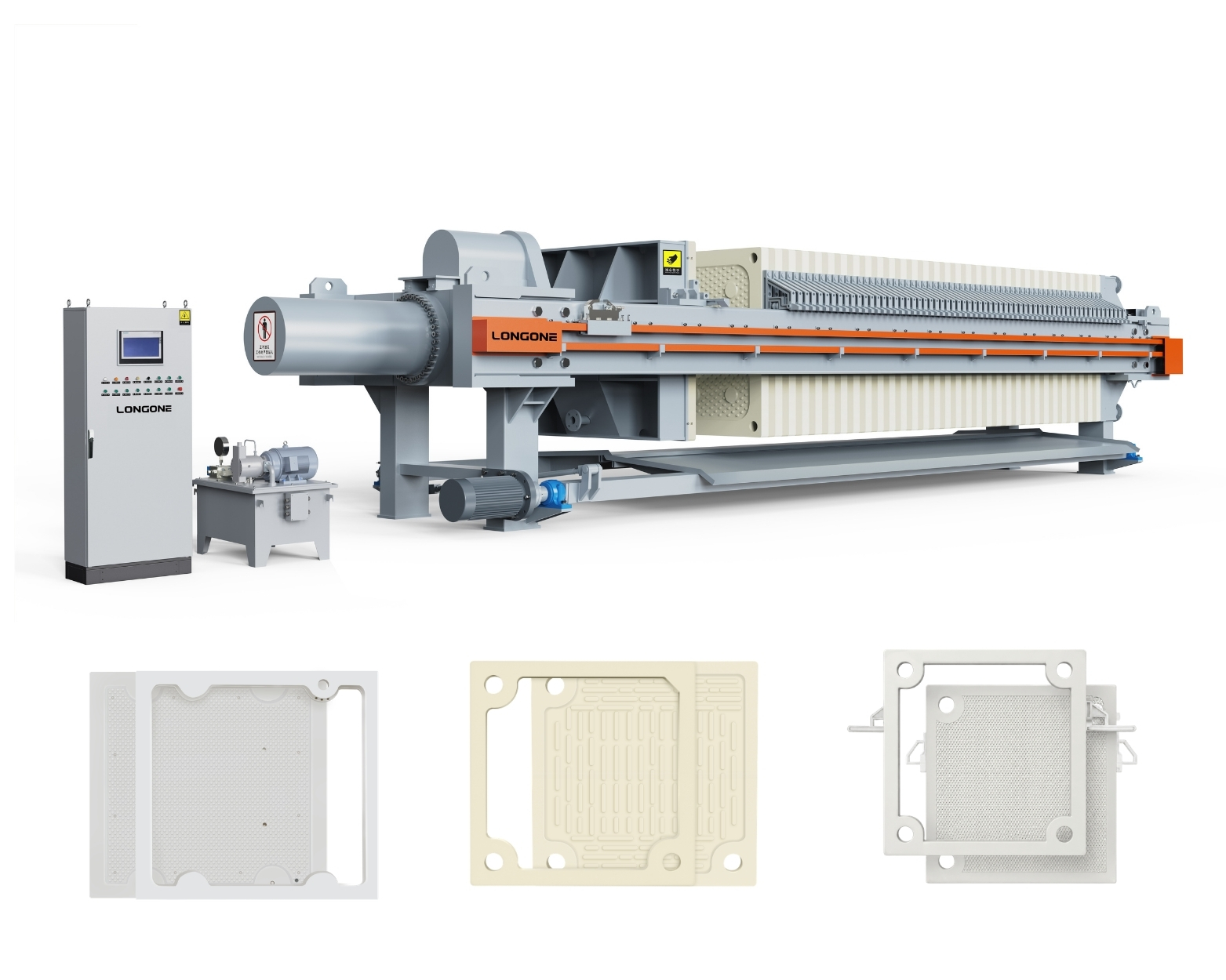
A plate and frame filter press is a batch solid-liquid separation machine. It uses pressure to force a slurry through filter cloth, which holds back the solids and lets the clear liquid (filtrate) pass through.
What defines this design is that it uses two separate components, plates and frames, arranged in alternating order. A solid plate carries the filter cloth and the drainage channels. An open frame sits between two plates, and the hollow space inside the frame becomes the filtration chamber. As solids build up in that space, they form a filter cake.
In short: in a plate and frame filter press, the chamber is created by the thickness of the frame, not by a recess molded into the plate. This is the main structural difference from a recessed chamber filter press, and it explains most of the differences in cost, flexibility and pressure capability discussed below.
Plate and frame filter presses are one of the earliest filter press designs and are still widely used in chemical processing, food and beverage, pharmaceuticals, laboratory work and small-scale industrial operations.
How a Plate and Frame Filter Press Works: The Filtration Cycle Step by Step
Every filter press runs in batches. A typical plate and frame cycle follows these steps:
- Closing the press. Plates and frames, each covered with filter cloth, are pressed together against a fixed head. Closing can be done by a manual screw or, more commonly for larger units, by a hydraulic cylinder. The tight seal keeps the slurry inside the chambers under pressure.
- Feeding the slurry. A feed pump sends slurry through a feed port running through the stack. The slurry enters each frame chamber through channels in the plates and frames.
- Filtration. Pressure pushes the liquid through the filter cloth and into the drainage grooves on the plate surface. The filtrate flows out through discharge ports. Solids stay behind and begin to build up against the cloth.
- Cake formation. As filtration continues, the cake grows until the frame chamber is full. Flow drops and pump pressure rises, which signals the end of the filtration phase.
- Washing (optional). If you need to recover valuable product from the cake or remove soluble impurities, wash liquid can be pumped through the cake.
- Cake discharge. The press is opened, plates and frames are separated, and the cake is removed, either falling by gravity or with manual assistance. The cloth is checked or cleaned, and the press is closed for the next cycle.
Because the frame is open, the cake fills the whole space inside it. This is why the frame thickness sets the cake thickness.
Key Components: Plates, Frames, Filter Cloth, Hydraulic System and Feed Pump
Understanding the main parts helps you specify a machine and troubleshoot problems later.
Filter plates. The plate is a flat, solid element with a drainage surface, usually grooves or studs, that supports the filter cloth and guides filtrate to the discharge ports. Plates are made from materials such as polypropylene, cast iron, stainless steel or other engineered materials, depending on chemical resistance, temperature and mechanical needs.
Filter frames. The frame is an open ring that separates two plates. Its thickness defines the chamber volume and the cake thickness. Frames come in different thicknesses so the same press can be adjusted for different slurries or cake targets.
Filter cloth. The cloth sits between each plate and frame. It is the actual filtration medium, and its material, weave and permeability strongly affect filtrate clarity, cake release and cycle time. Cloth selection is one of the most important and most overlooked decisions in filter press performance.
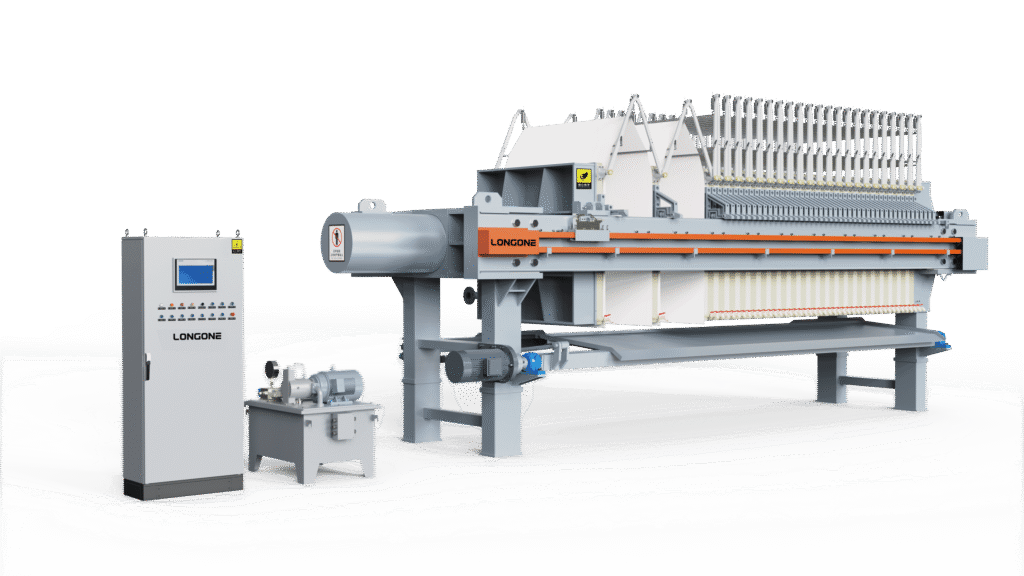
Closing system. Smaller presses may use a manual screw. Larger machines use a hydraulic cylinder to hold plates and frames together against the pressure of the incoming slurry. Insufficient closing force is a common cause of leakage.
Feed pump. The pump delivers slurry at the pressure required for filtration. Pump type and pressure capability should match the slurry’s characteristics, especially if the solids are abrasive or shear-sensitive.
Frame and support structure. Side beams or a rigid frame hold the plate stack in alignment and carry the closing load.
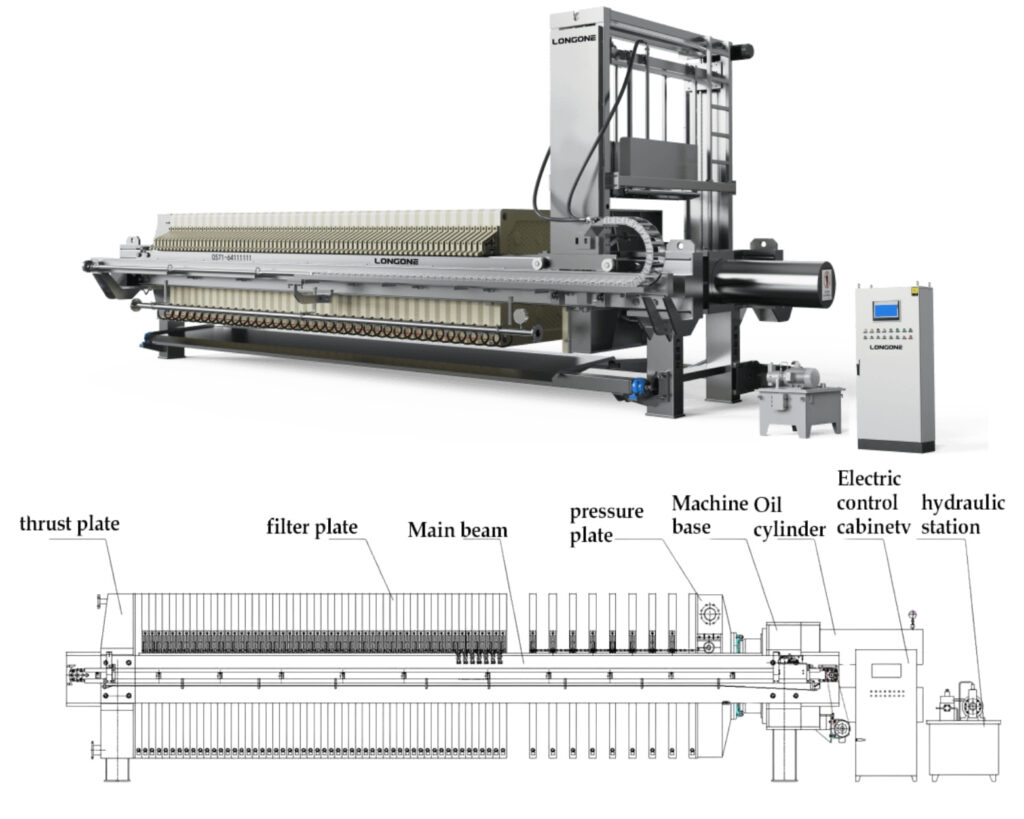
Plate and Frame vs. Recessed Chamber Filter Press: What Actually Differs
These two designs are often presented as “old” versus “modern,” but that is misleading. They are different tools with different strengths.
| Feature | Plate and Frame Filter Press | Recessed Chamber Filter Press |
|---|---|---|
| How the chamber is formed | By the frame between two plates | By recesses molded into each plate |
| Number of components | Plates and frames (two element types) | Plates only (one element type) |
| Cake thickness | Adjustable by changing frame thickness | Fixed by the plate recess depth |
| Typical operating pressure | Generally lower | Generally higher |
| Sealing | More sealing surfaces, so more potential leak points | Fewer sealing surfaces |
| Initial cost | Often lower | Often higher |
| Cake discharge | Often more manual | Easier to automate (e.g., plate shifting) |
| Best suited for | Small batches, lab use, frequent product changes | Continuous industrial production, higher dryness targets |
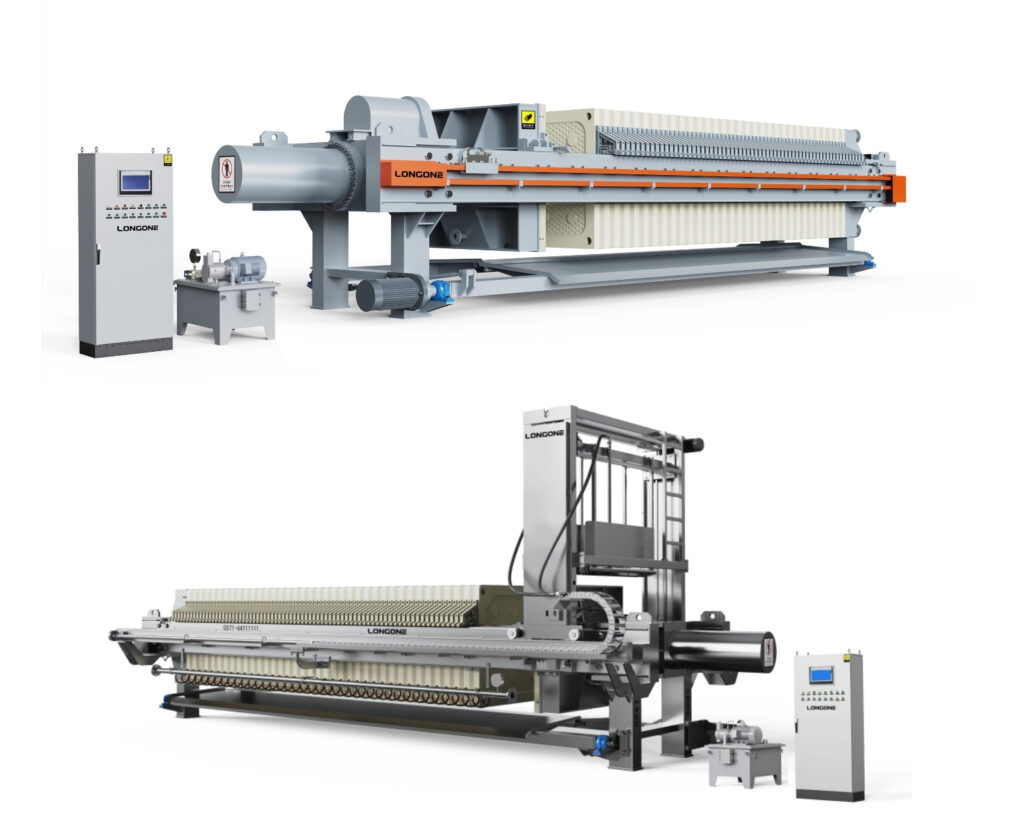
The practical takeaway: recessed chamber presses tend to dominate high-volume, higher-pressure and automated operations. Plate and frame presses remain a sensible choice when flexibility and lower entry cost matter more than throughput and automation.
Where Plate and Frame Filter Presses Still Make Sense
Despite the popularity of recessed chamber designs, plate and frame presses continue to be a good fit in several situations:
- Small production volumes. When slurry quantity is limited, a large automated press may be more machine than you need.
- Laboratory and pilot testing. Adjustable cake thickness makes plate and frame units useful for testing how a slurry behaves before scaling up.
- Frequent product changeovers. Simple construction and easy access make cleaning between products more manageable.
- Easy-to-release cakes. If your solids discharge cleanly from the cloth, the manual aspect of discharge is less of a burden.
- Budget-sensitive projects. Lower initial investment can be decisive for smaller operations.
- Clarification and polishing. Where the priority is clear filtrate rather than very dry cake, thin cakes and adjustable frames can be an advantage.
There are also cases where a plate and frame press is not the best option: high-throughput operations, applications requiring high pressure or very dry cake, and plants that need fully automatic cycles with minimal labor. In those cases, a recessed chamber or membrane filter press is usually more appropriate.
How to Choose the Right Plate and Frame Filter Press for Your Application
Rather than asking which design is more advanced, ask which design fits your process. These factors matter most:
1. Slurry characteristics. Particle size, solids concentration, viscosity, temperature and chemical composition determine cloth choice, plate material and achievable filtration rate. If possible, test your actual slurry before purchasing.
2. Volume and cycle frequency. Estimate how much slurry you process per batch and how many batches per day. This drives filtration area and the number of plates and frames.
3. Target cake dryness. If you need very low moisture in the cake, evaluate whether a plate and frame design can meet the target or whether a recessed chamber or membrane press is required.
4. Operating pressure. Confirm that the plate and frame structure and its sealing can handle the pressure your process needs.
5. Labor and automation. Consider who will open the press, discharge the cake and clean the cloth. A lower purchase price can be offset by higher labor cost over time.
6. Materials of construction. Match plate, frame and cloth materials to your chemicals and temperatures. Corrosion or thermal deformation shortens equipment life quickly.
7. Spare parts availability. Plates, frames and cloth are wear items. Choose a supplier who can provide replacements with consistent dimensions and quality.
If you are unsure, share your slurry data and daily volume with a filter press specialist. A brief technical review often prevents costly design mistakes.
Conclusion
A plate and frame filter press is defined by its two-part structure: solid plates and open frames stacked in alternation, with the frame thickness setting the cake thickness. It offers flexibility and lower entry cost, but usually at the price of lower pressure capability and more manual work than modern recessed chamber designs.
The best filter press is not the newest or the most automated one. It is the one that matches your slurry, your production volume, your cake dryness target and your labor situation. Start from those four factors and the choice usually becomes clear.
If you would like help evaluating your application, our team at LONGONE can review your slurry data and recommend suitable filter plates and configurations. Contact us with your process details and we will be glad to help.
Frequently Asked Questions
What is the main difference between a plate and frame and a recessed chamber filter press?
A plate and frame filter press forms the filtration chamber with a separate frame placed between two plates. A recessed chamber filter press forms the chamber with recesses molded into the plates themselves, so no frames are needed.
Can a plate and frame filter press be automated?
Yes, to a degree. Hydraulic closing is common, and some systems add mechanical assistance for opening and closing. However, full automation such as automatic plate shifting and cloth washing is more typical of recessed chamber presses.
What materials are plates and frames made from?
Common materials include polypropylene, cast iron, stainless steel and other engineered materials. The right choice depends on chemical compatibility, operating temperature and mechanical load.
How do I choose the frame thickness?
Frame thickness determines cake thickness. Thicker frames hold more solids per cycle but may lengthen filtration time and make discharge harder. The best thickness depends on how your slurry behaves, so small-scale testing is recommended.
How often should filter cloth be replaced?
There is no fixed interval. Replacement depends on slurry abrasiveness, chemical exposure, cleaning method and how often the press runs. Signs that cloth needs replacing include declining filtrate clarity, slower filtration, blinding that no longer washes out, and visible wear or tears.