
When selecting filter plates for a filter press, one of the most common questions is whether to use a CGR filter plate or a non-CGR filter plate. Although both designs are widely used for solid-liquid separation, they differ significantly in sealing method, filter cloth installation, leakage control, maintenance requirements, and overall operating cost.
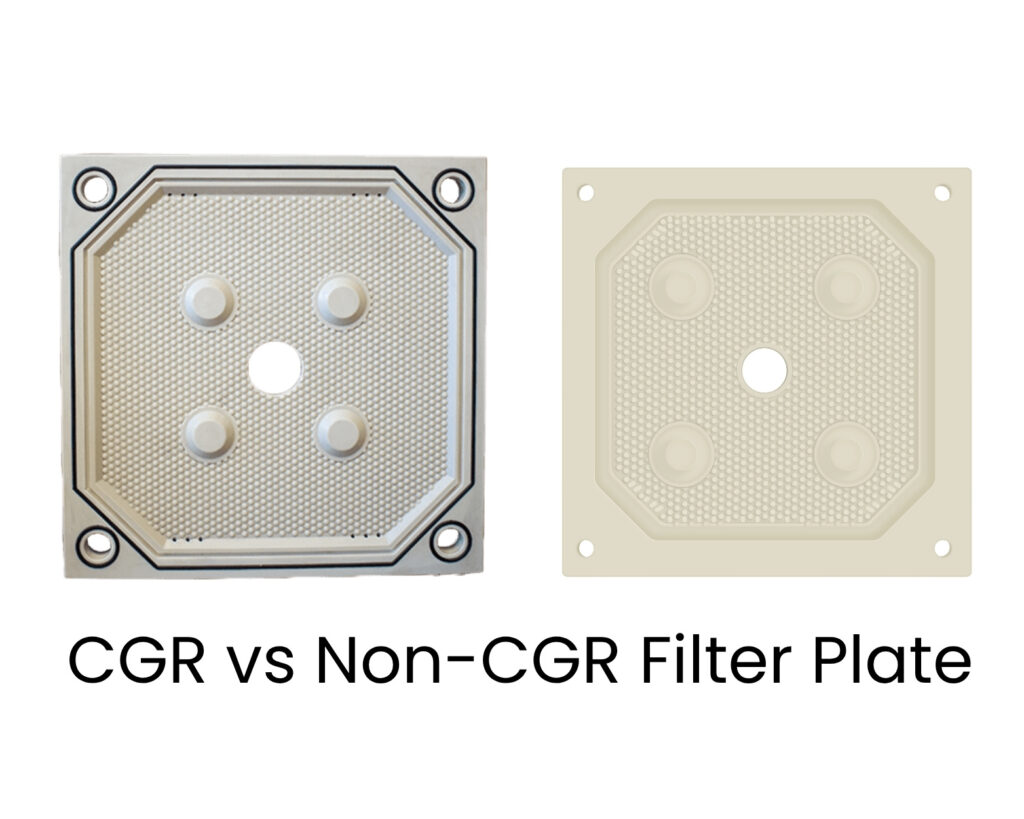
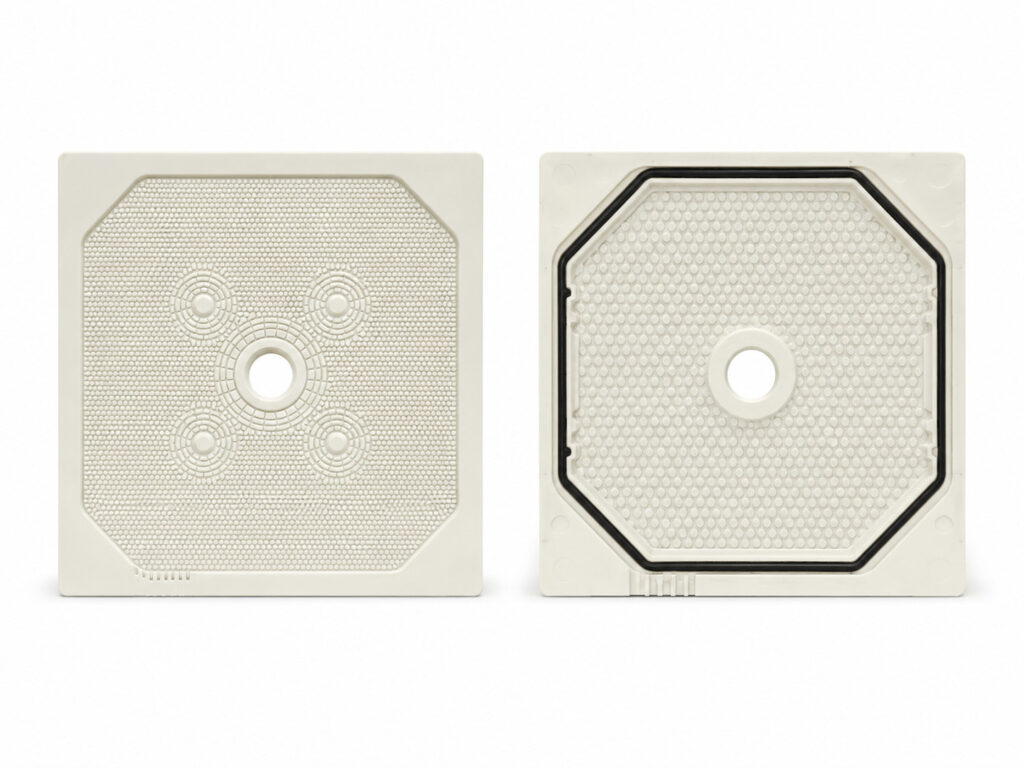
CGR stands for Caulked, Gasketed, and Recessed. A CGR filter plate incorporates a sealing gasket around the plate perimeter, while the filter cloth is secured into a groove on the plate surface. By comparison, a non-CGR filter plate normally uses a non-gasketed recessed design in which the filter cloth extends over the sealing surface between adjacent plates.
Neither design is automatically better for every filtration process. The right choice depends on the slurry characteristics, chemical compatibility, leakage tolerance, operating environment, maintenance practices, and total lifecycle cost. This guide explains the key differences between CGR vs non CGR filter plates and helps filter press operators, engineers, and purchasing teams determine which option is more suitable for their application.
What Is a CGR Filter Plate?
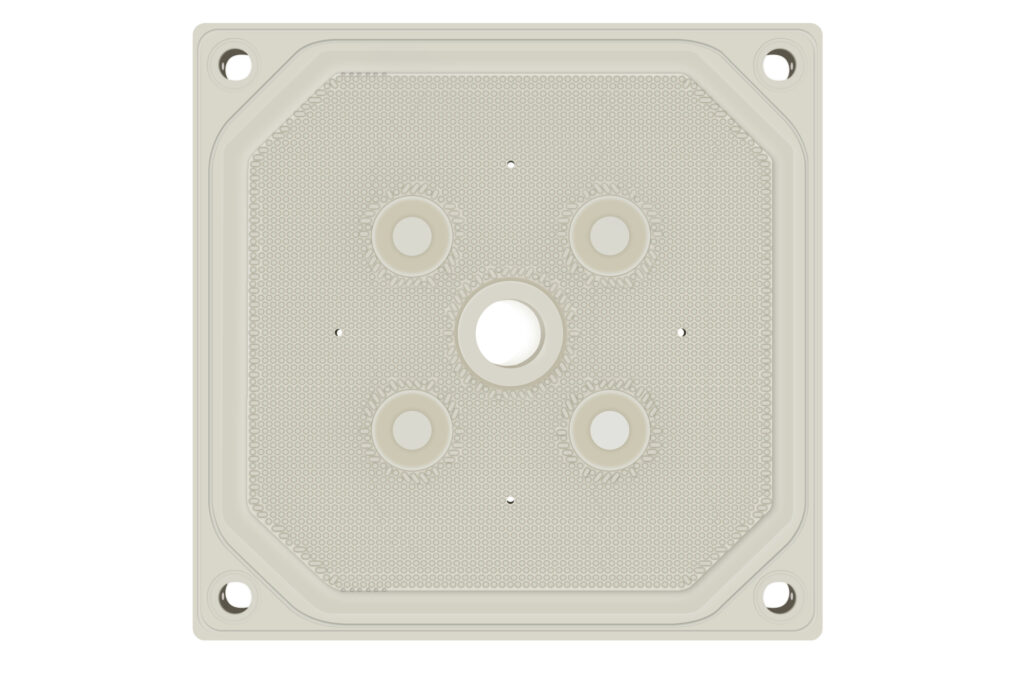
A CGR filter plate is a recessed filter press plate designed with a gasket around its sealing surface and grooves that hold the filter cloth securely in position. The term CGR refers to three important characteristics:
- Caulked: The filter cloth is inserted and secured into grooves formed in the filter plate.
- Gasketed: A gasket is installed around the plate perimeter to provide a tighter seal between adjacent plates.
- Recessed: The plate contains a recessed chamber where solids accumulate during filtration and form the filter cake.
When the filter press closes, the gaskets on neighboring plates are compressed against each other, creating a highly effective seal around the filtration chamber. This structure significantly reduces the possibility of filtrate escaping between the plates.
Because of this enhanced sealing performance, CGR plates are frequently considered for processes involving corrosive liquids, odorous materials, valuable filtrate, potentially hazardous slurry, or applications in which keeping the filter press area clean is especially important.
CGR plates are commonly manufactured from polypropylene because of its chemical resistance, relatively low weight, and suitability for many industrial filtration environments. Depending on the slurry chemistry and operating temperature, different gasket materials may be selected, including EPDM, NBR, and FKM-type materials.
However, gasket selection must always be based on actual chemical compatibility rather than simply choosing the most expensive material.
What Is a Non-CGR Filter Plate?
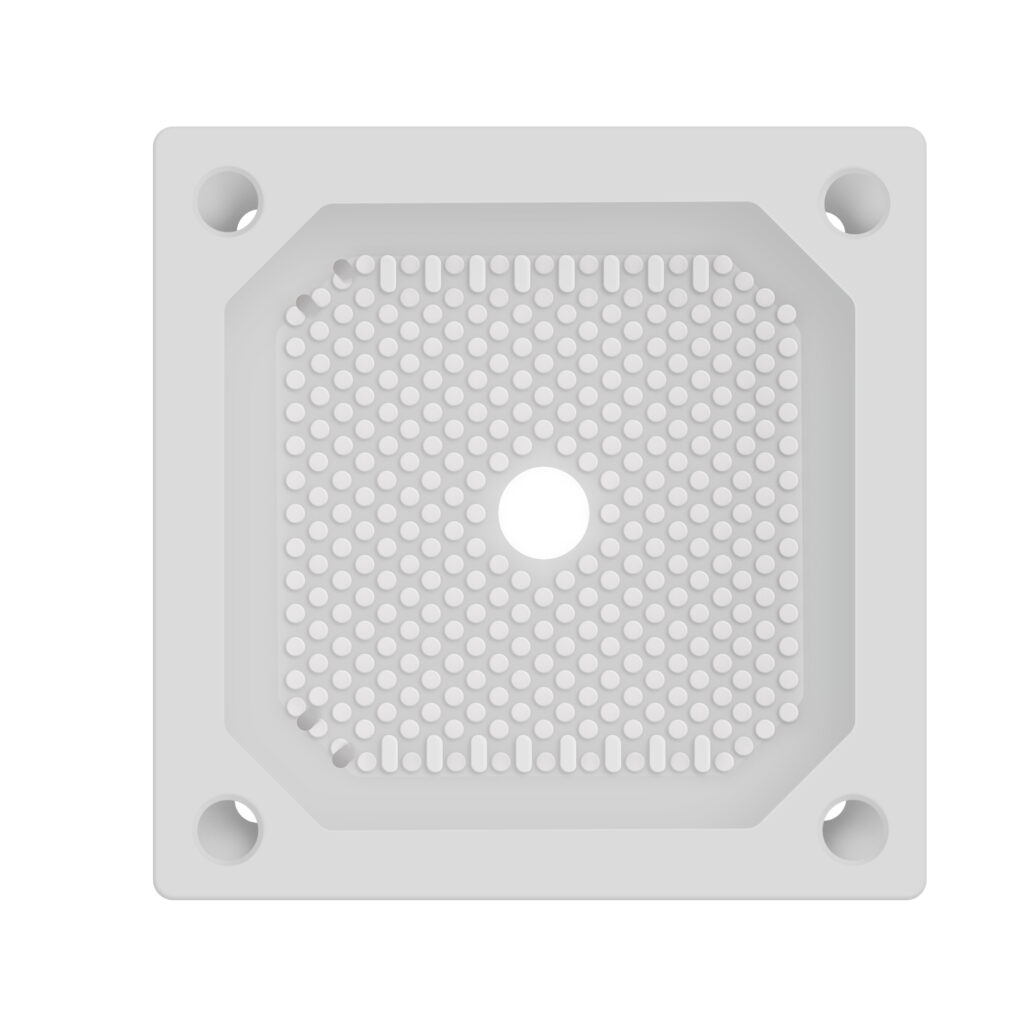
A non-CGR filter plate, often called a non-gasketed recessed filter plate, does not use the same perimeter gasket arrangement as a CGR plate. Instead, the filter cloth typically covers the plate face and extends across the sealing area.
When the filter press closes, the cloth is compressed between adjacent plates and contributes to sealing the filtration chambers.
This simpler design has several practical advantages. Filter cloths are generally easier to remove and replace, there are no perimeter gaskets requiring routine inspection or replacement, and plate maintenance can be less complicated.
For many conventional sludge dewatering and industrial wastewater applications, this makes non-CGR plates an economical and practical solution.
The main trade-off is leakage control. Because the sealing system depends partly on cloth condition, plate alignment, closing pressure, and cleanliness of the sealing surfaces, a non-gasketed filter plate may be more susceptible to occasional dripping, wicking, or leakage between plates.
This does not mean that a non-CGR filter plate is an inferior design. In applications where minor dripping is acceptable and frequent filter cloth replacement is required, the simpler construction may provide a better balance between capital cost, maintenance time, and filtration performance.
CGR vs Non-CGR Filter Plate: Key Differences
The most important difference between CGR and non-CGR filter plates is their sealing structure. However, purchasing decisions should consider much more than leakage alone.
| Comparison Factor | CGR Filter Plate | Non-CGR Filter Plate |
|---|---|---|
| Plate Design | Caulked, gasketed, recessed | Non-gasketed recessed |
| Sealing Method | Perimeter gasket | Filter cloth between plate sealing surfaces |
| Leakage Control | Excellent when properly maintained | Good, but more potential for dripping or wicking |
| Filter Cloth Installation | Cloth is caulked into grooves | Cloth typically fits over the plate |
| Cloth Replacement | More time-consuming | Generally faster and easier |
| Gasket Maintenance | Required | No perimeter gasket maintenance |
| Initial Cost | Generally higher | Generally lower |
| Maintenance Complexity | Higher | Lower |
| Containment | Better suited to leakage-sensitive processes | Suitable where minor leakage can be tolerated |
| Typical Applications | Chemical, sensitive, odorous, valuable, or leakage-critical slurry | Wastewater, sludge, mining, and general industrial dewatering |
This comparison shows why the decision should not be based entirely on filter plate price. A lower initial purchase price does not necessarily result in the lowest long-term operating cost, while a more expensive CGR plate does not automatically provide economic benefits in every process.
Performance, Leakage, Maintenance, and Cost Comparison
Leakage and Sealing Performance
Leakage control is normally the strongest reason for selecting CGR filter plates.
The perimeter gasket creates a defined sealing interface between neighboring plates. When the plate pack is correctly aligned and compressed, this gasket can significantly reduce external filtrate leakage.
For chemical processing facilities, electroplating operations, odor-sensitive applications, or processes involving valuable liquids, reducing leakage may improve housekeeping, reduce product loss, and help limit operator exposure to process fluids.
Non-CGR plates can also operate effectively, but their sealing performance depends more heavily on filter cloth condition and correct plate closure. Folded cloth, accumulated cake on sealing surfaces, damaged cloth, misaligned plates, or insufficient closing force can contribute to leakage.
Filter Cloth Installation
Filter cloth maintenance is another major difference in the CGR vs non-CGR filter plate comparison.
On a CGR plate, the filter cloth is normally pressed into a groove and secured around the recessed chamber. This creates a clean plate-to-plate gasket sealing surface but makes cloth installation more labor-intensive.
Non-CGR plates generally allow simpler cloth mounting. This can be an important advantage for plants where filter cloths must be replaced frequently because of abrasive solids, blinding, chemical attack, or changing filtration requirements.
For a filter press with a large number of plates, even a small difference in cloth replacement time per plate can result in a meaningful difference in total maintenance labor.
Gasket Maintenance
CGR filter plates introduce an additional maintenance component: the gasket.
Gaskets should be inspected for cracking, swelling, chemical degradation, hardening, deformation, or loss of elasticity. Damaged gaskets may reduce sealing performance and should be replaced before they cause persistent leakage.
Correct gasket material selection is therefore essential. A gasket that performs well with one chemical may deteriorate rapidly in another.
Non-CGR plates eliminate this maintenance requirement because they do not use the same perimeter gasket system.
Filtration and Cake Performance
It is important not to assume that choosing a CGR plate will automatically produce a significantly drier filter cake.
Final cake moisture is influenced by many factors, including slurry particle size, solids concentration, feed pressure, filter cloth permeability, filtration cycle time, chamber depth, cake compressibility, and whether membrane squeezing or air blowing is used.
The main advantage of the CGR design is improved sealing and liquid containment rather than automatically higher dewatering efficiency.
Initial Cost vs Total Cost of Ownership
CGR filter plates will often involve a higher initial investment because of their plate design, cloth installation method, and gasket requirements.
However, purchasing teams should evaluate the total cost of ownership rather than comparing plate prices alone.
Consider costs associated with:
- Filter cloth replacement labor
- Gasket inspection and replacement
- Filtrate or product loss
- Floor and equipment cleaning
- Production downtime
- Waste disposal
- Maintenance frequency
- Operator exposure control
- Replacement plate life
For a valuable or hazardous slurry, preventing leakage may justify the additional cost of CGR plates. For conventional sludge dewatering where occasional dripping creates little operational impact, non-CGR plates may offer a lower-cost solution.
Which Applications Need CGR or Non-CGR Filter Plates?
Different industries have different filtration priorities. Understanding the process environment makes it easier to decide between CGR and non-CGR plates.
Choose CGR Filter Plates When Leakage Control Is Critical
CGR filter plates may be preferred for:
- Chemical processing
- Electroplating wastewater treatment
- Corrosive slurry filtration
- Odorous sludge treatment
- Processes involving valuable filtrate
- Applications requiring cleaner working environments
- Selected pharmaceutical and food processing applications
- Potentially hazardous process liquids
- Specialty chemical filtration
For these applications, the primary benefit is improved containment. Better sealing can reduce liquid escaping from the plate pack and make the filtration area easier to manage.
Choose Non-CGR Filter Plates for General Dewatering
Non-CGR filter plates are widely used in:
- Municipal wastewater treatment
- Industrial wastewater treatment
- Mining and mineral processing
- General sludge dewatering
- Stone and aggregate wastewater treatment
- Process applications where minor dripping is acceptable
- Operations requiring frequent filter cloth replacement
For these applications, the lower maintenance complexity and easier cloth replacement can outweigh the benefits of a gasketed sealing system.
How to Choose Between CGR and Non-CGR Filter Plates
Before purchasing replacement filter plates or specifying plates for a new filter press, operators should evaluate the complete filtration process.
Check Your Leakage Tolerance
Start with a simple question: can your process tolerate occasional dripping from the filter press?
If the answer is no because the liquid is hazardous, corrosive, valuable, strongly odorous, or difficult to clean, CGR plates deserve serious consideration.
If small amounts of leakage can be managed without affecting production, safety, product recovery, or housekeeping, non-CGR plates may be sufficient.
Understand the Slurry
Provide your filter plate manufacturer with information about the material being filtered, including:
- Slurry composition
- Solid concentration
- Particle characteristics
- pH
- Chemicals present
- Operating temperature
- Expected feed pressure
These details help determine not only whether CGR or non-CGR is suitable, but also the appropriate plate material, gasket material, filter cloth, chamber depth, and filtration configuration.
Consider Filter Cloth Replacement Frequency
If the plant changes filter cloths frequently, maintenance time can become a major operating cost.
A non-CGR design usually makes cloth replacement simpler. By contrast, CGR cloth installation requires greater attention because the cloth must be correctly secured into the plate grooves.
Plants should therefore calculate maintenance labor over several years rather than focusing only on the purchase price of the plates.
Check Compatibility With the Existing Filter Press
When replacing existing plates, do not assume that a CGR plate and non-CGR plate can always be exchanged directly.
Plate dimensions, plate thickness, chamber depth, feed port position, filtrate discharge arrangement, handle design, plate pack length, hydraulic closing force, cloth configuration, and sealing structure should all be checked.
Providing the original plate drawing or a detailed sample plate is often the safest approach when ordering replacement filter press plates.
CGR vs Non-CGR Filter Plate: Which Is Better for Your Filter Press?
There is no universal winner in the CGR vs non-CGR filter plate comparison.
Choose a CGR filter plate when leakage prevention, process containment, cleanliness, odor control, or protection of valuable filtrate is a major priority. The gasketed sealing structure can provide significant operational benefits in demanding filtration environments, although gasket maintenance and filter cloth replacement require additional attention.
Choose a non-CGR filter plate when the process can tolerate minor leakage and your priorities are simpler maintenance, faster filter cloth replacement, and lower overall equipment complexity. For many wastewater, mining, and general industrial sludge dewatering processes, non-gasketed recessed plates remain a highly practical solution.
The best decision should always be based on slurry characteristics, chemical compatibility, temperature, operating pressure, filter cloth requirements, leakage tolerance, and long-term operating cost.
Conclusion
Ultimately, the best filter plate is the one that matches your actual filtration conditions. Correct plate selection can improve filter press reliability, simplify maintenance, reduce unnecessary operating costs, and provide more consistent filtration performance over the service life of the equipment.
LONGONE manufactures CGR, non-CGR, recessed chamber, membrane, and other filter plates for a wide range of industrial filter presses and solid-liquid separation applications.
If you are selecting filter plates for a new filter press or replacing existing plates, send us your filter press brand and model, plate dimensions, slurry characteristics, operating pressure, temperature, feed position, filter cloth requirements, and existing plate drawings or photos.
Our engineering team can help evaluate whether a CGR or non-CGR filter plate is more suitable for your process and recommend the appropriate plate material, chamber design, filter cloth, and gasket configuration for your filtration requirements.
Frequently Asked Questions
What Does CGR Mean on a Filter Plate?
CGR means Caulked, Gasketed, and Recessed. The filter cloth is secured into grooves in the recessed plate, while a perimeter gasket helps create a tighter seal between adjacent plates.
What Is the Main Advantage of a CGR Filter Plate?
The main advantage is improved leakage control. The gasket provides a more defined sealing surface, making CGR plates especially useful where liquid containment and plant cleanliness are important.
Are Non-CGR Filter Plates More Likely to Leak?
Non-CGR plates generally have a higher possibility of dripping or wicking because the filter cloth is part of the sealing interface. However, a correctly maintained non-CGR filter press can still provide reliable filtration for many industrial applications.
Are CGR Filter Plates More Expensive?
CGR plates generally involve higher initial and maintenance costs because of the gasket system and more complex cloth installation. The actual economic difference depends on plate size, material, gasket type, cloth design, operating conditions, and filtration requirements.
Does a CGR Filter Plate Produce a Drier Cake?
Not necessarily. Cake moisture depends on slurry properties, filtration pressure, filter cloth selection, cycle time, chamber design, and optional dewatering methods such as membrane squeezing. CGR primarily improves sealing rather than guaranteeing a drier cake.
Can I Replace Non-CGR Plates With CGR Plates?
Sometimes, but conversion should be evaluated carefully. The plate dimensions, closing system, plate pack length, feed and discharge arrangement, filter cloth design, and other structural factors must be compatible with the existing filter press.