
Most filter press projects start with the same question: “How much sludge do we produce per day?” It sounds reasonable, and it is the reason so many presses end up undersized, oversized, or quoted twice. Wet sludge volume is only the starting point. The numbers that actually decide the machine are the dry solids you must capture per batch and how many cycles your operation can realistically run each day.
This guide walks through where a plate & frame filter press fits in a wastewater treatment line, which applications suit it best, and how to size one with a simple worked example. It also covers plate and cloth selection and the mistakes that most often cause problems after installation.
Where Plate & Frame Filter Presses Fit in Wastewater Treatment
In a typical treatment line, a plate & frame filter press sits at the end of the sludge path. Wastewater is clarified or treated chemically, the resulting sludge is thickened, and the press then dewaters it into a handleable cake. The cake goes to landfill, incineration, land application, or further processing. The filtrate, which is clear water, returns to the head of the plant or to discharge.
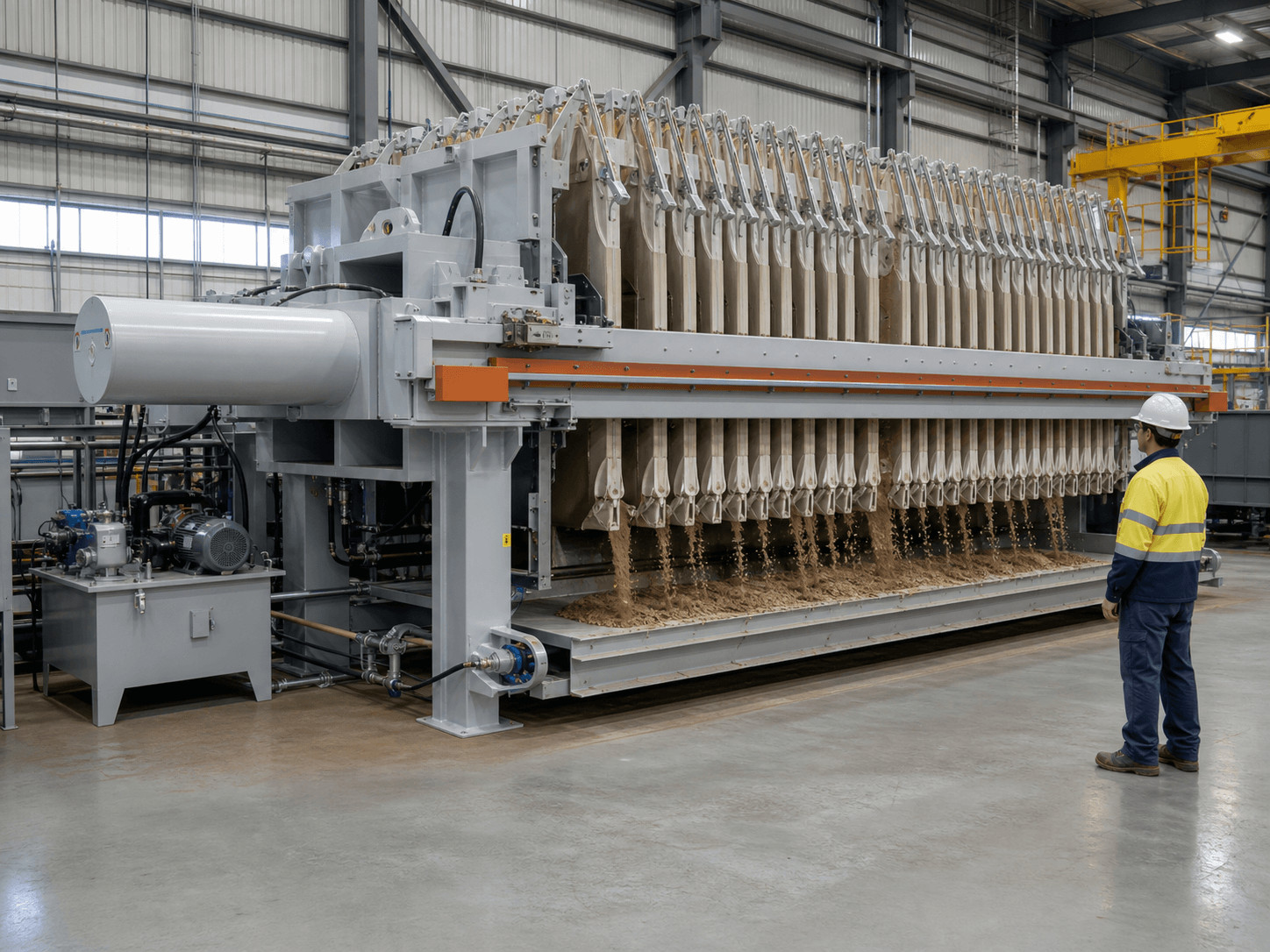
The press works in batches. Sludge is pumped into chambers lined with filter cloth. Solids are retained and build up into a cake, while filtrate passes through the cloth and leaves through the plate ports. When the chambers are full and flow drops, the cycle stops, the plates are opened, and the cake is discharged. Then the next cycle begins.
A note on terminology: strictly speaking, a plate-and-frame design uses flat plates separated by hollow frames, and the frames form the chambers. Many modern wastewater machines use recessed chamber plates instead, where each plate has a built-in recess and no separate frame is needed. In everyday procurement, buyers often use “plate & frame” for both. When you request quotes, state which configuration you mean so everyone is pricing the same machine.
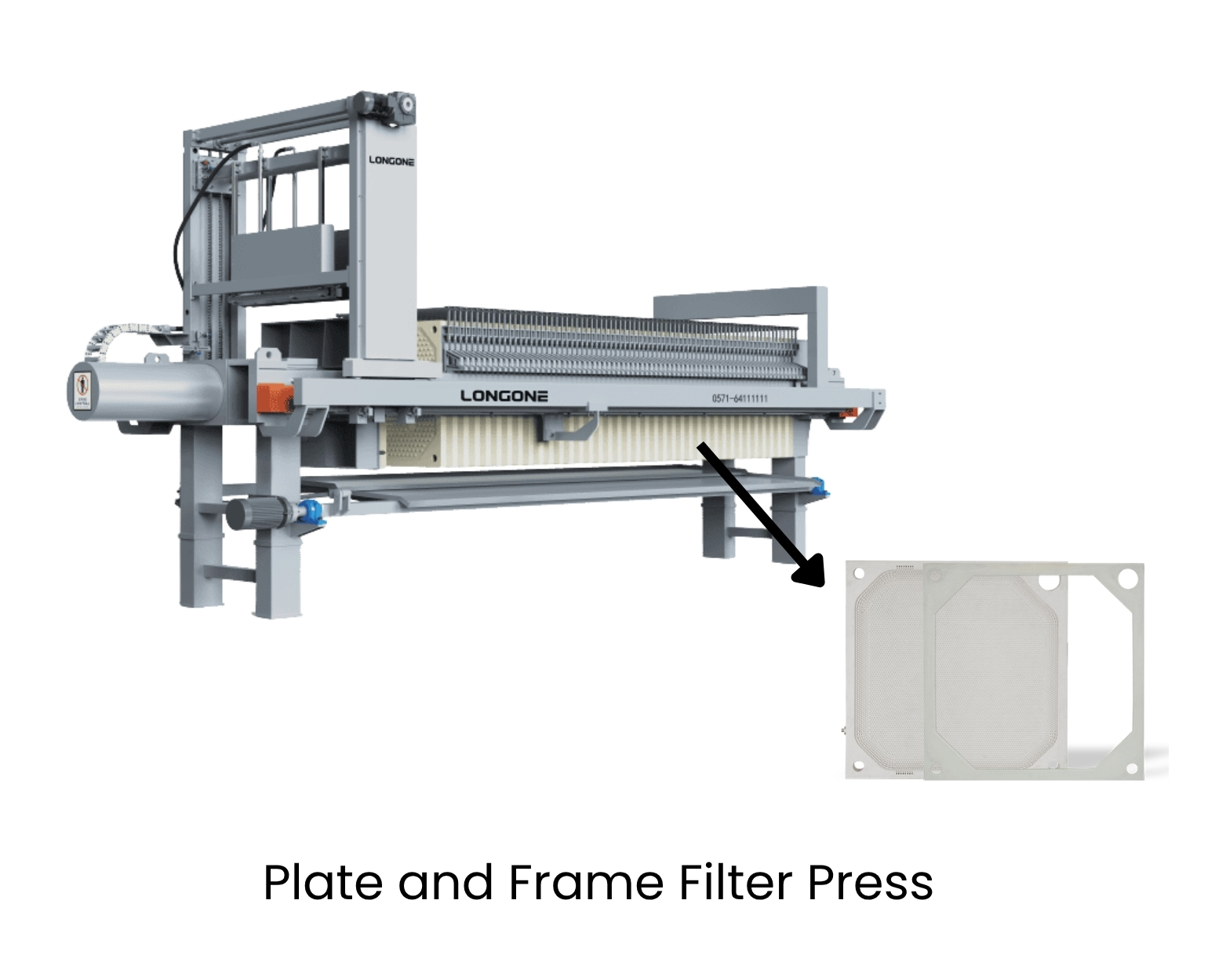
Plate & frame filter presses are a strong fit when you need:
- A drier cake than continuous dewatering equipment can deliver
- High solids capture and clear filtrate
- Flexibility across sludge types that change from batch to batch
- Low-to-medium daily volumes where simplicity and reliability matter more than continuous throughput
They are a weaker fit for very large, steady flows where a continuous machine’s throughput advantage outweighs the value of a drier cake.
Key Wastewater Applications: Municipal, Industrial, and Mining
Filter presses are used wherever the cost of hauling and disposing of wet sludge justifies investing in drier cake. The table below shows typical operating ranges for common applications. These are indicative values only, and actual results depend on sludge characteristics, conditioning, and operating pressure.
| Industry | Typical Sludge Type | Typical Feed Solids | Typical Cake Solids | Common Discharge Mode |
|---|---|---|---|---|
| Municipal wastewater | Thickened primary/biological sludge, often lime or polymer conditioned | 2-5% | 30-45% | Semi-automatic or automatic |
| Electroplating and metal finishing | Metal hydroxide sludge | 1-3% | 30-45% | Manual or semi-automatic |
| Mining and mineral processing | Tailings, process slurry | 10-30% | 70-85% | Automatic |
| Chemical and pigment | Process precipitates | Varies widely | 40-60% | Semi-automatic or automatic |
| Textile dyeing | Chemically treated dye wastewater sludge | 1-3% | 25-35% | Manual or semi-automatic |
| Food and beverage | Biological and organic sludge | 2-5% | 20-35% | Semi-automatic |
Two patterns stand out. First, low-solids feeds such as plating and textile sludge benefit most from thickening before the press. Second, mining slurries start with much higher solids content, so the same chamber volume handles far more dry material per cycle.
How to Size a Plate & Frame Filter Press: Sludge Volume, Solids Load, and Cycle Time
Sizing comes down to one chain of logic: how many kilograms of dry solids must you process each day, how much cake volume does that produce, and how many cycles will you run? The chamber volume you need falls out of those three answers.
Step 1: Calculate dry solids per day. Multiply daily sludge volume by its solids concentration. Dry solids are what the press has to capture, and they stay constant even if you thicken the sludge beforehand.
Step 2: Convert to cake volume. Divide dry solids by your target cake solids percentage to get wet cake mass. Then divide by cake density to get volume.
Step 3: Divide by cycles per day. This gives the cake volume each cycle must hold.
Step 4: Add a margin. A margin of 15-20% covers seasonal load swings, wetter-than-expected sludge, and future growth.
Worked example. Suppose an industrial plant produces 20 m³ of thickened sludge per day at 3% solids, with a target cake of 35% solids.
- Dry solids per day: 20 m³ × 1,000 kg/m³ × 0.03 = 600 kg
- Wet cake mass at 35% solids: 600 ÷ 0.35 ≈ 1,714 kg
- Cake volume at roughly 1,200 kg/m³ density: 1,714 ÷ 1,200 ≈ 1.43 m³ per day
- With 2 cycles per day: about 0.71 m³ per cycle
- Adding a 20% margin: about 0.86 m³, or roughly 860 liters of chamber volume
If the plates you are considering are 1000 × 1000 mm with a chamber volume of roughly 30 liters each, you would need about 29 chambers, so around 30 plates. This is an illustration of the method, not a final specification. Plate counts, cake thickness, and chamber volumes vary by design, so confirm the numbers with your manufacturer.
Why cycle time matters. A full cycle includes more than filtration. Feeding, pressing, squeezing, opening the plates, discharging the cake, closing the press, and periodic cloth washing all take time. A typical cycle runs several hours depending on sludge filterability and automation level. If your operators can only run two cycles per shift, a press sized for four cycles per day will fall short no matter how well the numbers look on paper.
Why thickening matters. Dry solids per day do not change if you thicken the sludge first, but the volume that has to move through the feed pump drops sharply, and the filtration phase gets shorter. In many projects, adding or improving thickening is the cheapest way to reduce the press size you need to buy.
Filter Plate and Cloth Selection for Wastewater Sludge
Sludge is less forgiving than clean process streams, so plate and cloth choices deserve attention.
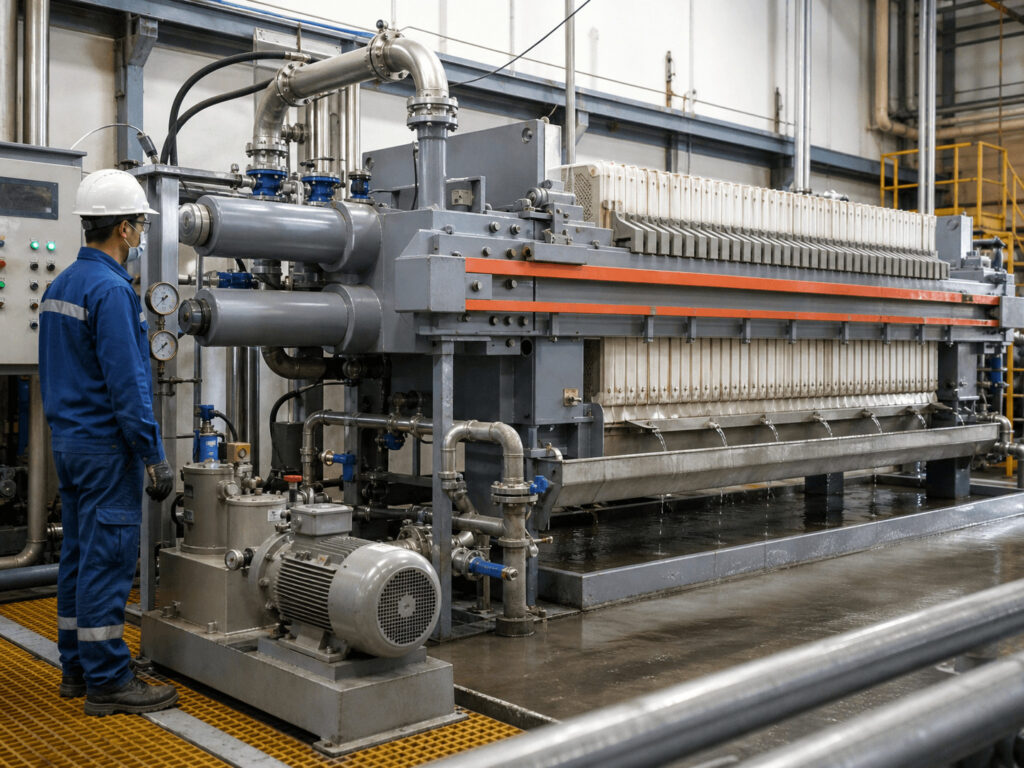
Plate material. Polypropylene is the standard choice for most wastewater duties because it handles a wide pH range, resists corrosion, and is light enough to make plate handling practical. Acidic, hot, or chemically aggressive streams, such as pickling or some plating wastewaters, call for a closer look at the operating temperature, the chemical mix, and the gasket and seal materials. For these duties, state your pH and temperature range plainly when you request a quotation.
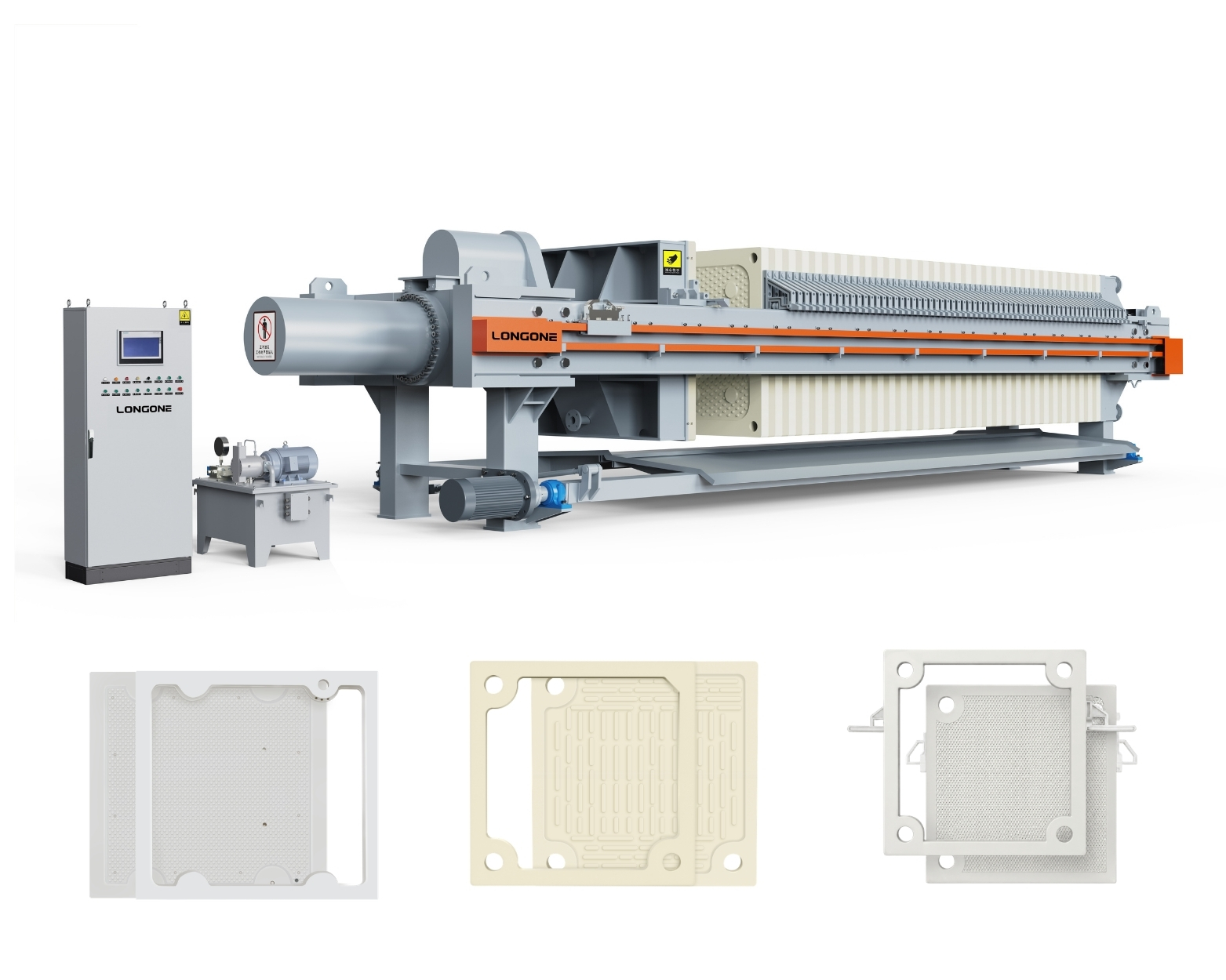
Filter cloth. Cloth selection balances three things: filtrate clarity, cake release, and how quickly the cloth blinds. A tighter weave captures finer solids but may clog faster. A more open weave drains quickly but can let fines through. Fabric material, weave pattern, and air permeability should be matched to your sludge’s particle size distribution rather than picked from a catalog default. Cloth washing frequency should also be planned from the start, since it affects both cycle time and cloth life.
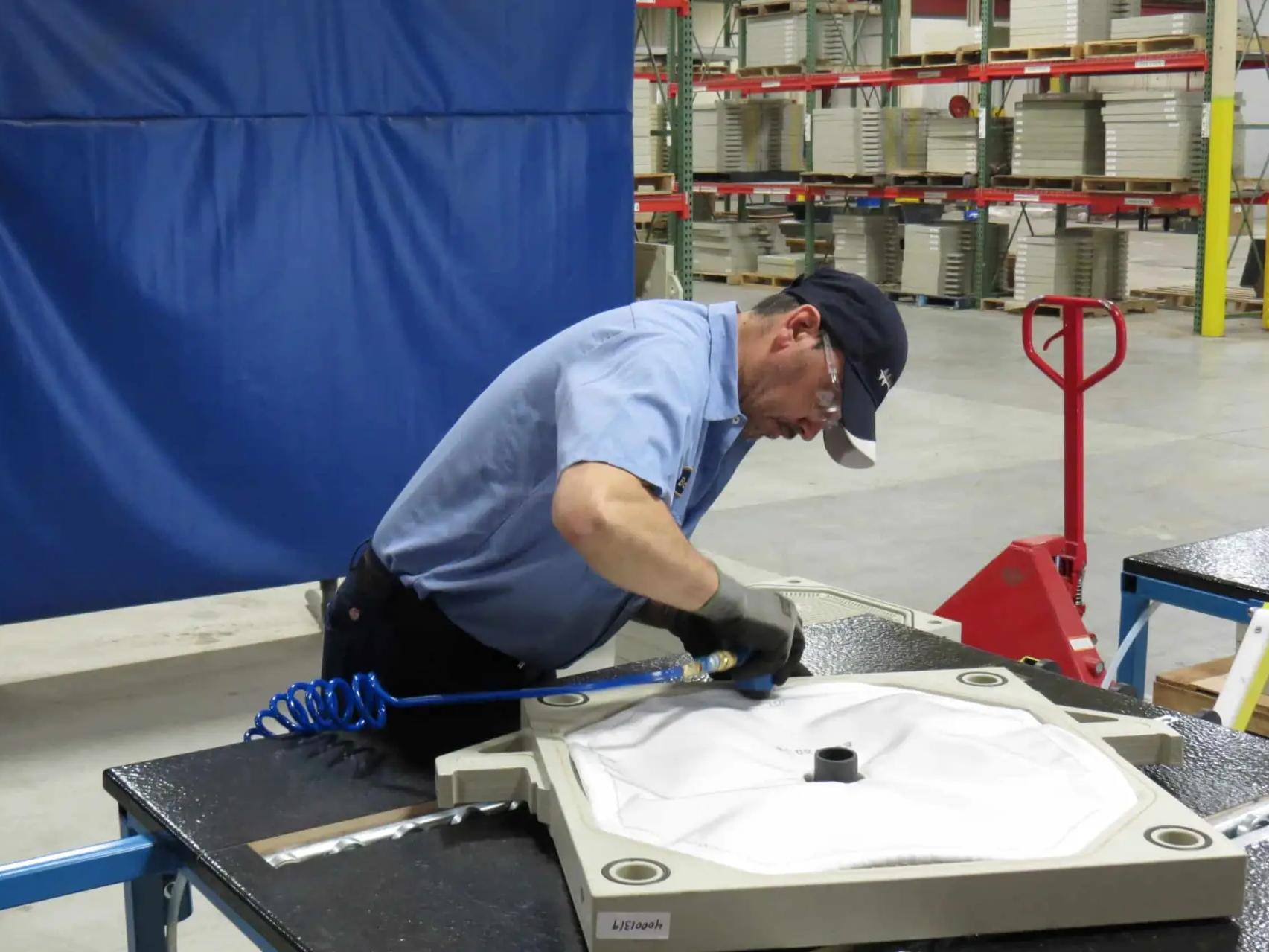
Pressure rating. Common feed pressure ratings include 0.6, 1.0, and 1.6 MPa. Higher pressure can produce drier cake on some sludges, but not all sludges respond equally. Compressible biological sludge often gains little beyond a certain pressure, while mineral or metal-bearing sludge responds better. For a drier cake, membrane (diaphragm) plates add a squeeze step after filling and are worth considering when disposal costs are high.
LONGONE manufactures filter press plates in a range of sizes and materials, and our engineers regularly review sludge data to help match plate, cloth, and pressure rating to the actual duty.
Plate and Frame vs Belt Press vs Centrifuge for Sludge Dewatering
A plate & frame press is not always the best answer. Here is how it compares with the two other common dewatering options. Values are typical ranges and will vary with sludge type and conditioning.
| Factor | Plate & Frame Filter Press | Belt Filter Press | Decanter Centrifuge |
|---|---|---|---|
| Typical cake solids | 30-50%+ | 15-25% | 20-30% |
| Solids capture | Very high (often 95-99%) | Moderate to high | Moderate to high |
| Operation | Batch | Continuous | Continuous |
| Footprint | Moderate | Larger | Compact |
| Energy use | Low to moderate | Low | High |
| Polymer demand | Often lower | Higher | Higher |
| Capital cost | Moderate | Lower to moderate | Higher |
| Best suited to | Low-to-medium volumes, drier cake, variable sludge | Steady, large municipal flows | Large continuous flows, limited space |
The simple rule: if your disposal cost is driven by cake weight and you handle low-to-medium volumes, the plate & frame press usually wins on total cost. If you run very large, steady flows and cake dryness is less critical, a continuous machine may make more sense.
Common Sizing Mistakes and What to Specify Before Requesting a Quote
Most filter press problems trace back to a few repeated sizing errors:
- Sizing on wet sludge volume alone. This ignores solids concentration, which is the real driver.
- Ignoring cycle time. A press that cannot complete the planned number of cycles per day is effectively undersized.
- Not planning for seasonal or production swings. Loads change, and a press with no margin becomes the bottleneck at peak.
- Forgetting cloth washing time. It takes the press out of service and should be part of the cycle plan.
- Choosing plates without checking chemistry. pH, temperature, and chemical content decide plate and gasket suitability.
Before you request a quotation, gather the following information:
- Daily sludge volume and operating days per week
- Solids concentration (before and after thickening, if applicable)
- Sludge type and source, including any conditioning chemicals used
- pH and temperature range
- Target cake solids or disposal requirement
- Preferred discharge mode: manual, semi-automatic, or fully automatic
- Available floor space and utilities (power, compressed air, wash water)
With this list in hand, a manufacturer can recommend a configuration instead of offering a generic quote that needs revising later.
If you are in the early stages of a project and would like a second opinion on sizing, you are welcome to share your sludge data with our team. We are happy to review it and suggest a starting point.
Conclusion
A plate & frame filter press earns its place in wastewater treatment when the goal is a drier cake, high solids capture, and dependable performance at low-to-medium volumes. It is less about moving the most sludge and more about reducing what you pay to haul and dispose of it.
Getting the size right comes down to three things:
- Size by dry solids, not wet volume. Solids concentration, before and after thickening, drives the chamber volume you need.
- Plan around real cycle time. Count feeding, pressing, discharge, and cloth washing, then add a 15-20% margin for seasonal swings.
- Match plates and cloth to the sludge. pH, temperature, and particle size decide material, weave, and pressure rating.
Projects that settle these points before requesting a quote tend to avoid re-quotes, delays, and undersized equipment. If you have sludge data and want a second opinion on configuration, the LONGONE team is glad to review it and suggest a starting point.
Frequently Asked Questions
How do you calculate the size of a filter press for sludge dewatering?
Start with the dry solids you must process per day, divide by the target cake solids to get wet cake mass, then convert to volume using cake density. Divide by planned cycles per day and add a 15-20% margin. The result is the chamber volume you need.
What cake solids can a plate & frame filter press achieve with wastewater sludge?
It depends on the sludge. Municipal and metal hydroxide sludges commonly reach 30-45% solids, while mineral slurries can exceed 70%. Conditioning, feed pressure, and plate type all influence the result.
How long does one filter press cycle take?
A full cycle typically takes a few hours, covering filling, pressing, plate opening, cake discharge, and closing. Sludge filterability and the level of automation have the biggest effect on duration.
Is a plate & frame filter press better than a belt press for small plants?
For small to medium volumes, a filter press usually delivers drier cake and higher solids capture, which lowers disposal cost. A belt press may suit larger, steady flows where continuous operation matters more than cake dryness.
What plate material is best for acidic wastewater?
Polypropylene handles a wide pH range and is the common choice. For strongly acidic or hot streams, check the exact temperature, chemical mix, and gasket material with your manufacturer before ordering.