
If your filter cake leaves the press wetter than your disposal budget can handle, or cycle times keep growing as throughput increases, the problem is often not the press itself. It is the plate. In many plants, switching from standard chamber plates to membrane filter plates is the single change that lowers cake moisture without redesigning the whole filtration line.
But a filter press membrane plate is not a simple upgrade you can order by size and price alone. Feed type, plate material, drainage design, cloth and squeeze conditions all affect how it performs in daily operation. This guide explains how membrane filter plates work, what the main design choices are, and how to specify the right plate for your slurry and your press.
What Is a Membrane Filter Plate and How Does It Work
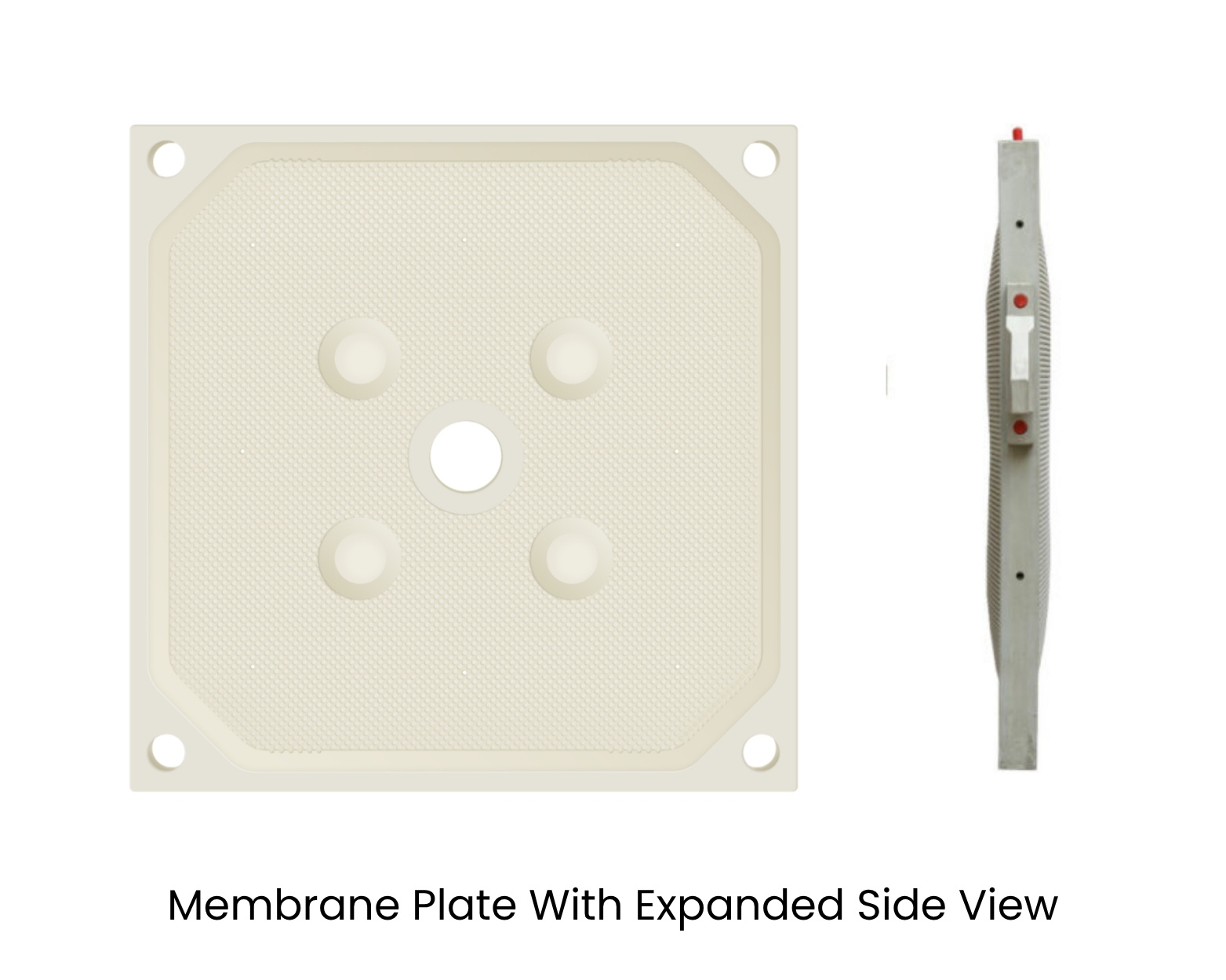
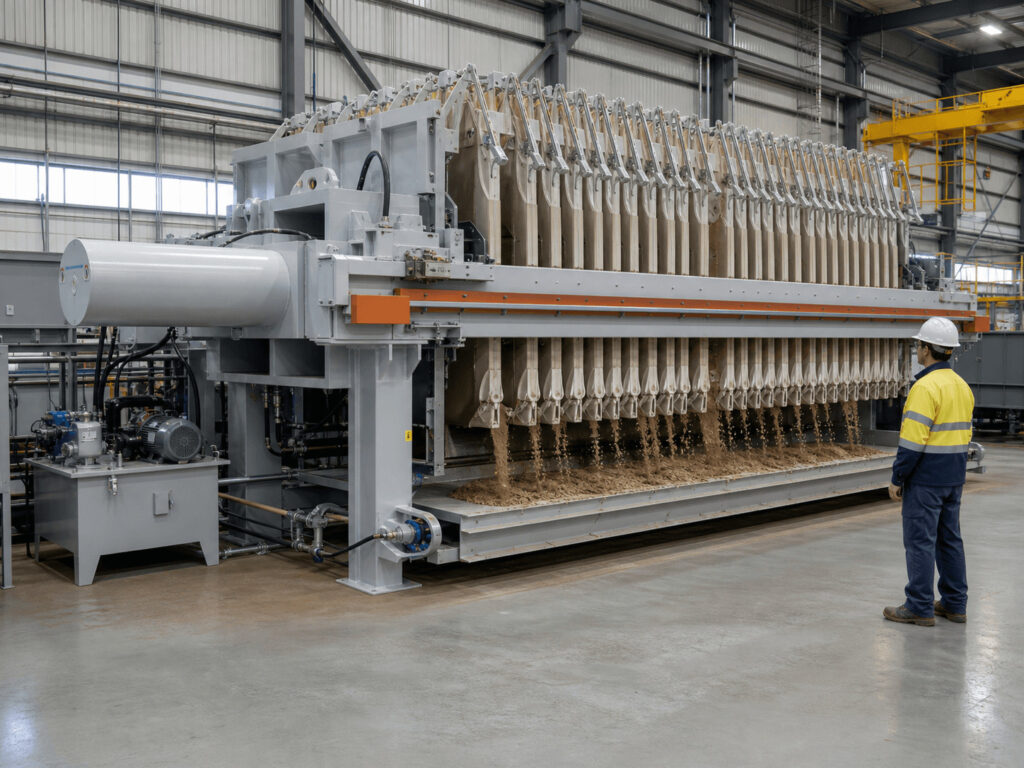
A membrane filter plate is a filter press plate with a flexible membrane on its filtering surfaces. The plate body is rigid, usually made of polypropylene (PP), and the membrane is a flexible layer that can inflate when pressure is applied behind it.
A membrane plate works in two stages.
Stage 1: Filtration. Slurry is pumped into the chambers formed between adjacent plates. Filter cloth on each plate retains the solids, and filtrate passes through the cloth and drains away through the plate’s drainage channels. Solids build up as a cake inside the chamber.
Stage 2: Membrane squeeze. Once the chamber is filled, feeding stops. Compressed air or water is then introduced behind the membrane, causing it to inflate and press against the cake. This extra mechanical pressure forces more liquid out of the cake that pressure filtration alone could not remove.
The result is a drier, denser cake. For many applications, this also means a shorter overall cycle, because less time is needed to reach the target dryness through feed pressure alone.
This is the core difference from a standard recessed chamber plate, which relies only on feed pump pressure. The membrane plate adds a controlled squeeze step, which is why it is widely used where cake moisture has a direct cost, such as transport, drying, landfill fees or downstream handling.
Membrane Filter Plate Feed Types: Corner Feed, Center Feed, and Top Feed
Feed type is the first design decision to settle, because it determines how slurry enters the chamber and how the plate fits your existing press frame. Membrane filter plates are commonly made in three feed configurations.
Corner feed. Slurry enters through a port in one corner of the plate. Our corner-feed membrane plates use three corner returns, which carry filtrate and wash or blowdown media through the other corners. Because the feed and return paths sit at the plate edges, the center of the plate stays free for filtration area and the membrane.
Center feed. Slurry enters through a central opening in the plate and spreads outward through the chamber. This is a traditional layout and is widely used on many plate and frame and recessed chamber presses.
Top feed. Slurry enters from the upper part of the plate. This layout is used for specific press designs and slurry conditions where feeding from the top is preferred.
| Feed Type | Feed Entry Point | Key Characteristic | Selection Notes |
|---|---|---|---|
| Corner Feed | One corner of the plate | Feed and returns sit at the edges, leaving the plate center free for filtration area | Check that the corner-port layout matches your press frame and piping |
| Center Feed | Center of the plate | Traditional layout with slurry spreading outward from the middle | Common on existing presses; confirm the center hole and cloth design match |
| Top Feed | Upper part of the plate | Used for particular press designs and slurry conditions | Confirm compatibility with your press design before ordering |
There is no single best feed type. The right choice depends on your press frame, your piping and your slurry. If you are replacing plates on an existing press, match the existing feed type unless you are also changing the press. If you are specifying a new system, discuss the feed type together with slurry characteristics, plate size and squeeze method.
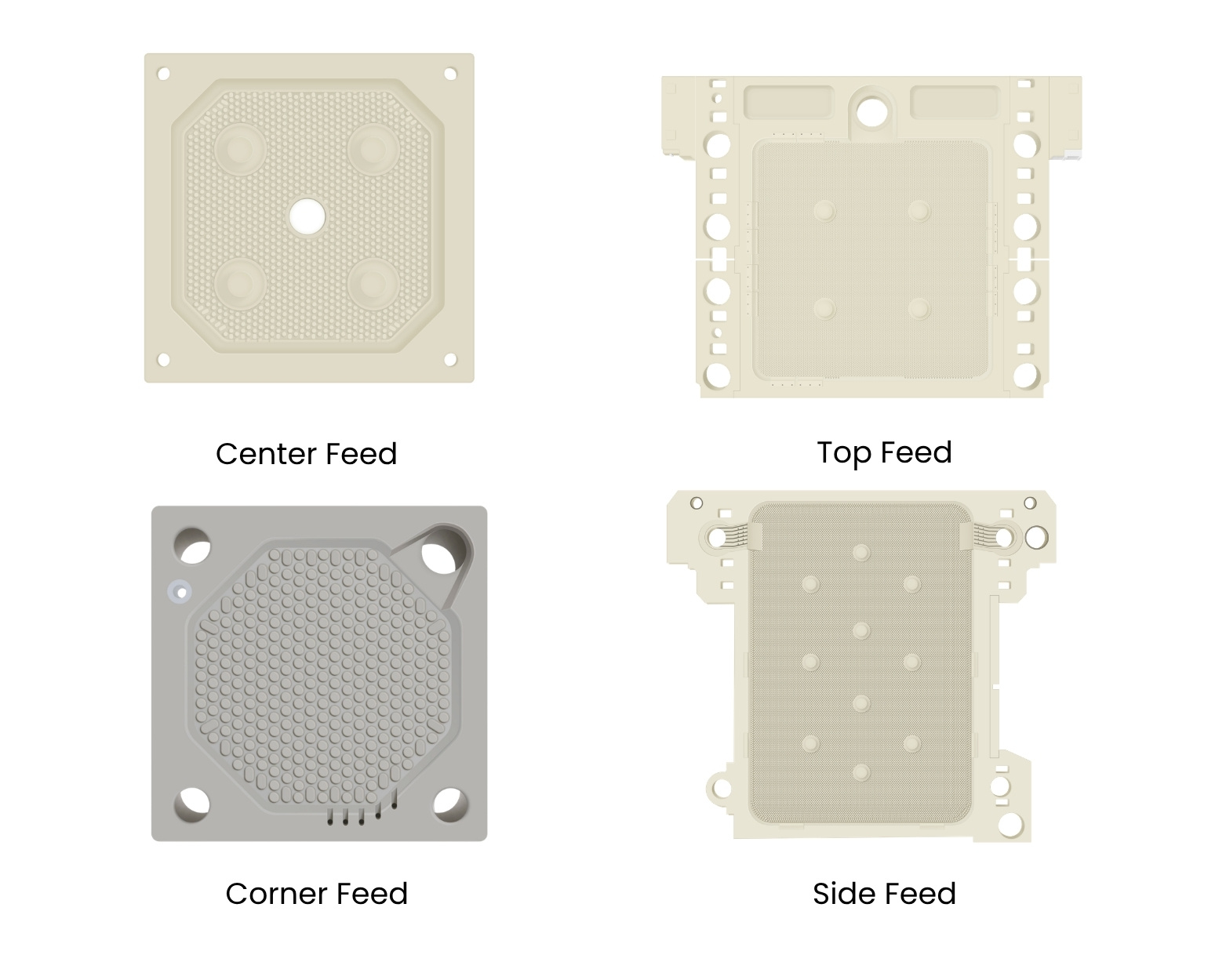
Plate Design and Materials: Polypropylene Body, Drainage Nubs, and Filter Cloth
Why polypropylene
Most membrane filter plates are made from polypropylene. PP offers a practical combination of corrosion resistance, light weight and mechanical strength, which suits a wide range of filtration duties. Compared with metal plates, PP plates are easier to handle during cloth changes and plate shifting, which matters for operator safety and maintenance time.
Material is not only about the plate body. The way the membrane is joined to the plate, and the quality of that join, strongly affects service life. The membrane is flexed on every squeeze cycle, so the bond or weld has to withstand repeated pressurization over thousands of cycles.
Nubs and drainage
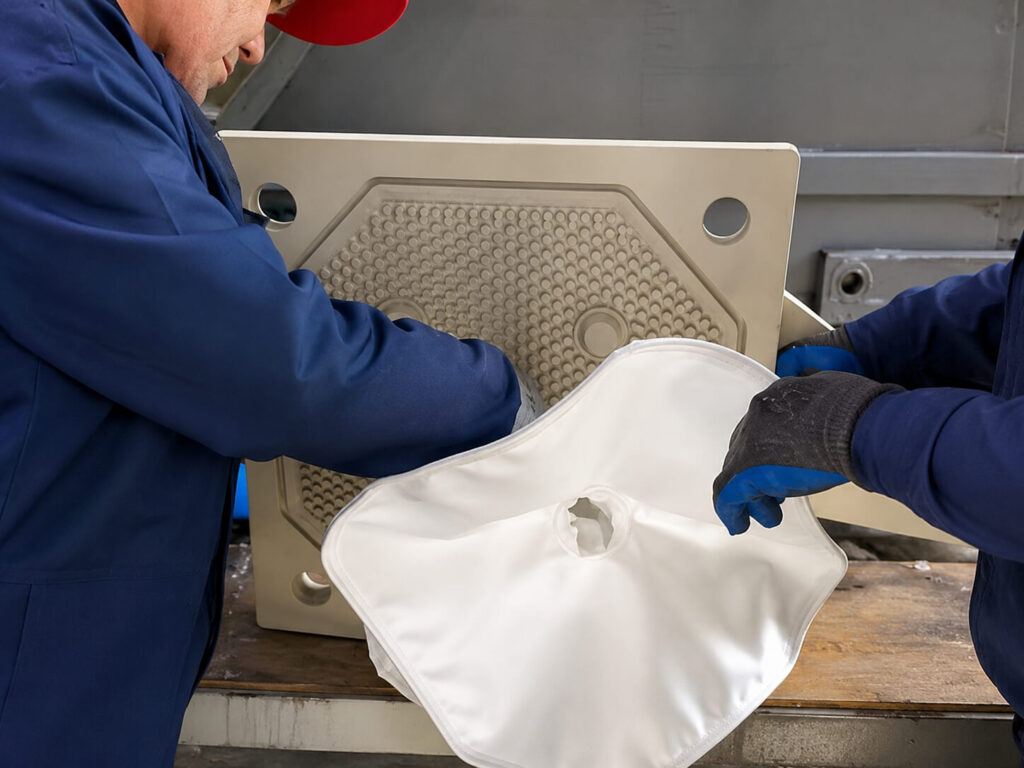
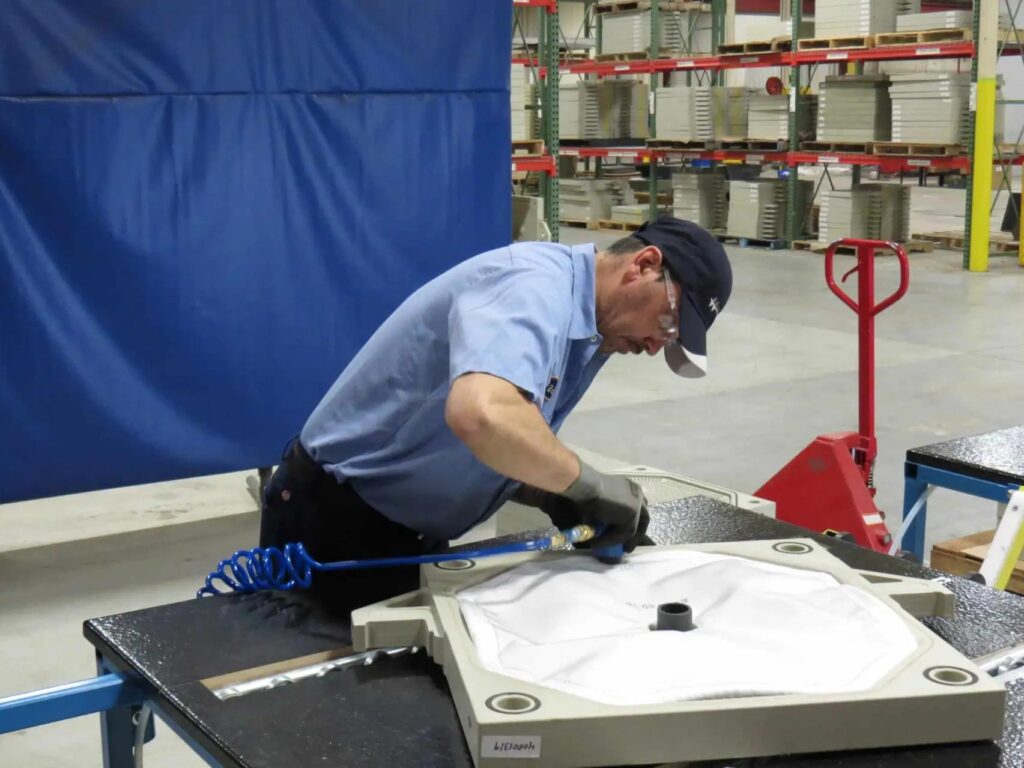
The filtering surface of a membrane plate carries a pattern of raised nubs. They do two jobs at once. They support the filter cloth so it is not pressed flat against the plate, and they create open drainage paths so filtrate can flow away easily.
Nub design matters more than it appears. If the pattern restricts flow, filtrate cannot leave efficiently, and you may see slow filtration, uneven cake formation or cloth blinding. If the nubs are poorly shaped, the cloth wears faster. When comparing plates, look at how well the surface supports the cloth and how clear the drainage path is, not only at plate dimensions.
Filter cloth
Membrane filter plates are normally supplied with filter cloth. The cloth is part of the filtration system, not an accessory. Material, weave and permeability should match your slurry’s particle size, chemistry and temperature. A good plate paired with the wrong cloth will still underperform, so treat cloth selection as part of the plate specification.
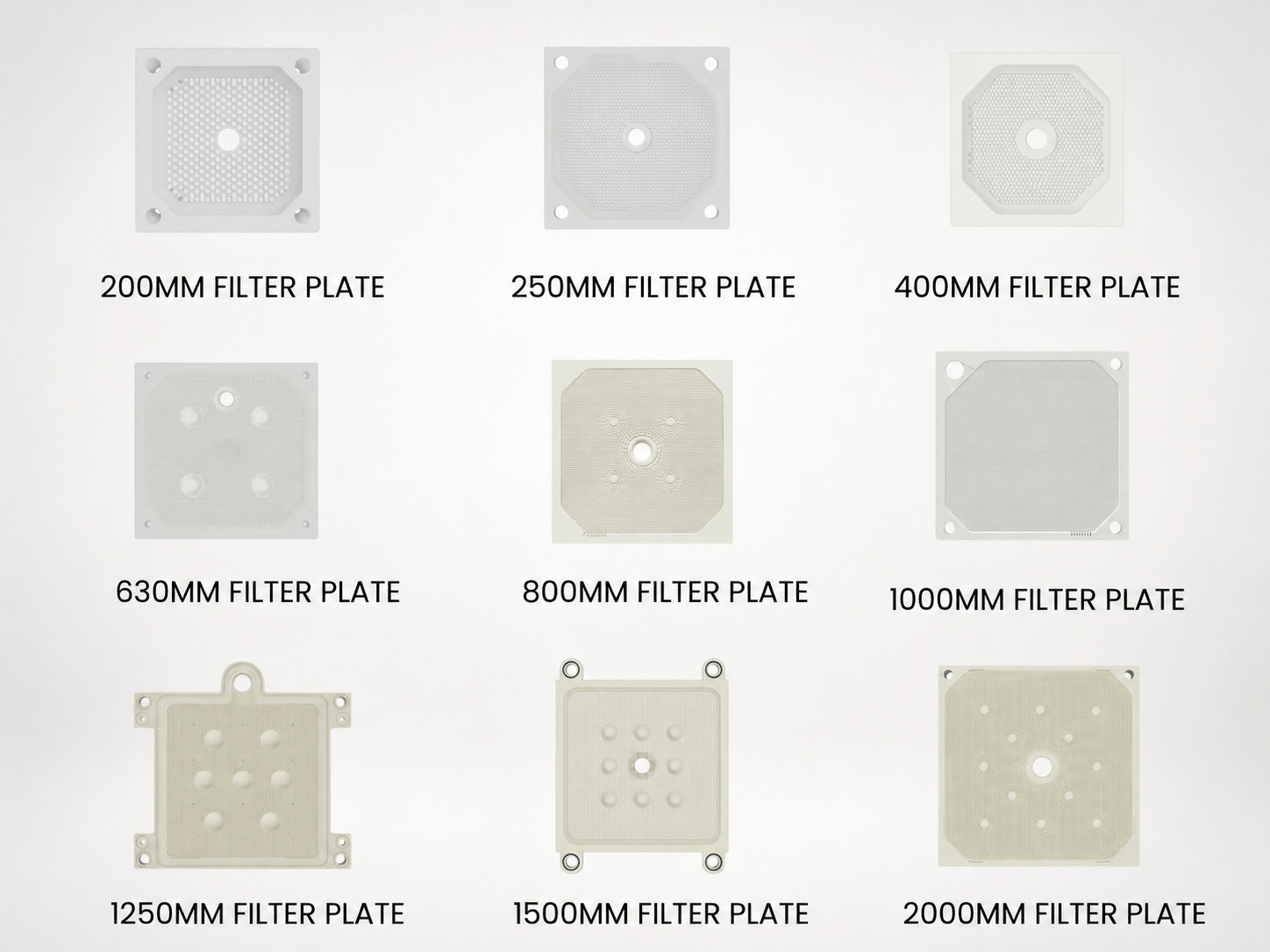
Membrane Filter Plate Sizes: From 470 mm to 1500 mm
Membrane filter plates are made in a range of standard sizes. Common dimensions include 470 mm, 630 mm, 800 mm, 1000 mm, 1200 mm and 1500 mm.
| Plate Size | Typical Use Scale |
|---|---|
| 470 mm | Small-scale, pilot or low-volume duties |
| 630 mm | Small to medium duties |
| 800 mm | Medium duties |
| 1000 mm | Medium to large duties |
| 1200 mm | Large duties |
| 1500 mm | Large-scale, high-throughput duties |
حجم اللوحة, together with the number of plates in the press, determines total filtration area and chamber volume. A larger plate gives more filtration area per plate, while more plates can also increase capacity, and the balance depends on your press frame, floor space and handling.
In practice, size is often dictated by what you already have. If you are replacing plates in an existing press, the plate size must match the frame, and the feed type, thickness and hole positions must align with the existing design. If you are buying a new press, size should be chosen from the required throughput, available space and how plates will be handled and discharged.
Where Membrane Filter Plates Perform Best: Typical Filtration Applications
Membrane filter plates are used across many solid-liquid separation tasks. They are most valuable when cake dryness has a measurable cost impact.
Mining and mineral processing. Concentrates and tailings often need low moisture for handling, transport or dry stacking.
Chemical processing. Many chemical products and by-products require efficient dewatering, with plate material suited to the chemistry involved.
Wastewater and sludge dewatering. Lower cake moisture reduces sludge volume and disposal cost, which is often the main economic driver in municipal and industrial treatment.
Food and other industrial processes. Where dewatering or product recovery is required, membrane plates can provide controlled, repeatable squeeze.
It is worth being honest about when membrane plates are not necessary. If your cake dryness target is already met by standard chamber plates, or if the cake is highly compressible in a way that makes squeezing ineffective, the added cost and complexity of a membrane system may not pay back. The decision should come from your cake moisture target, disposal costs and cycle time goals, ideally supported by a slurry test.
How to Choose, Maintain, and Replace Membrane Filter Plates
A practical selection checklist
Before requesting a quote, collect the following information. It lets a manufacturer recommend a plate that fits your real conditions.
- Slurry data: solids concentration, particle size, chemistry and pH
- Operating temperature: especially if the slurry is hot
- Abrasiveness: abrasive solids shorten membrane and cloth life
- Feed pressure and squeeze pressure: and the squeeze medium (air or water)
- Feed type: corner, center or top, matched to your press
- Plate size and quantity: matched to your frame and capacity target
- Cake dryness target: the number your process or disposal route requires
Common failure causes
In our experience, membrane plate problems rarely come from the PP body itself. More often they come from:
- Membrane fatigue from repeated high-pressure squeeze cycles
- Abrasive or sharp solids damaging the membrane or cloth
- Wrong cloth selection leading to blinding or poor cake release
- Operating conditions outside the plate’s pressure or temperature rating
- Cake or debris left on sealing surfaces, causing leaks
Maintenance habits that extend plate life
Inspect cloth and plate surfaces regularly, and clean sealing edges before closing the press. Wash cloth on a schedule that suits your slurry. Check the squeeze system, including air or water supply and pressure settings, to avoid overpressure. Replace worn cloth early, since damaged cloth can allow solids to reach the membrane surface.
Retrofitting an existing press
Membrane plates can often replace chamber plates in an existing press, but compatibility has to be checked first. Confirm plate dimensions, feed type, thickness and hole positions. Make sure the press has, or can be fitted with, the squeeze piping and controls that membrane plates need. If you are unsure, sending your press model and plate drawings to the manufacturer saves time and avoids ordering mismatched plates.
If you would like a second opinion on plate type, feed layout or size for your slurry, our team is happy to review your operating data and suggest a configuration. Sharing basic slurry details and your press specifications is usually enough to get started.
Conclusion
A membrane filter plate is worth its cost when lower cake moisture, shorter cycles or reduced disposal expense matter to your operation. Its performance comes from several decisions made together: the right feed type for your press (corner, center or top), a polypropylene body with a well-bonded membrane, nubs that support the cloth and keep drainage clear, and a cloth chosen for your slurry. Plate size, from 470 mm to 1500 mm, then has to fit your frame and capacity target.
Most problems in the field trace back to a mismatch between plate specification and real operating conditions, such as squeeze pressure, temperature or abrasive solids. Collecting accurate slurry and press data before ordering is the simplest way to avoid them.
If you are comparing options or planning a retrofit, a short review of your slurry details and press specifications is usually enough to narrow down the right configuration.
FAQ
How does a membrane filter plate reduce cake moisture?
After the chamber is filled and feeding stops, compressed air or water inflates the membrane behind the cake. This applies extra mechanical pressure that squeezes additional liquid out of the cake, producing a drier cake than feed pressure alone.
What feed types are available for membrane filter plates?
The three common feed types are corner feed, center feed and top feed. The right choice depends on your press frame, piping and slurry conditions. When replacing plates, match the feed type of your existing press.
What sizes do membrane filter plates come in?
Common sizes include 470 mm, 630 mm, 800 mm, 1000 mm, 1200 mm and 1500 mm. The size you need depends on your press frame, required capacity and available space.
Can membrane plates replace chamber plates in my existing press?
Often yes, but it must be checked. Plate size, thickness, feed type and hole positions must match, and the press needs squeeze piping and controls for the membrane. Providing your press model and plate drawings helps confirm compatibility.
Are membrane filter plates supplied with filter cloth?
Yes. Membrane filter plates normally come with filter cloth. Cloth material and weave should be selected to suit your slurry’s particle size, chemistry and temperature.