
As industrial production continues to demand higher efficiency and lower operating costs, fully automatic filter press technology has become increasingly important. Among different designs, the fully automatic rotary cloth filter press stands out because of its synchronized filter cloth movement, automatic cake discharge, and integrated filter cloth cleaning system.
Unlike conventional filter presses that may require sequential plate opening and individual cake removal, this technology uses a mechanical system to move all filter cloths simultaneously. This helps shorten unloading cycles, improve cleaning efficiency, and reduce routine manual operations.
In this article, we will explore how an automatic rotary cloth filter press works, its key advantages, its differences from traditional equipment, and the factors industrial buyers should consider when selecting a suitable filtration solution.
What Is a Fully Automatic Rotary Cloth Filter Press?
A fully automatic rotary cloth filter press is an industrial filtration machine designed to separate solids from liquids through pressure filtration. It combines conventional filter press technology with an automated filter cloth movement mechanism to improve cake discharge and cloth cleaning.
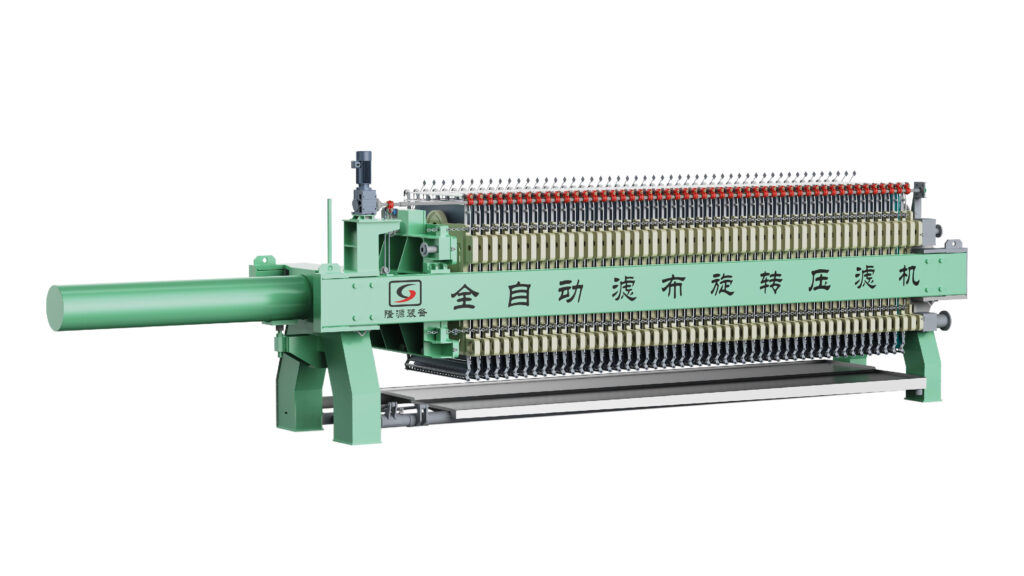
The equipment generally consists of several key components:
- Filter Plates: Form individual filtration chambers where slurry is separated into solid and liquid phases.
- Filter Cloth: Acts as the filtration medium, retaining solid particles while allowing filtrate to pass through.
- Hydraulic System: Provides the pressure required to close and secure the filter plate pack.
- Diaphragm Squeezing System: Applies additional pressure to the filter cake to remove residual moisture.
- Rotary Filter Cloth Mechanism: Drives multiple filter cloths to move synchronously during cake discharge and cleaning.
- Automatic Control System: Coordinates the filtration, squeezing, unloading, and washing operations.
The most distinctive feature is the rotary filter cloth mechanism. Instead of relying entirely on conventional individual cake removal, the system uses mechanical movement to rotate the filter cloths together after the plates are opened.
This design makes cake discharge more efficient and allows the filter cloth cleaning process to be integrated into the operating cycle.
It is important to understand that rotary cloth technology is a specialized configuration of automatic filter press equipment. Not every automatic filter press uses this particular mechanism.
How Does an Automatic Rotary Cloth Filter Press Work?
The working process involves several coordinated stages. Each stage contributes to effective solid-liquid separation and efficient equipment operation.
Step 1: Slurry Feeding and Pressure Filtration
First, the hydraulic system closes the filter plate pack to form sealed filtration chambers.
The feed pump then delivers slurry into these chambers under pressure. As the slurry passes through the filter cloth, solid particles are retained inside the chambers while the liquid passes through the drainage channels and exits the machine as filtrate.
Over time, the accumulated solids form filter cakes between the filter plates.
The filtration performance depends on several factors, including slurry concentration, particle size, feed pressure, filter cloth characteristics, and the properties of the materials being processed.
Step 2: Diaphragm Squeezing and Deep Dewatering
After the initial filtration stage, the machine can use diaphragm squeezing to further reduce the moisture content of the filter cake.
Water or compressed air is introduced to the appropriate diaphragm chambers, causing the flexible membranes to expand and compress the filter cakes.
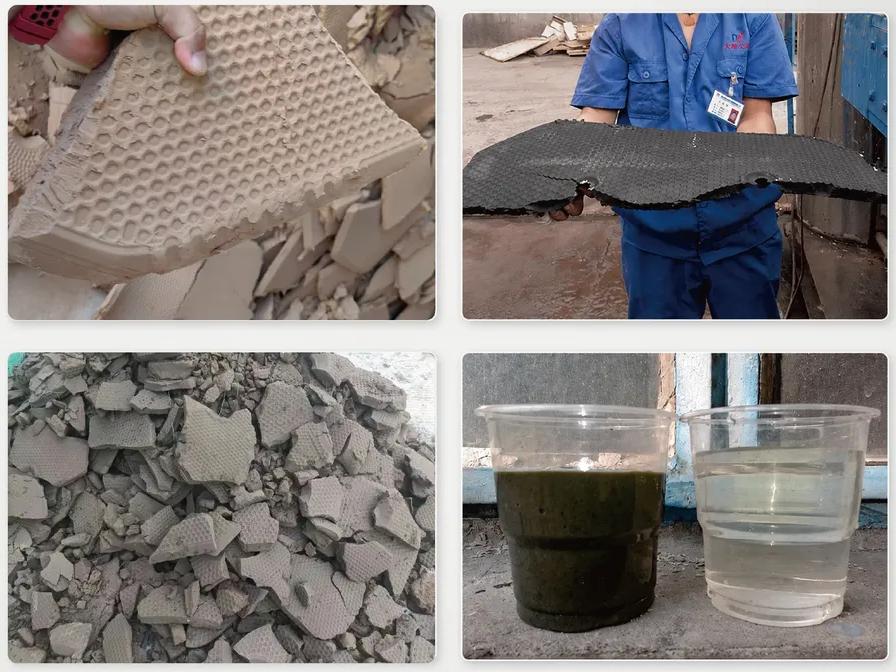
This additional mechanical pressure forces more liquid through the filter cloth, producing a drier cake than conventional pressure filtration alone may achieve under comparable conditions.
The final cake moisture content depends on the slurry characteristics, filtration conditions, membrane pressure, and process configuration.
Step 3: Synchronized Filter Cloth Rotation and Cake Discharge
This is the key feature that distinguishes a fully automatic rotary cloth filter press.
Once filtration and squeezing are completed, the filter plates are opened. The specialized cloth-moving mechanism then drives all filter cloths to rotate synchronously.
As the cloths move, the filter cakes are separated from their surfaces and discharged automatically.
Compared with conventional equipment that may require plates to be opened individually for cake removal, synchronized cloth movement allows the machine to complete unloading in a more centralized and efficient manner.
According to the manufacturer’s technical brochure, the complete unloading cycle, including hydraulic cylinder return, can be completed in less than five minutes.
Step 4: Automatic Filter Cloth Washing
After cake discharge, the filter cloths continue moving through the washing system.
High-pressure water sprays are directed onto the moving filter cloth surfaces to remove residual particles and accumulated materials.
Because the cloths move synchronously, the system can clean multiple filter cloths within one integrated operation rather than requiring individual manual cleaning.
This helps reduce residue buildup, maintain filtration performance, and minimize routine cleaning labor.
Once washing is completed, the equipment can prepare for the next filtration cycle.

Key Advantages of Rotary Cloth Filter Press Technology
For industrial operators, the value of a fully automatic filter press goes beyond reducing manual operations. Its design can also improve the efficiency of several important production stages.
Faster and More Efficient Cake Discharge
Traditional filter presses may require sequential plate opening and individual cake removal. This can increase unloading time, particularly when equipment contains a large number of filtration chambers.
A rotary cloth filter press uses synchronized mechanical movement to discharge multiple filter cakes during one integrated operation.
According to the manufacturer’s brochure, its complete unloading time is less than five minutes under the specified equipment configuration.
Shorter unloading cycles can help reduce non-filtration time and improve overall production efficiency.
More Effective Filter Cloth Cleaning
Filter cloth contamination is a common challenge in industrial filtration.
Residual particles can accumulate within the cloth structure, potentially increasing filtration resistance and reducing separation efficiency.
The automatic rotary washing mechanism allows multiple filter cloths to be cleaned together using high-pressure water.
This reduces the need for individual manual cleaning and helps maintain more consistent filtration conditions.

Reduced Labor Requirements
Manual cake removal and filter cloth cleaning can require considerable operator involvement, especially in large filtration systems.
By integrating automatic plate opening, synchronized cloth movement, and automatic washing, rotary cloth technology reduces the need for routine manual assistance during these operations.
This can improve workplace efficiency and allow operators to focus on equipment monitoring and process management.
Improved Operational Continuity
The integration of multiple automatic operations helps make the filtration process more consistent.
Automatic cloth cleaning reduces the risk of prolonged residue accumulation, while synchronized unloading helps shorten the interval between filtration cycles.
However, actual equipment availability and production capacity still depend on slurry properties, maintenance schedules, equipment configuration, and operating conditions.
Rotary Cloth Filter Press vs. Traditional Filter Press
Although both equipment types perform pressure filtration, their cake discharge and filter cloth cleaning methods can be significantly different.
The following comparison is based on the technical brochure’s comparison between rotary cloth filter press technology and conventional filter press equipment.
| Comparison | Rotary Cloth Filter Press | Traditional Filter Press |
|---|---|---|
| Cake discharge | Synchronized cloth rotation | Sequential plate opening and cake removal |
| Unloading time | Less than 5 minutes | More than 30 minutes |
| Cloth cleaning | Integrated synchronized washing | Individual plate washing |
| Washing time | Less than 5 minutes | More than 1 hour |
| Labor assistance | No routine manual assistance for these operations | Approximately 2 operators |
Note: These figures are reported in the manufacturer’s brochure and refer to its stated equipment comparison. Actual performance varies by model, filtration conditions, and operating configuration.

Differences in Cake Discharge
In conventional filter presses, plates are generally opened sequentially, and filter cakes are discharged as the plates separate.
For large filter plate packs, this process can take considerable time.
Rotary cloth filter presses use a synchronized cloth movement mechanism to separate and discharge multiple cakes more efficiently.
This makes the technology particularly interesting for applications where unloading time is a major factor affecting production capacity.
Differences in Filter Cloth Cleaning
Traditional cleaning procedures may require operators or automatic washing devices to handle the filter plates individually.
The rotary cloth design integrates cloth movement with high-pressure water spraying, allowing multiple cloths to be cleaned in a coordinated process.
This can significantly shorten washing time and reduce cleaning-related labor requirements.
Differences in Operating Costs
Labor requirements, cleaning frequency, maintenance costs, and production downtime all influence the total operating cost of a filtration system.
Automatic discharge and cleaning can help reduce routine labor and shorten non-filtration periods.
However, buyers should evaluate the complete lifecycle cost rather than comparing equipment prices alone. Energy consumption, spare parts, filter cloth replacement, maintenance requirements, and actual production output should also be considered.
Industrial Applications and Equipment Selection
Automatic filter presses are used in a wide range of industries that require efficient solid-liquid separation. A rotary cloth filter press may be particularly suitable for processes where frequent cake discharge and filter cloth cleaning are important operational requirements.
Mining and Mineral Processing
Mining operations generate large volumes of mineral slurry and tailings that require effective dewatering.
Filter presses help separate water from solid materials, supporting mineral concentrate filtration and tailings management.
The appropriate equipment configuration should consider particle size distribution, slurry abrasiveness, solids concentration, and required cake moisture.
Chemical Processing
Chemical production often involves complex slurry compositions and demanding filtration conditions.
An automatic filter press can help separate suspended solids from process liquids while reducing manual handling.
Filter cloth materials, plate materials, sealing performance, and corrosion resistance should be selected according to the chemical composition and operating temperature.
Wastewater and Sludge Treatment
Municipal and industrial wastewater treatment plants generate sludge that must be dewatered before transportation, disposal, or further processing.
Automatic filter presses can reduce sludge volume and help improve downstream handling efficiency.
For these applications, feed sludge characteristics, organic content, and pretreatment conditions are important factors affecting dewatering performance.
New Energy and Other Industrial Applications
New energy manufacturing and other advanced industrial processes may involve specialized slurry filtration requirements.
Depending on the material characteristics, a suitable filter press system can support process-liquid recovery, solid separation, and production waste treatment.
Equipment selection should be based on actual process requirements rather than industry classification alone.

What Should You Consider Before Purchasing?
Selecting an automatic filter press requires more than comparing filtration areas or machine dimensions.
Industrial buyers should evaluate the following factors:
- Slurry Characteristics: Analyze particle size, solids concentration, viscosity, chemical composition, and temperature.
- Required Filtration Capacity: Determine the required throughput and expected operating hours.
- Cake Moisture Requirements: Establish the target moisture content based on transportation, disposal, or subsequent processing needs.
- Filter Plate and Cloth Compatibility: Select suitable plate structures and filter cloth materials for the application.
- Automation Requirements: Identify which operations need automatic control, including feeding, squeezing, plate movement, cake discharge, and cloth washing.
- Installation Conditions: Consider available floor space, utilities, maintenance access, and integration with existing production equipment.
One important consideration is that the final cake moisture content is strongly influenced by the material itself. Different slurries can produce different dewatering results even when processed by the same machine.
Therefore, laboratory testing and process evaluation are recommended before final equipment selection.
Why Choose LONGONE for Automatic Filter Press Solutions?
LONGONE is a professional manufacturer of industrial filter press machines, filter plates, and filtration components. We provide customized solid-liquid separation solutions for customers across various industries.
Our capabilities cover:
- Filter Press Manufacturing: Industrial filter press machines designed for different filtration capacities and operating conditions.
- Filter Plate Production: Chamber, membrane, CGR, and other customized filter plates.
- Complete Filtration Solutions: Integrated equipment and components tailored to specific industrial applications.
- Technical Support: Assistance with equipment selection, filtration requirements, and customized configurations.
Whether you need a complete filter press system or replacement filtration components, LONGONE is ready to support your project.
Frequently Asked Questions About Automatic Filter Presses
1. What Is an Automatic Filter Press?
An automatic filter press is an industrial solid-liquid separation machine that automates operations such as plate opening, cake discharge, and filter cloth cleaning, reducing manual intervention and improving operating efficiency.
2. How Does an Automatic Filter Press Work?
An automatic filter press pumps slurry into filtration chambers. Solid particles are retained by the filter cloth while liquid passes through. After filtration, the filter cakes are discharged through an automated or mechanically assisted process.
3. What Are the Main Advantages of a Fully Automatic Filter Press?
The main advantages include reduced labor requirements, shorter operating cycles, consistent filtration performance, automated cake discharge, and improved production efficiency.
4. What Is a Rotary Cloth Filter Press?
A rotary cloth filter press is a specialized automatic filter press that uses a mechanical system to move multiple filter cloths synchronously. This allows filter cakes to be discharged automatically and filter cloths to be cleaned efficiently.
5. How Do I Choose the Right Automatic Filter Press?
Consider slurry characteristics, required filtration capacity, solid content, target cake moisture, operating pressure, and available installation space. Consulting a filtration equipment manufacturer can help determine the appropriate configuration.
6. Does LONGONE Manufacture Filter Press Machines and Filter Plates?
Yes. LONGONE manufactures industrial filter press machines, filter plates, and related filtration components. We also provide customized solutions based on customers’ filtration processes and project requirements.
Conclusion
A fully automatic rotary cloth filter press offers an efficient approach to industrial solid-liquid separation by integrating synchronized cake discharge, automatic filter cloth cleaning, and advanced filtration technology.
Compared with conventional equipment, it can significantly reduce unloading and cleaning time while minimizing routine manual operations.
Choosing the right filter press depends on your slurry characteristics, production capacity, and dewatering requirements. With expertise in filter press manufacturing, filter plate production, and customized filtration solutions, LONGONE is committed to helping industrial customers improve their filtration processes.
Contact LONGONE today to discuss your filtration requirements and find the right solution for your application.